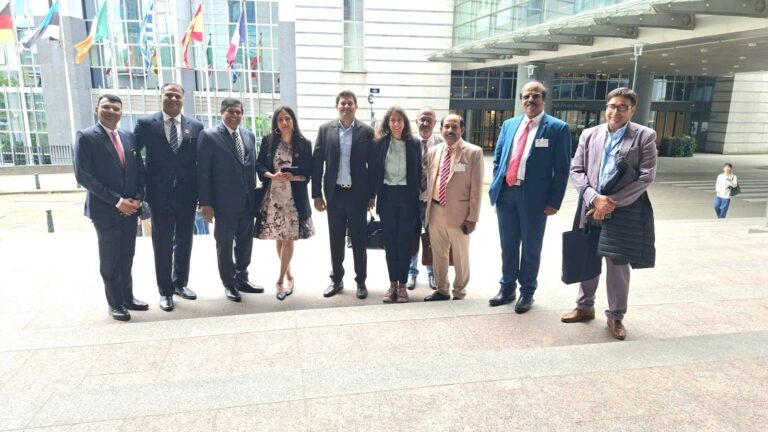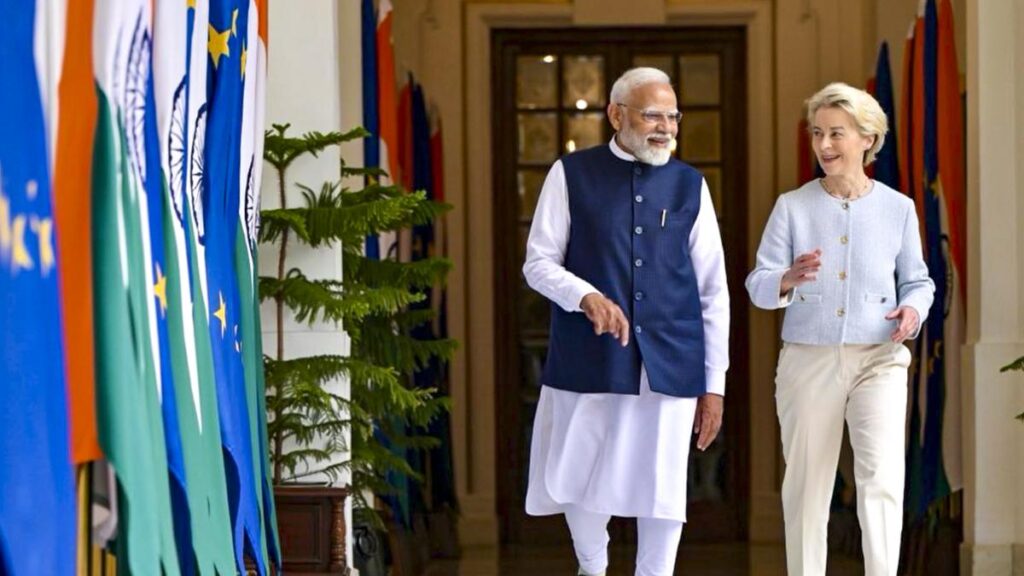
Indian and European officials remained convinced that a trade agreement between the two parties could be concluded by the end of the year, as the 14th round of negotiations drew to a close on Friday October 10, 2025 in Brussels.
“I can’t imagine a scenario where we wouldn’t be close or wouldn’t have concluded the FTA by the end of the year,” said a European official, who requested anonymity. The Hindu on Thursday (October 9, 2025).
Rajesh Agrawal, who has so far led negotiations with the United States and took office as Commerce Secretary on October 1, was in Brussels this week and left the city on Friday evening (October 10, 2025). The Hindu We understand that with the appointment of Mr. Agrawal as Commerce Secretary, Darpan Jain of the ministry will lead the negotiations between India and the United States, with Mr. Agrawal still playing a very active role in these negotiations.
Read also | India and the EU are working on a series of transformative initiatives besides considering concluding an FTA by December
India’s EU negotiating team, led by L. Satya Srinivas, is expected to leave the Belgian capital on Saturday, October 11, 2025. A new round of negotiations is expected to take place in New Delhi in November, but discussions will continue during the interregnum.
Bilateral trade in goods in 2024 stood at 120 billion euros ($139 billion), but challenges remain and both sides complain about tariff and non-tariff barriers. Challenging areas include services, agriculture and dairy, pharmaceuticals, automotive, wine and spirits. The parties decided to set aside the most sensitive areas of the negotiations.
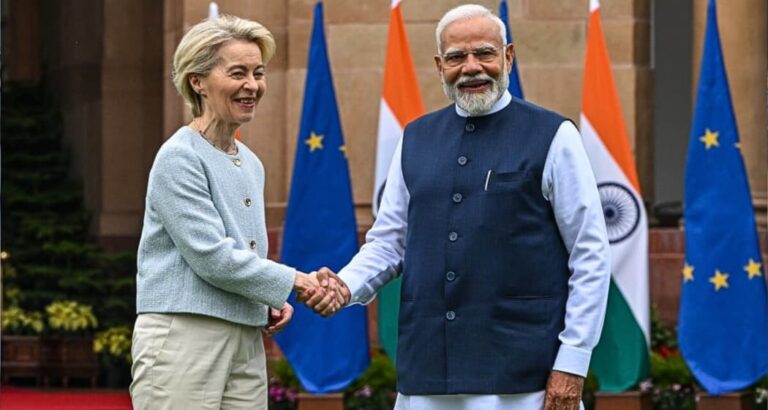
While officials are under a political mandate set by Prime Minister Narendra Modi and European Commission President Ursula von der Leyen in February this year to reach a deal by the end of 2025, some of these difficult issues remain, including “trade and sustainable development”.
Read also | India and EU to begin next round of trade deal negotiations from October 6 in Brussels
India has long opposed the EU’s Carbon Border Adjustment Mechanism (CBAM). The tax, which aims to price emissions emitted during the production of goods, including imports, is set to take full effect on January 1, after a two-year transition period.
Commerce and Industry Minister Piyush Goyal has repeatedly said India will retaliate if its products are brought under the mechanism. Mr. Goyal warned, in a speech delivered in New York at the end of September, that the CBAM “trap” could isolate Europe and cause inflation there. The government has also opposed the idea of bundling climate action and trade.
Questions around CBAM and sustainability were still under discussion on Friday (October 10, 2025) afternoon, The Hindu learned from another source with direct knowledge of the negotiations.
Read also | First round of FTA negotiations with EAEU, including Russia, expected to take place “in early November”
The EU should adjust its approach to trade and sustainable development so that the outcome is “something India can live with”, chief negotiator Christophe Kiener told the European Parliament’s trade committee on September 25, saying a chapter on trade and sustainable development would nonetheless be necessary. Mr. Kiener also said that although the sides did not make progress during the 13th round in New Delhi, they had improved their mutual understanding. Towards the end of these negotiations, “things will inevitably be difficult,” Mr. Kiener said.
For the EU, India’s quality control orders (QCOs) are among the often-mentioned difficulties.
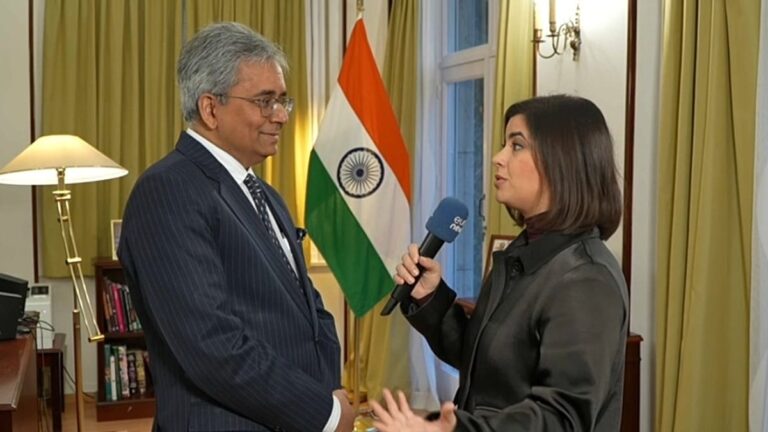
India’s ambassador to Brussels, Saurabh Kumar, is optimistic about the trade negotiations.
“It is not a single point or a particular aspect that has overriding weight. Trade negotiations by definition are not easy and there are difficulties, but both sides are committed to this agreement (the FTA) and determined to see it through,” Kumar said. The Hindu Friday (October 10, 2025), adding: “There is a strong political directive to complete discussions by December. »
Mr. Goyal is expected in Brussels at the end of the month.
Read also | India could withstand external shocks thanks to strong domestic demand and economic policies: Shaktikanta Das
IMEC “Sherpa” meeting held
Brussels has been busy this week, with more than just trade. The Global Gateway Forum (the bloc’s strategy for investment in other jurisdictions) was also held this week, as well as a steering meeting (i.e. a “Sherpa” meeting) for the India Middle East Europe Economic Corridor (IMEC). NSA MP Pavan Kapoor, who represented India in the meeting, participated virtually.
With a ceasefire in place between Israel and Gaza and the possibility of less fighting in the future, Brussels is adhering to the plan announced at the G20 summit in New Delhi in September 2023. The corridor, once built, will provide transport, fiber optic and energy routes from India to Europe via West Asia.
Read also | India-EFTA trade deal comes into force (Union Commerce Minister Piyush Goyal)
“We are very attached to it, and the Indians are very attached to it, as are others. And we have these various investments that we are making to support the different stages of this project. The main thing is that the Middle East is resolved,” the European official said, adding that Washington’s attention to this issue was still necessary.
“We also need the punch of the Americans,” they said.
When asked if there was any specific limiting factor to operationalize the IMEC project, Mr. Kumar said the countries involved in the project were in the process of identifying their responsibilities.
“There is no limiting factor. The countries involved are trying to organize themselves on how to move forward and who takes care of what aspect,” he said.
Published – October 11, 2025 at 8:02 p.m. IST
About The Author