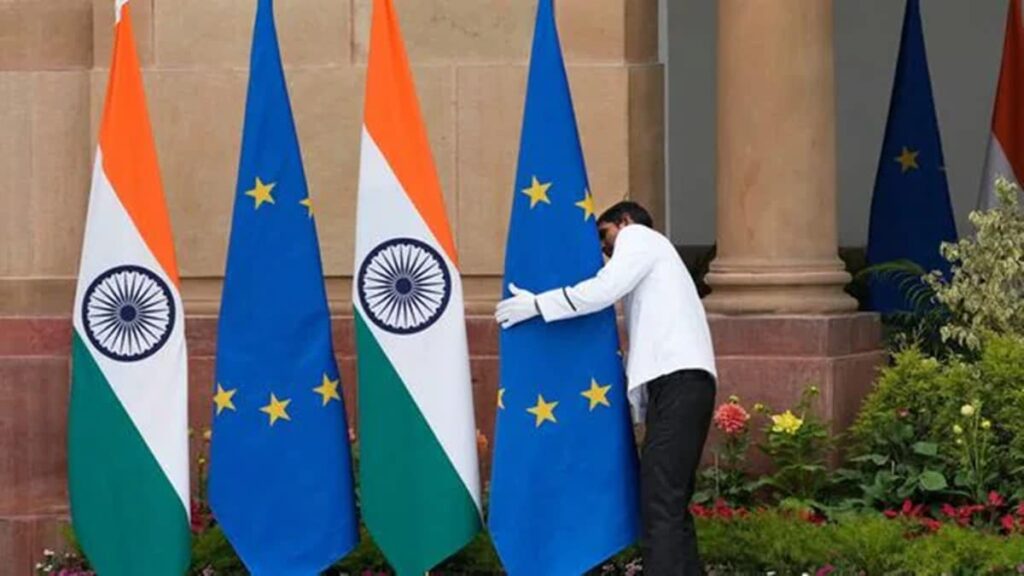
As officials from India and the European Union (EU) complete their 14th round of negotiations on the proposed free trade agreement (FTA) on Friday, plans are afoot for Commerce and Industry Minister Piyush Goyal’s visit to Brussels later this month, before the start of the next round of negotiations.
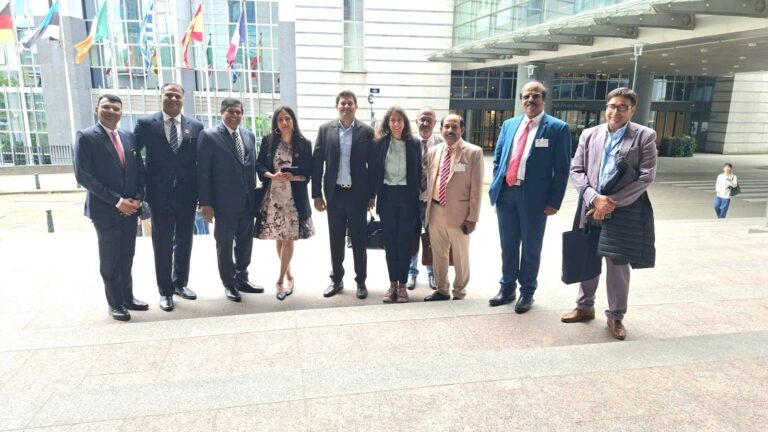
Indian negotiators, who began negotiations in Brussels on October 6, were joined by Commerce Secretary Rajesh Agrawal in the final days of the round. Agrawal also met his European Commission (EC) counterpart, Director General of Trade (DG-Trade), Sabine Weyand, during the visit.

The 15th round is scheduled for mid-November in New Delhi, with both sides aiming to finalize the deal by the end of this year. As the deadline approaches, negotiations take place every month.
During his visit, Goyal will meet his counterpart, European Trade Commissioner Maros Sefcovic, and other commissioners to advance the negotiations.
In the meantime, intense discussions continue between the two parties. During the 14th round, discussions took place on tariff reductions on certain products, on which an agreement remained elusive.
Other areas where discussions took place include rules of origin, sanitary and phytosanitary measures, technical barriers to trade, trade in services, dispute settlement and investments.
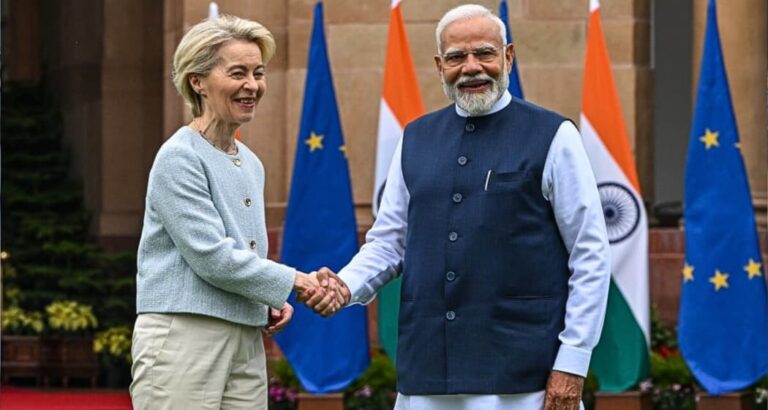
The deadline for an FTA was set in February by both sides, when EC President Ursula von der Leyen visited India with all the commissioners.
In June 2022, India and the EU resumed negotiations for a comprehensive FTA, an agreement on investment protection and a pact on geographical indications, after a hiatus of more than eight years. It was blocked in 2013 due to differences in the level of market opening.
In addition to demanding significant reductions in tariffs on automobiles and medical devices, the EU wants reduced taxes on other products such as wine, spirits, meat, poultry, as well as a strong intellectual property regime.
India’s demands in the negotiations include duty-free access to its labor-intensive imports and emerging sectors like automobiles and electronics. Another concern for India in the negotiations is the imposition of a carbon tax by the EU on imports of steel, aluminum, cement and fertilizers from January 26. The tax imposed under the Carbon Border Adjustment Mechanism (CBAM) could pose an additional barrier to Indian exports while tariff barriers are further reduced.
The FTA covers 23 policy areas or chapters, including trade in goods, trade in services, investment, sanitary and phytosanitary measures, technical barriers to trade, trade remedies, rules of origin, customs and trade facilitation, competition, trade defense, government procurement, dispute settlement, intellectual property rights, geographical indications and sustainable development.
The FTA is crucial as the 27-member bloc is India’s largest trading partner with bilateral merchandise trade of $136.2 billion, although the United States remains the largest market. Indian exports to the EU stood at $75.8 billion, while imports stood at $60.6 billion in 2024-25. Both sides also have very strong services trade, which stood at $70 billion in 2023. India has a surplus of $9.25 billion.
About The Author