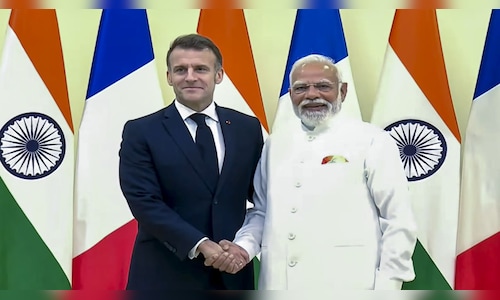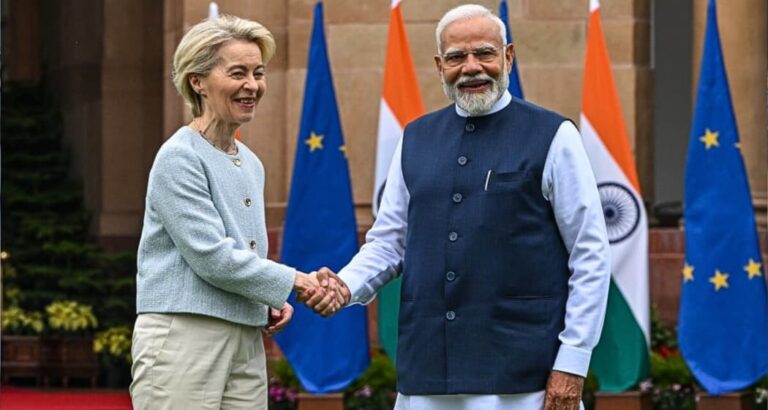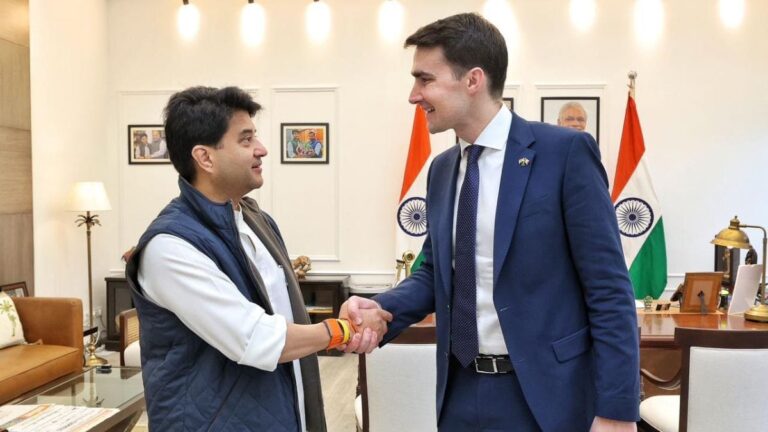
The European Union has approved a new security and defense agreement with India, which will be signed at the India-EU summit in New Delhi next week.
EU foreign policy chief Kaja Kallas announced this in the European Parliament on Wednesday, saying the partnership was part of a wider strategic agenda.
This program also includes a free trade agreement, defense and security cooperation, cybersecurity, maritime security and the fight against terrorism.
European Council President Antonio Costa and European Commission President Ursula von der Leyen are visiting India and will be the chief guests at the Republic Day celebrations on January 26. The India-EU summit will take place the next day, January 27.
EU foreign policy chief Kaja Kallas announced approval of security and defense deal
EU foreign policy chief Kaja Kallas announced approval of security and defense deal
India-EU defense deal will help fight terrorism
Kalas said the security and defense agreement between India and the EU would help in the fight against terrorism. He said this would strengthen cooperation in sectors such as maritime security and cybersecurity.
Kalas said Europe was ready to move forward with India on a new and strong agenda. He said India was becoming very important to Europe’s economic power.
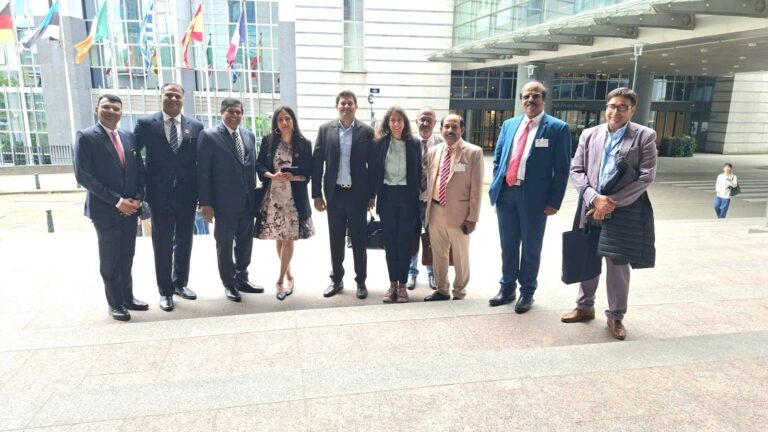
The EU delegation to India will comprise around 90 members. Among them are Kaja Kalas, trade commissioner Maros Sefcovic and numerous administrators.
Top EU leaders to attend India-EU summit
The President of the European Council Antonio Costa and the President of the European Commission Ursula von der Leyen will visit India on this occasion.
The two leaders will be the chief guests at India’s Republic Day celebrations on January 26, while the India-EU summit will take place on January 27.
Kallas said the agreement would strengthen cooperation between the two sides, particularly in combating terrorism and strengthening security.

“This partnership will strengthen cooperation on maritime security, counter-terrorism and cyber defense. I look forward to signing it at the EU-India summit in New Delhi,” Kallas said.
Large EU delegation visits India
The EU delegation visiting India will include around 90 members, including Kaja Kallas, Trade Commissioner Maroš Šefčovič and several senior officials and directors.
Process of signing the trade agreement
Before the agreement is officially signed, both parties must complete legal procedures. The approval of the European Parliament is required first, followed by that of the European Council. Once authorized, Trade Commissioner Šefčovič will present the agreement to India for signature.
At the summit, India and the EU are also expected to unveil a joint strategic plan that will guide bilateral relations from 2026 to 2030.
Read also| India, EU close to free trade deal on Republic Day
CBAM remains a key point of discussion
According to media reports, negotiations are still ongoing on controversial issues such as the Carbon Border Adjustment Mechanism (CBAM). Under CBAM, the EU imposes carbon tariffs on products like steel and cement if they are produced using highly polluting processes.
Even though the EU has not changed its CBAM policy so far, both sides are trying to find a mutually acceptable solution.
Read also| Trump withdraws threat of 10% tariffs against eight European countries
Trade, technology and mobility on the agenda
Kallas said closer cooperation between India and the EU is vital in today’s increasingly dangerous global environment.
A free trade agreement would open markets by reducing tariffs and trade barriers, boosting exports and business opportunities on both sides.
She added that the partnership would also strengthen cooperation in the areas of clean technology, pharmaceuticals and semiconductors.
Another key pillar of the agreement is the mobility of professionals. India and the EU will work to facilitate the movement of students, researchers, skilled professionals and seasonal workers, strengthening collaboration in technology, innovation and research.
About The Author