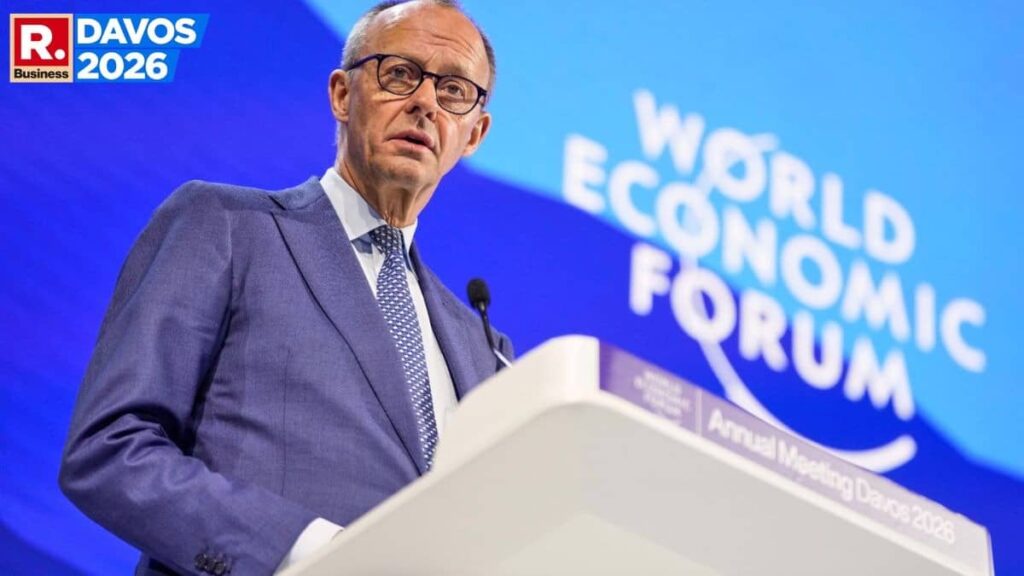
German Chancellor Friedrich Merz said on Thursday that the proposed free trade agreement between India and the European Union could serve as a unifying force for major economies at a time when global trade faces growing uncertainty.
Addressing a session at the World Economic Forum’s annual meeting in Davos, Merz linked the India-EU negotiations to a broader effort to strengthen cooperation between countries that support predictable, rules-based economic engagement rather than unilateral trade barriers.
Directly referring to the negotiations between India and the EU, Merz said the current global environment offers the opportunity for deeper alignment between major economies.
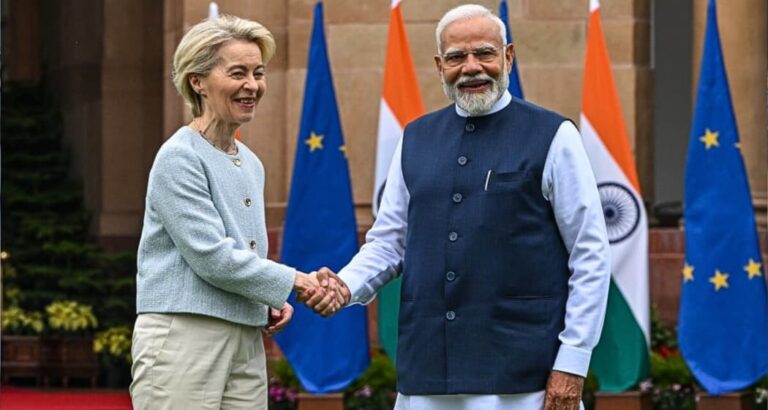
“In a few days, the President of the European Commission will travel to India to establish the principles of a free trade agreement between the subcontinent and the European Union,” he said.
“I was in India a week ago and I have no doubt that the era of great powers presents an opportunity for all of us and for all countries that favor regulation over arbitrariness and see the benefits of free trade over protectionism and isolationism,” he added.
The German Chancellor noted that discussions between India and the European Union were progressing towards defining the fundamental principles of the agreement, signaling the political intention of both sides to move the negotiations forward.
India and the EU are negotiating a broad agreement covering goods, services, investments and regulatory cooperation. If completed, the deal would link two of the world’s largest economic blocs, expanding market access and strengthening supply chain resilience amid changing global trade structures.
Germany, the EU’s largest economy and India’s largest trading partner within the bloc, has consistently supported deeper economic engagement with New Delhi as Europe seeks to diversify its trade relationships beyond its traditional partners.
Merz’s Davos comments add to growing political momentum behind trade talks, as India and the EU seek to resolve remaining differences over tariffs, standards and market access. European leaders are increasingly describing the deal as a cornerstone of the broader strategic partnership between India and the EU.
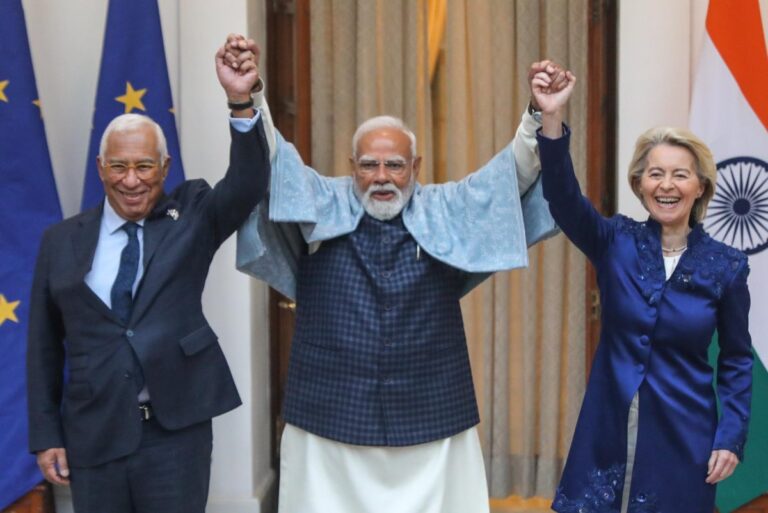
Earlier, at the World Economic Forum in Davos, European Commission President Ursula von der Leyen said: “There is still work to do. But we are on the cusp of a historic trade deal. Some call it the mother of all deals. A deal that would create a market of 2 billion people, representing almost a quarter of global GDP.” Von der Leyen, alongside European Council President António Costa, will be the chief guests at India’s 77th Republic Day Parade on January 26 and will co-chair the India-EU Summit on January 27. Commerce and Industry Minister Piyush Goyal also recently called the agreement the “mother of all agreements”.
About The Author