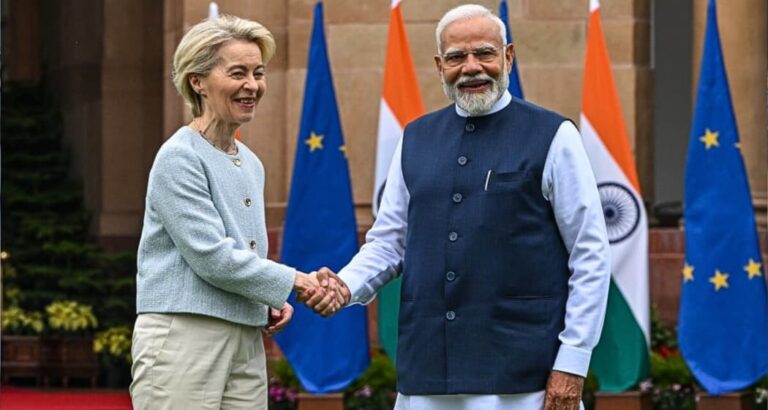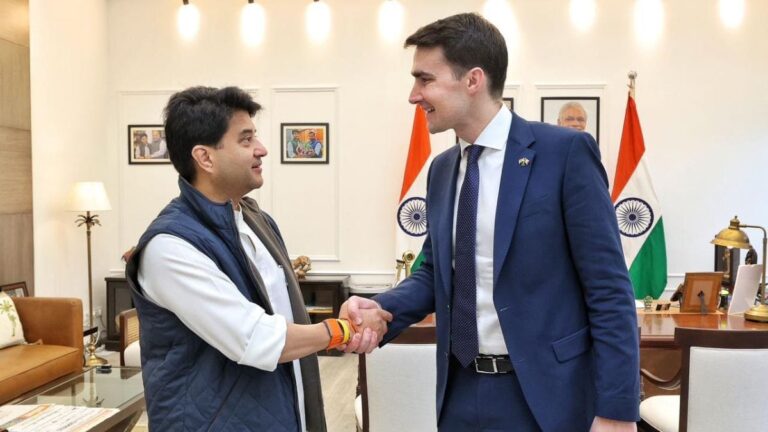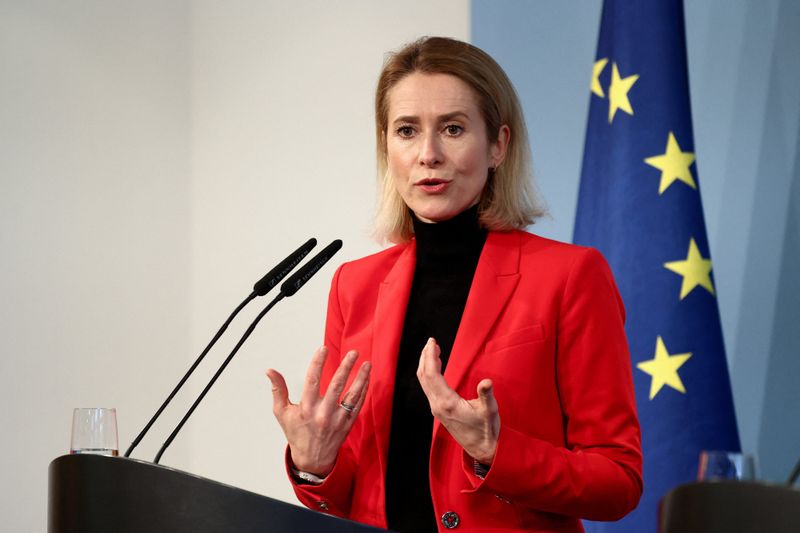
The European Union and India have agreed to move forward with the signing of a new EU-India security and defense partnership, marking a significant expansion of cooperation in areas such as maritime security, cybersecurity and counter-terrorism, EU High Representative for Foreign Affairs and Security Policy and Vice-President of the European Commission Kaja Kallas said on Wednesday.
Addressing the plenary session of the European Parliament ahead of the 60th EU-India Summit, scheduled to take place in New Delhi on January 27, Kallas said the proposed partnership reflects a shared recognition that closer security cooperation is essential in an increasingly unstable global environment.
“In a more dangerous world, we will both benefit from working closely together,” she said, adding that negotiations would also be launched on an information security agreement, aimed at facilitating deeper cooperation in sensitive strategic areas.
Alongside the proposed security and defense partnership, the EU and India aim to conclude negotiations on a long-pending free trade deal that Kallas said would open markets, remove barriers and strengthen critical supply chains in sectors such as clean technology, pharmaceuticals and semiconductors.
She also announced her intention to conclude a memorandum of understanding on a comprehensive mobility cooperation framework, which would facilitate the movement of seasonal workers, students, researchers and highly qualified professionals, while promoting research and innovation.
Kallas described the upcoming summit as a “pivotal moment” in EU-India relations, underpinned by renewed political momentum and a clear objective, although preparations have not been without challenges. She said negotiations on the joint declaration and a new strategic program were progressing well, driven by the determination of both sides that the summit must produce concrete results.
The summit will adopt a new EU-India comprehensive strategic agenda for 2030, paving the way for deeper engagement in the areas of trade, security, technology and mobility. According to Kallas, leaders are expected to approve several key outcomes that will move the partnership “from words to action.”
Placing the partnership in a broader geopolitical context, Kallas said Europe and India are moving closer together at a time when the rules-based international order is under unprecedented pressure due to wars, coercion and economic fragmentation.
“Two great democracies cannot afford to hesitate,” she said, emphasizing that both sides share responsibility for upholding international law, the United Nations Charter and a multilateral system that functions in the 21st century.
Highlighting cooperation in the Indo-Pacific region, Kallas said Europe and India could play a stabilizing role by defending open sea lanes, strengthening maritime domain awareness and resisting coercion in all its forms.
“The goal is simple but strategic: to embed trusted standards that shape global markets rather than react to them,” she said, adding that the summit was important for what it would set in motion: a more ambitious and operational EU-India partnership that would bring tangible benefits to the citizens, economies and security of both sides.
About The Author