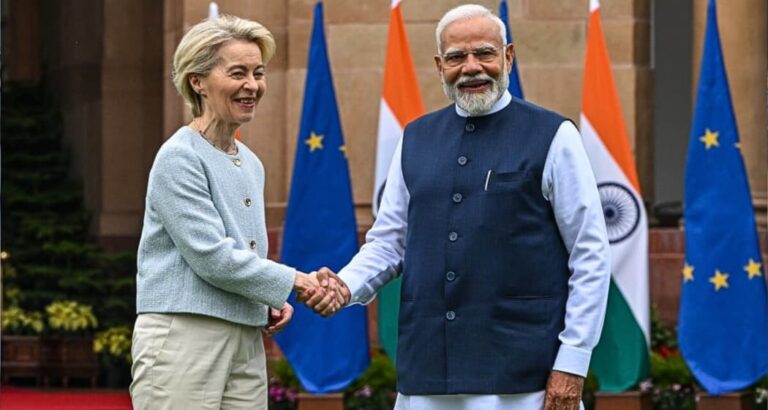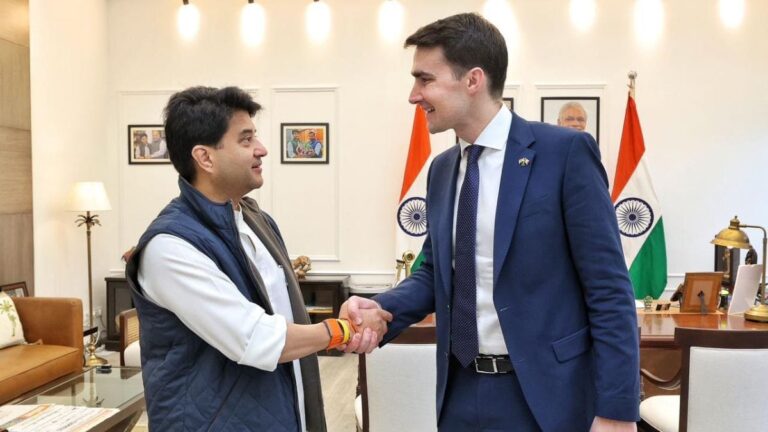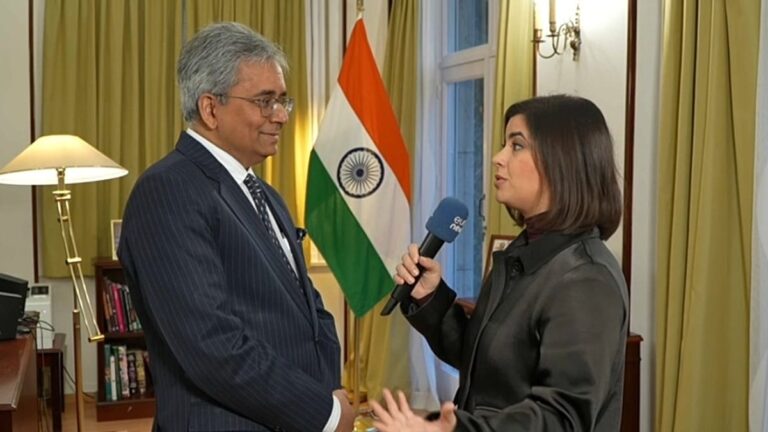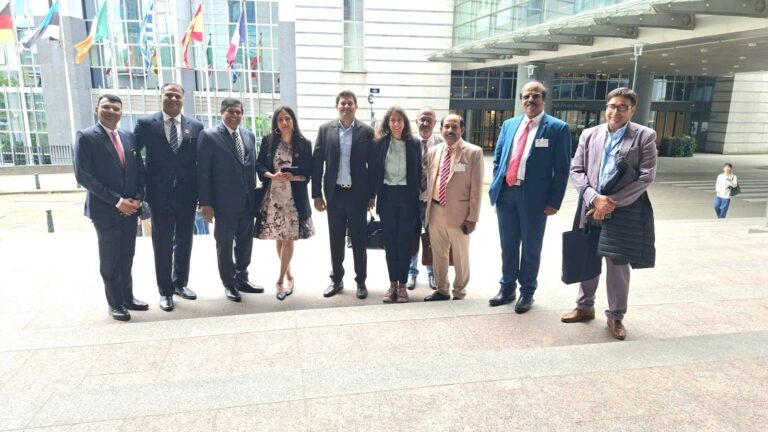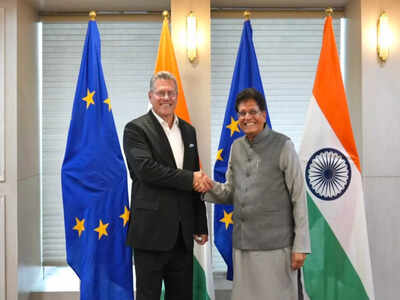
Commerce and Industry Minister Piyush Goyal on Wednesday said negotiations on the free trade agreement between India and the European Union (EU) are moving in a positive direction, with a draft of the agreement already prepared. He stressed that both sides were determined to conclude the agreement quickly. “Ek free trade agreement ki motee-motee roop rekha taiyaar ho gayee hai (a draft of a free trade agreement has been prepared),” Goyal told reporters during his visit to participate in the Pravasi Rajasthani Divas.
The progress of the negotiations was reviewed by Goyal and the European Union Commissioner for Trade and Economic Security, Maros Sefcovic, in New Delhi on December 8-9. “The discussions were very positive. And I am convinced that soon with the EU a decision will be taken on (the agreement),” he said. During his visit, Maros also met Finance Minister Nirmala Sitharaman and Foreign Minister S Jaishankar. Asked if an announcement on the conclusion of negotiations could be expected in January, Goyal said: “I can say with certainty that both sides are determined to conclude the deal quickly. Whether that happens in a month, next week or next month, we will wait and see.” The remarks come as India and the EU face a deadline of the end of December to conclude negotiations. The EU’s top leaders are expected to attend the Republic Day parade as the chief guest on January 26, followed by the India-EU summit the next day. India and the EU agreed to intensify efforts to conclude the negotiations quickly. The negotiations, which resumed in June 2022 after a hiatus of more than eight years, concern a comprehensive free trade agreement, an investment protection pact and an agreement on geographical indications. Negotiations were initially blocked in 2013 due to differences over market access. India’s bilateral trade in goods with the EU reached $136.53 billion in 2024-25, with exports valued at $75.85 billion and imports at $60.68 billion, making the bloc India’s largest trading partner in goods. The EU accounts for around 17% of India’s total exports, while the bloc’s shipments to India account for 9% of its foreign trade. The EU has called for significant reductions in tariffs on automobiles and medical devices, as well as tax cuts on products such as wine, spirits, meat and poultry, and a strong intellectual property framework. Indian exports to the EU, including ready-made garments, pharmaceuticals, steel, petroleum products and electrical machinery, could gain competitiveness if the deal is finalized. Negotiations between the two countries cover 23 policy areas. These include trade in goods and services, investment, rules of origin, customs and trade facilitation, government procurement, dispute resolution, intellectual property rights and geographical indications.
About The Author