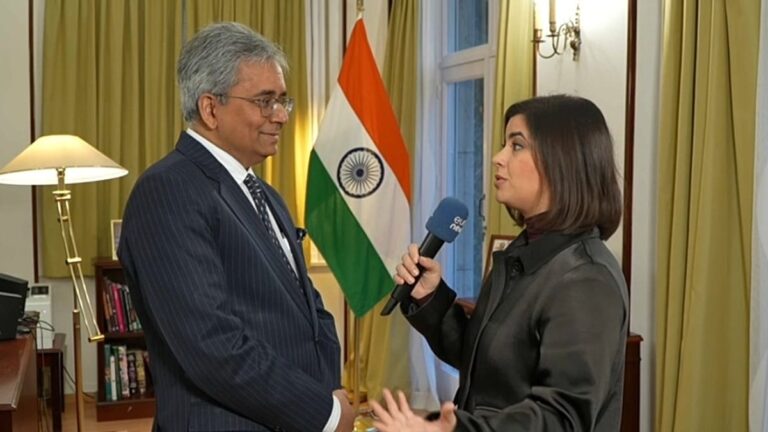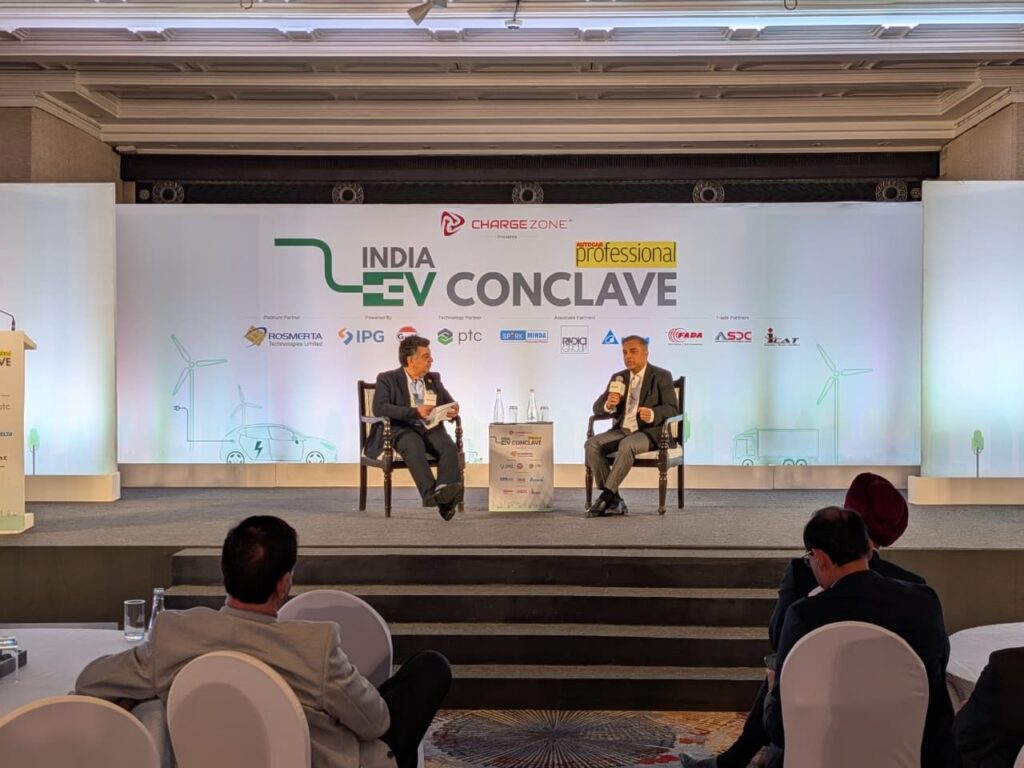
The second phase of India’s project to promote electric vehicle manufacturing may face delays as the country remains engaged in free trade agreement (FTA) negotiations with the European Union, revealed Hanif Qureshi, IPS, additional secretary in the Ministry of Heavy Industries, at the India Electric Vehicle Conclave on Tuesday.
Speaking at the event at the Hyatt Regency Delhi, Qureshi acknowledged that “there could be a delay as India is still in the middle of FTA negotiations with the EU”, highlighting the complex interplay between trade policy and national industrial strategy. He stressed that while “FTAs are helpful, we should also look at domestic conditions”, highlighting the government’s cautious approach to ensuring trade deals do not harm domestic manufacturing interests.
The India-EU FTA negotiations, which resumed in 2021 after being abandoned in 2013, have become more urgent following the UK’s successful conclusion of an FTA with India in May 2025. The 14th round of negotiations concluded in Brussels in October, with both sides aiming for a deal by the end of 2025. The automotive sector represents one of the most contentious areas of the negotiations, with the EU proposing zero customs duties on its cars while India is reportedly considering gradually reducing customs duties on vehicles built in the EU from more than 100% to just 10%.
These negotiations have a direct impact on India’s electric vehicle manufacturing program, officially known as the Scheme to Promote Manufacturing of Electric Passenger Cars in India (SPMEPCI), which was notified in March 2024. The program offers reduced import duties to global electric vehicle manufacturers in exchange for significant investments in domestic manufacturing. Under the SPMEPCI, companies can import up to 8,000 electric vehicles per year with reduced customs duty of 15 per cent, compared to the existing 70-100 per cent, provided they commit to investing at least ₹4,150 crore (around $500 million) within three years.
The program requires manufacturers to reach 50% national value added (DVA) within five years and targets companies with significant global automotive operations rather than startups. It is designed to attract established international manufacturers like Tesla, VinFast and major European automakers.
Qureshi’s comments suggest the government is carefully balancing several objectives: attracting foreign electric vehicle makers through the SPMEPCI program while simultaneously negotiating broader tariff reductions with the EU that could impact the attractiveness of the program and India’s automotive strategy. The challenge lies in structuring the second phase of the project in a way that complements rather than conflicts with commitments that India might make under the FTA with the EU. Any tariff reduction agreed with the EU should be reconciled with the temporary duty relief offered under the SPMEPCI.
European luxury brands, including Mercedes-Benz, Audi, BMW and Porsche, are expected to benefit significantly from any tariff reduction. Currently, high customs duties make EU-made vehicles significantly more expensive in India. For example, a Porsche Taycan retailing at €102,600 in Germany costs around €177,500 in India, or 73% more. Tesla, although not European, has also expressed interest in the Indian market and could benefit from both the SPMEPCI program and the potential benefits of the FTA with the EU, given its manufacturing presence in Europe.
Domestic manufacturers including Tata Motors, Mahindra & Mahindra and Maruti Suzuki are concerned about increased competition from globally popular electric vehicles. The government’s phased approach to tariff reductions appears designed to protect these companies while strengthening domestic production capacity. Industry observers note that the delay in the second phase of SPMEPCI could actually give Indian manufacturers more time to strengthen their positions before facing intensified foreign competition.
The interplay between the EV program and the EU FTA reflects India’s broader strategic calculus to position itself within global supply chains. Following the UK-India Free Trade Agreement, European companies face competitive pressure to gain market access before losing ground to UK companies. From India’s perspective, the government is seeking to leverage this urgency to negotiate favorable terms while ensuring that any deal supports the Make in India initiative and does not simply turn the country into an import market.
With FTA negotiations with the EU expected to conclude by the end of 2025, it is unlikely that the second phase of the SPMEPCI will be finalized until the contours of the trade agreement are clearer. This could push back the project’s expansion until 2026 or later. However, the first phase of SPMEPCI remains operational and businesses can still apply for benefits under current guidelines. The application window was scheduled to open in June 2025, with the ministry reserving the right to reopen it until March 15, 2026.
Qureshi highlighted that despite the potential delay, the government remains committed to promoting the electric vehicle ecosystem and manufacturing across all segments. The pause in the second phase could allow policymakers to better align the program with India’s evolving trade architecture. “We are still in the middle of FTA negotiations with the EU, so the second phase could take some time,” Qureshi reiterated, suggesting that details on the timeline would emerge once trade negotiations progress.
The India EV Conclave, which brings together over 35 expert speakers and over 300 industry stakeholders, continues on Wednesday with discussions on charging infrastructure, battery innovation and supply chain resilience in India’s electric mobility transition.
About The Author