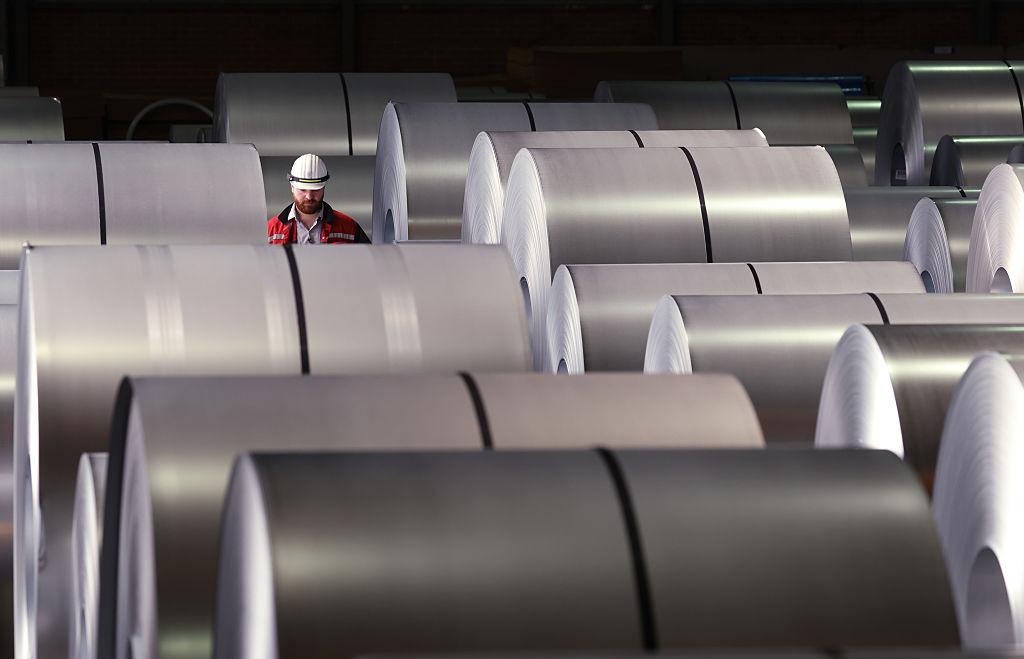
On October 7, the European Commission proposed a 50% customs duty on steel imports in the European Union that exceed a certain quota, while reducing the tax-free quota by 47%. The tariff would replace a “steel safeguard,” which was introduced in 2018 and will expire in mid-2026.
This safeguard measure was a response to the diversion of steel to the EU market due to global incapacity and the first Trump administration’s introduction of a 25% steel tariff. As part of this safeguard measure, the EU sets a quota on steel and levies a 25% customs duty on imports that exceed this quota. The new proposal would therefore significantly increase customs duties and reduce the overall level of imports.
Safeguard measures under World Trade Organization rules are permitted in order to remedy serious damage and facilitate adjustment. There may well be a case for avoiding disruption to steel markets once safeguards expire, but it is questionable whether this justifies a substantial increase in the level of protection, or whether high tariffs on all steel imports (regardless of carbon content) are compatible with the aim of promoting decarbonisation of the sector. Furthermore, an increase in tariffs could harm the competitiveness of downstream industries or lead to a broader increase in tariff protection in the EU and elsewhere.
The steel overcapacity problem persists, and the Trump administration has now increased the level of protection for the U.S. steel sector by eliminating quotas and product exclusions, increasing U.S. steel tariffs to 50%, and applying higher tariffs to high-steel products. Canada and Mexico have already responded by introducing tariffs that, to some extent, mirror U.S. levies.
To ensure consistency with the WTO, the Commission says the EU can rely on Article XXVIII of the General Agreement on Tariffs and Trade (GATT). This allows for an increase in tariffs provided that the balance of mutually beneficial concessions is maintained. Its application is legitimate under the WTO, which recognizes that as circumstances change, tariff concessions may need to be adapted. However, the EU’s application of high tariffs on all steel imports and plans to reduce quotas suggest that demands for compensation will be substantial and negotiations difficult.
A particularly problematic aspect of the Commission’s plan is that the new tariffs would apply to countries with free trade agreements with the EU. GATT Article XXVIII concerns only increases in general tariff rates and provides no justification for deviating from tariff elimination commitments under FTAs. Even if FTAs contain bilateral safeguard provisions, these would not justify the automatic application of a quota after the expiration of the WTO safeguard. The Commission’s proposal therefore involves a violation of all FTAs that the EU has concluded with third-country steel suppliers and a major obstacle to concluding negotiations with steel exporters such as India.
At a time when the EU must be seen as a reliable trading partner, the decision to ignore its FTA commitments should not be taken lightly. This goes to the heart of the EU’s role in the global trading system and its interest in ensuring respect for the rule of law. After all, if the EU ignores its international commitments in a critical sector, what would stop the EU’s partners from increasing tariffs on any sector they consider sensitive? Since many developing countries have high tariff bindings or agreed ceilings that tariffs will not exceed, they could increase tariffs on EU exports without even following the Article XXVIII procedure. But more fundamentally, what makes Europe an attractive partner is its willingness to respect the rules.
The goal of reducing duty-free steel imports by 47% cannot be reconciled with the goals of avoiding large offset demands in WTO negotiations and meeting FTA commitments. Nor is it necessary to prevent market disruption once the safeguard is lifted.
A more reasonable goal would be to maintain import penetration at the 2024 level and justify this with a change in tariff bindings, so that negotiations can continue between major steel suppliers to reduce overcapacity in a way consistent with decarbonization goals. The tariff increase should not apply to low-carbon steel or steel inputs that contribute to decarbonization (e.g. green iron ore). A new review of consolidations could take place after three years to assess progress in eliminating overcapacity. This approach could be reconciled with the safeguard provisions of FTAs and would have the added benefit of relaunching plurilateral steel negotiations which should cover both capacity reduction and decarbonization objectives.
About The Author