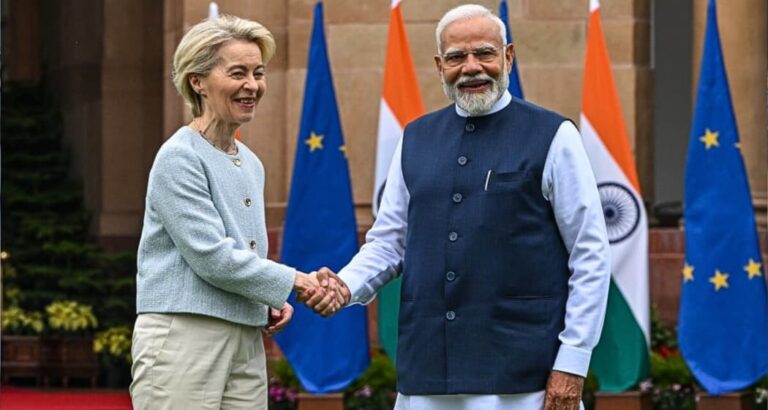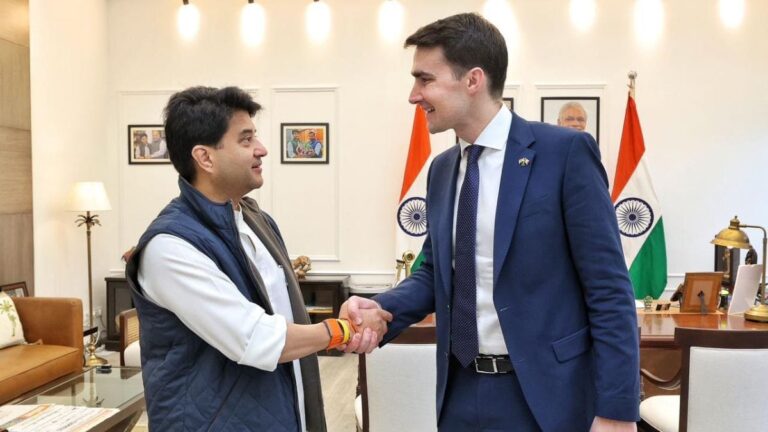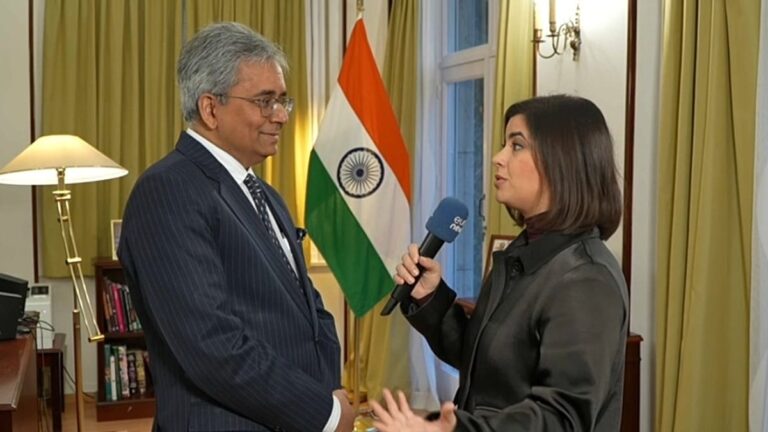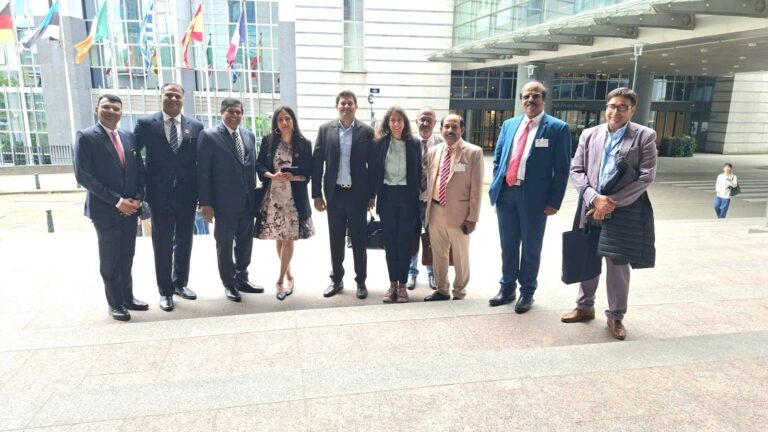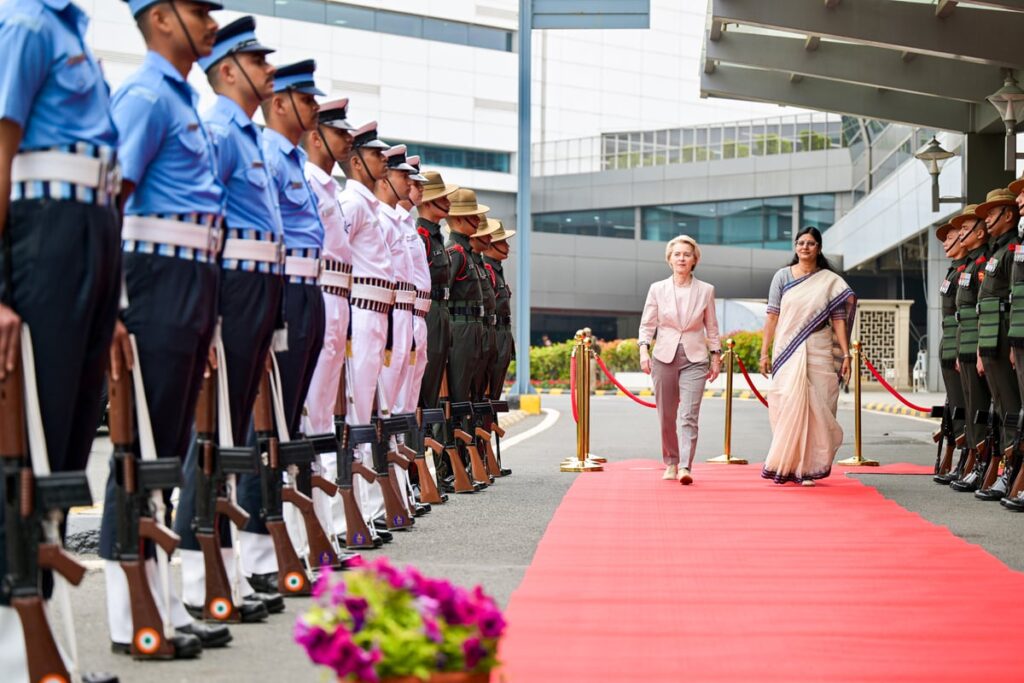
With a large part of the political projectors focused on Donald Trump’s erratic and harmful trade measures, the European Union and India are now in the last section of negotiations on a major trade agreement, talks intensifying in recent weeks.
However, a crucial element seems to be missing: a credible and enforceable chapter of trade and sustainable development (TSD).
For unions and workers across Europe, TSD chapters are not a technical detail – they are a decisive test to find out if the EU has engaged in the values it claims to support. In a world where these values are increasingly under pressure, this test could not be more vital.
A trade agreement that has no solid commitments to labor rights and sustainability not only would underflect workers in Europe and India – it would also affect the credibility of Europe at a time of growth in the instability of global trade. The EU should not abandon its principles in pursuit of the opportunity – not now, and certainly not in the current geopolitical climate.
These negotiations take place in the context of climbing tensions with the United States and a renewed emergency on both sides to conclude the agreement by the end of 2025, where the second presidency Trump marks a revival of protectionism, unilateralism and hostility towards multilateral institutions.
Trump has always ignored international labor standards, environmental cooperation and rules based on rules. If the EU meets by diluting its own standards – or worse, in doing so, with the aim of obtaining a geopolitical lever effect – it will not fulfill the void left by American disengagement; He will only deepen it.
Europe cannot win a race down – and it goes without saying that it should not try. The only viable path is to double the distinct role of the EU as a global standard for fair trade, sustainable and based on rules.
It starts by ensuring that the EU-Indian agreement fully reflects the values of democracy, social dialogue and respect for fundamental rights.
India is an increasingly important strategic partner.
It is the most populous democracy in the world and a rapidly growing economy with significant global influence.
But labor rights in India are faced with serious limitations. Millions of workers are in informal employment. Unions are faced with systemic constraints. The country has not yet ratified the basic conventions of the International Labor Organization (ILO) on freedom of association and collective negotiations.
ILO conventions have established fundamental human rights in the field of work which are universally applicable.
The EU-India FTA should insist on the fact that fundamental conventions must be ratified and applied, in particular by being the subject of the dispute settlement mechanisms which apply to other areas covered by the agreement.
The EU -New Zealand Deal gave a good example – why not India?
THE Confederation of European Unions (Etuc) had hoped that the EU agreement with New Zealand, which includes such provisions, had opened a new era for sustainable development in European trade agreements, putting the considerations of labor and environmental to the height of economic aspects.
We fear that the EU can follow the token agreement of the United Kingdom with India, in which the language on labor rights is only ambitious.
Negotiating a trade agreement that ignores these realities would be short -sighted and deeply damaging. It would send a dangerous signal: that the EU is willing to ignore human rights and work in exchange for market access.
More water
This question is not limited to the agreement in India. Similar concerns arise in the newly launched EU trade negotiations with the United Arab Emirates (UNITED ARAB EMIRATES).
Water has a well -documented file to restriction on freedom of association, to remove the independent unions and to rely strongly on precarious migrant work within the framework of the Kafala system.
Conclude a trade agreement without the enforceable provisions of labor and human rights not only legitimize these practices – it will demonstrate that economic interests are priority over the fundamental values of the EU. Such a model of globalization is unacceptable.
The chapters of trade and sustainable development, when they are done correctly, anchor trade agreements in a framework of responsibility. They include binding commitments, surveillance mechanisms and the participation of civil society.
Above all, they send a clear message: trade is not exempt from human rights, environmental obligations or a democratic examination.
If these principles are excluded from the EU business transactions, what remains? The agreements that do not only manage to reflect the values of Europe – but actively undermines them.
This is why the etut insists on the inclusion of strong and enforceable tsd chapters in both EU – indie negotiations and those with water. This is a test to know if Europe is ready to defend fair globalization at a time when the rules based on rules is in assistance.
The EU cannot meet the erosion of international standards by weakening its own. It would be to fall into the very trap as authoritarian and economic nationalists.
Thus, while the president Urula von der Leyen and his commissioners are preparing to publish their joint communication on a new strategic program of the EU-Indian, which should be published this week, let us remember: trade does not only concern prices or access to the market. This is the kind of world in which we want to build and live.
If Europe cannot defend its values in commercial policy, then where will it be?
Each month, hundreds of thousands of people read journalism and opinion published by EOOBSERVER. With your support, millions of others will also be.
If you are not already, become A support member today.
About The Author