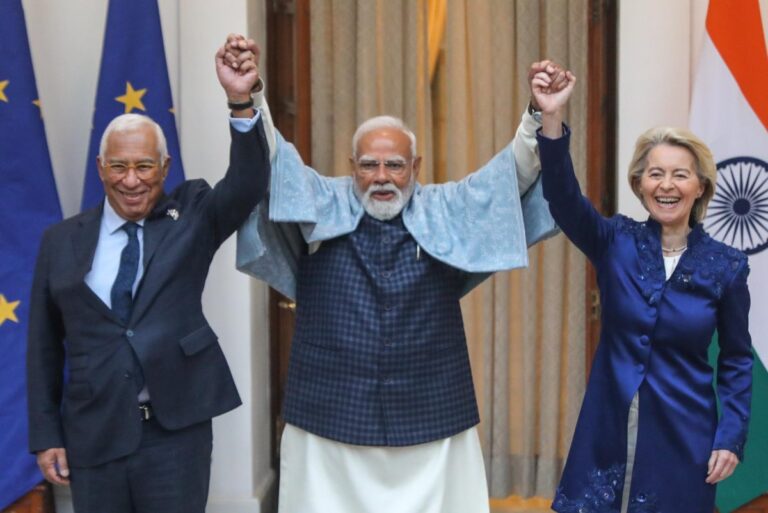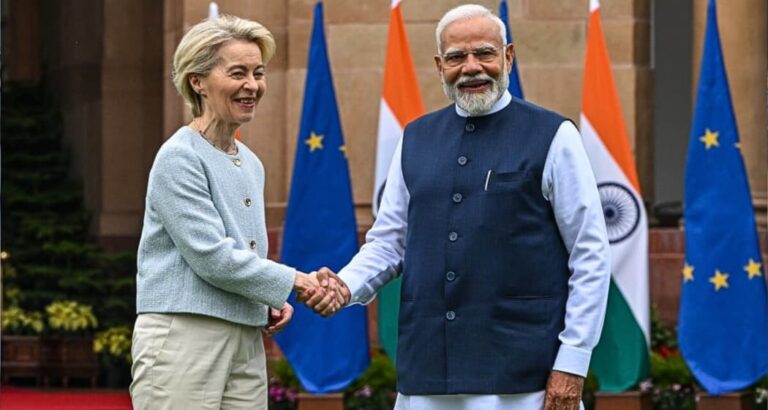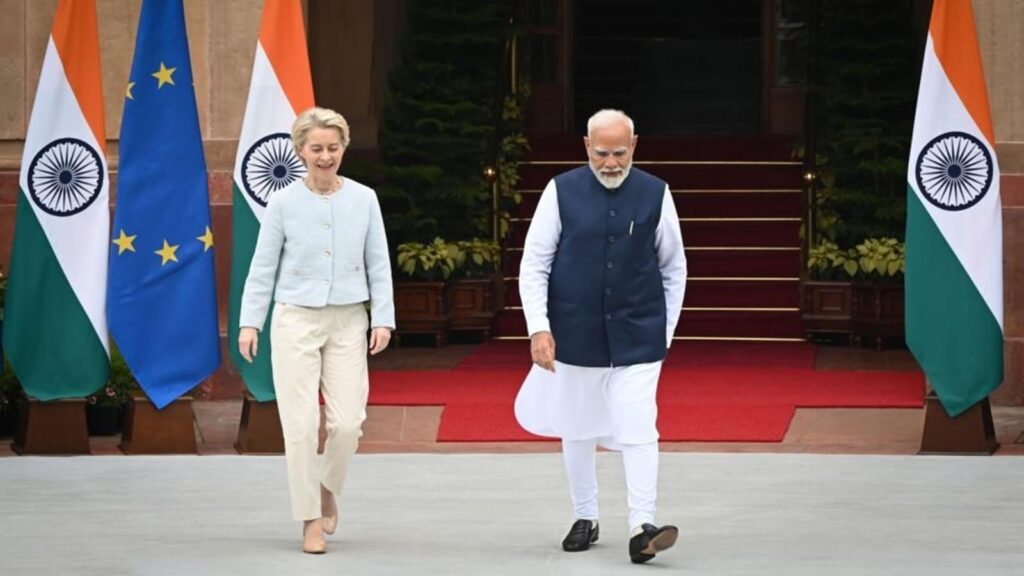
Joint communication on a new EU strategic program in India signed on September 17, 2025 marks an inflection point for relations between India and the European Union (EU), exhibiting a robust and multi-pilers framework for collaboration which opens up a wealth of economy, the majority of the economy, the main foreign policy for the foreign policy for the EU: the price of the world, the major, the major, the major, Priority foreign for the EU: the price of the world is the world of the major, the major, the major, the major, the main priority foreign policy for the EU. Key democracy, and a growing world power, with convergent interests and complementary forces to those of the EU.

He marks a central moment in the relationship between the EU and India; It is a clear and ambitious roadmap to deepen, expand and raise a more critical partnership than ever. In a world struggling with geopolitical changes, economic uncertainty and existential climatic threats, this program provides a powerful framework for two of the world’s largest democratic and economic blocks to collaborate for mutual prosperity and global stability. The opportunities it unlocks for growth, innovation and security are immense, signaling a new dawn for a ready to reach its full potential.
Communication defines five pillars – prosperity and sustainability, technology and innovation, security and defense, connectivity and global problems, and catalysts through pillars – which collectively constitute a strategic reset and an escalation of ambitions.
Trade and investment are at the heart of the new roadmap. The current global climate requires this goal. The EU remains the largest trading partner in India and the proposed free trade agreement (ALE), with a targeted conclusion by the end of 2025, could become the largest agreement of this type in the world, unlocking unprecedented flows of goods, services and investment. The EU aims to increase investments in India via its Global Gateway initiative, deactivating private sector engagement and renewable energy support projects, urban transport, digital infrastructure, etc. Regulatory convergence, transparency and market access will directly increase jobs, in particular for women – and will integrate supply chains, the creation of blue valleys to facilitate industry engagement.
The second major area is technology and innovation. Both parties will create a deeper partnership in critical emerging technologies, digital transformation and research. The agenda supports the links between European and Indian SMEs, incubators and startups – including an EU -India Startup partnership project – and invites India to cooperation of the Horizon Europe research program on artificial intelligence, advanced semiconductors, secure digital public infrastructure technology, calculating India at high level.
The agenda also offers an EU-Indian security and defense partnership, progressing collaboration in maritime security, cyber defense, crisis management, counter-terrorism and the development of the defense industry. Negotiations for an information security agreement should begin, allowing the exchange of classified documents and to open ways for India’s participation in future EU missions or initiatives). Joint action against hybrid threats, crisis management and critical infrastructure protection – in particular in the maritime field – are priority, reflecting shared commitments to a free and open Indo -Pacific in international law in international law
The EU supports the regional ambitions of India’s connectivity, arguing in evidence of the Eastern Indian Economic corridor (IMEC) and trilateral cooperation through the EU global gateway. The mobility of the workforce will be improved via a European legal gateway office and a wider framework covering the study, work and research opportunities. The agenda highlights cooperation in global governance, climate action, food security and sustainability as joint responsibilities, positioning India and the EU as champions of multilateralism and order based on rules.
The EU and India will also invest in skilled mobility, connections from people to people, commercial commitment and reinforced institutional architecture. This includes mutual recognition of qualifications, exchanges in the academic world and closer integration of commercial communities to ensure pragmatic and involved results
Prime Minister Modi Welcomed the Roadmap, Noting The New Agenda’s Alignment With India’s Vision of Developed NATIONHOOD by 2047, and Reiteting India’s Stance On Peaceful Global Conflict Resolution the EU ASO Views India As An essential Partner in Diversify Chains and Strengthening Economic Resilience Current Geopolitical Uncetainties – Especially in the Context of Weaponized Dependencies and disrupted Global Markets
While the roadmap recognizes the differences, such as the energy links of India with Russia and the occasional divergence on the policies of the third country – it offers institutional mechanisms to resolve them, including thematic dialogues and enlarged consultations. Emphasis remains on the maximization of the vast unexploited potential in trade and investment, scientific collaboration and joint global action, rather than in the areas of disagreement.
- Trade and completion of the ALE: FTA can stimulate Indian and European companies by lowering prices, improving legal predictability and integrating supply chains. Sectors that should win include manufacturing, digital services, aviation, agritech and pharmaceutical products.
- Innovation and digital economy: the scene of dynamic startups of India and the growing technological infrastructure must benefit from research links, the mobility of talents and access to investment and EU expertise in emerging sectors such as AI, green hydrogen and advanced manufacturing.
- Security and World Order: shared efforts in maritime security, the fight against terrorism and crisis management will improve stability through Indo-Pacific and beyond. The partnership can serve as a platform to shape regional security executives and respond to new threats, including cyber and hybrid risks
- Green transition: collaboration on clean energy, sustainable agriculture, circular economy and climate financing will accelerate the decarbonization of India and strengthen its position as a technological center
- Personal people, mobility and global influence: by promoting qualified exchanges and mutual recognition of qualifications, the agenda strengthens the soft power of the two partners and establishes global standards for governance and economic commitment.
The new EU-Indian strategic program has the potential to transform the bilateral relationship of a truly strategic transactional relationship. By operating complementary forces in trade, technology, security and global governance, India and the EU can create a partnership that will not only shape their future, but also the global architecture of the 21st century. This program is not only a vision – it is a concrete roadmap for shared prosperity, security and cooperation based on rules, unique to the requirements of a multipolar world.
As the implementation takes place, political decision -makers, businesses and civil society through India and the EU must seize the opportunities it creates, fill the gaps and build bridges for a resilient, prospective and enriching partnership
This article is written by Shishir Priyadarshi, president of Chinan Research Foundation and former director of economic development of the WTO.
About The Author