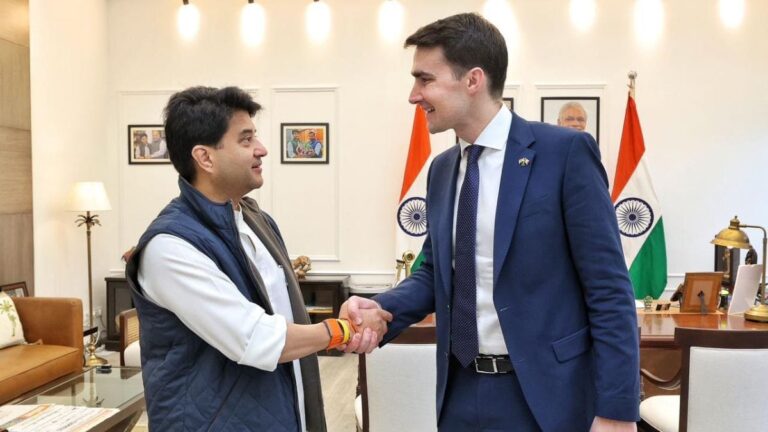
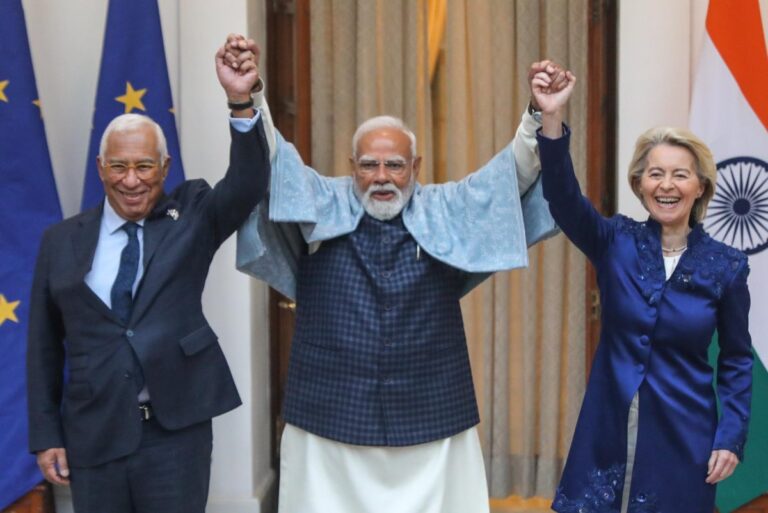
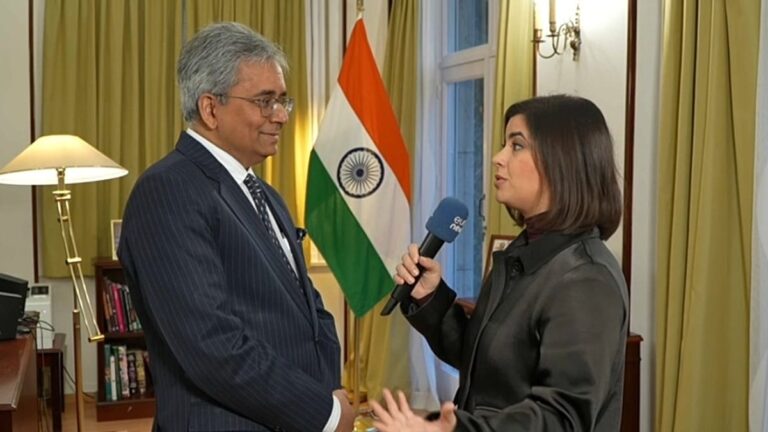
A delegation from the European Union Political and Security Committee (PSC), the Bloc’s Foreign Foreign and Security Policy organization is expected to start a historic visit to India on Wednesday, seeking to deepen defense cooperation in the middle of the Indo-Pacific Safety Dynamics.
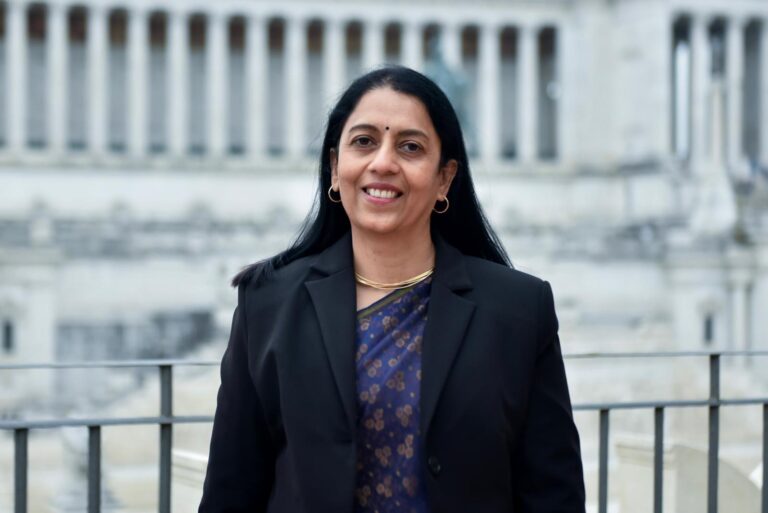
The delegation, led by the ambassador of the president of the PSC, Delphine Pronk and including the envoys of the 27 EU member states, will hold talks with senior officials from the Ministries of External Affairs and the Defense of India, will be committed with strategic tanks and will visit naval facilities in Mumbai. The visit, from September 10 to 14, is the first by the CPS to a non -European country.
The visit is based on the recent key stages, including the visit of the college of EU commissioners in India in February, the first strategic dialogue of the EU-India in June, and the next EU-India summit in early 2026. Maintain the rule of law, human rights and democratic governance.
The visit of the PSC will coincide with a commercial delegation from the separate European Commission led by Commissioner Maroš Šefčovič and the agriculture commissioner Christophe Hansen, who should arrive in Delhi on September 12, accompanied by senior EU trade officials. The overlapping calendar is designed to synchronize security and economic engagement, the sales team focusing on continuous negotiations of the EU-India free trade agreements, in particular prices, digital regulations and market access, while the PSC delegation continues discussions of maritime and defense cooperation. Indian officials said that the convergence of visits highlights the integrated EU approach to establish a complete strategic partnership with India.
Expressing enthusiasm for the next visit, Pronk said: “EU-India collaboration is essential in the key fields of mutual interest, including consciousness of the fight against terrorism, cybersecurity, hybrid cooperation, maritime information security and interference. The best political leaders. “”
The commitment is anchored in the roadmap of the EU-India 2020 strategic partnership, which identifies maritime security, the fight against terrorism and cyber-collaboration as key areas of the common interest. Officials have said that discussions will probably cover EU’s extended participation in naval exercises, awareness of the coordinated maritime field, counter-pirate cooperation and emerging defense technologies.
The EU has regularly increased its Indo-Pacific commitment since the launch of its regional strategy in 2021. France maintains a long-standing presence in the Indian Ocean, and Germany, Italy and Spain have led naval patrols in the region. The PSC’s visit marks the EU’s first attempt to present a unified defense posture in Asia.
For India, the visit ends with ambitious naval enlargement objectives. The country is continuing a plan to increase its naval force to more than 200 warships and submarines by 2035, including new aircraft carriers and diesel electric submarines, because it seeks to diversify defense partnerships beyond Russia. Analysts say that EU awareness completes India’s strategic alignment with the United States, Japan and Australia under the Quad while adding depth to its Indo-Pacific posture.
The visit is in the middle of the naval climb of China. Western Defense Assessments claims that Beijing now operates more than 350 surface ships and submarines, making it the largest navy in the world in number of shells, and adds advanced carriers, destroyers and nuclear propulsion attack submarines at an unequaled global rate. Its growing imprint in the Indian Ocean, through port projects in Gwadar, Pakistan and Hambantota, Sri Lanka, has fed the Indian concerns concerning a “pearl chain” surrounding its coast. At the same time, China has deepened military and naval cooperation with Pakistan, providing frigates, submarines and modern missiles and making joint patrols in the Oman Sea. Indian officials see this axis as creating a two front maritime challenge, forcing New Delhi to accelerate the expansion of the fleet and to seek wider partnerships. European diplomats argue that these trends highlight the need for EU-Indian security cooperation to help keep the sea channels open and maintain regional stability.
The PSC should visit the Western command of the Indian Navy in Mumbai during its trip, offering a briefing platform on sea challenges in the Oman Sea and the Indian Ocean. Discussions should pave the way for an annual institutionalized security dialogue between the EU and India, with a wider strategy to be presented at the next EU -India summit – probably at the beginning of 2026.
Quotes: EAS (EU official website), The Economic Times, The Hindu, The Hindustan Times, Theprint, The Tribune
About The Author