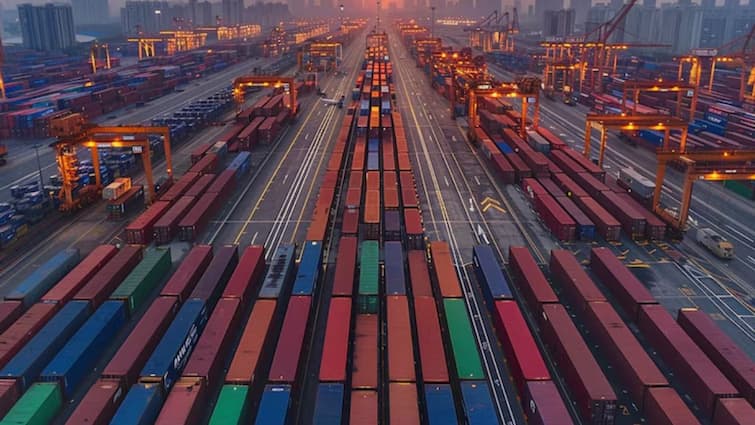
India’s free trade agreement (ALF) with the European Union could unlock access to a market of $ 875 billion and provide pricing parity with the Anase peers while the country sails in a critical stage in the changing world trade landscape, said Boston Consulting Group (BCG), India-Head Jain.
Last month, India and the United Kingdom signed a historic ALE that will reduce prices on British whiskey, cars and a range of items, in addition to increasing bilateral trade by around $ 34 billion per year. The FTA should benefit from Indian exports of 99% of prices.
“The global trade environment undergoes a structural transformation where geopolitics and economic nationalism become as important as profitability and comparative advantage. Trade is increasingly influenced by preferential access for partner nations, prices and punitive sanctions for adversaries and incentives that have rearrald the supply chains to stimulate national production in the strategic sectors” PTI.
The traditional model of the “just in time” supply chain gives way to a “just in case” approach, motivated by exposed vulnerabilities during pandemic and current geopolitical tensions.
India is only placed to benefit from this realignment, taking advantage of its strategic location, its large domestic consumption base, its favorable demographic data and its workforce and the push of policies towards manufacturing and growth-oriented growth, he said, adding, this advantage becomes even more important with the recent announcement of the United States to take prices of 50% on most Indian exports.
Preferential access to the United Kingdom and potentially the EU could provide new growth markets, in particular for sectors with high intensity of workforce, offering a precious stamp against the increase in American protectionism, he said.
“The growing adoption of Chinese strategy + 1 gives India a privileged opportunity to effectively compete with China and the Association of Nations of Southeast Asia (ASEAN) in emerging sectors such as semiconductors, electronics and rare earth minerals,” he said.
To seize this opportunity, India must obtain access to critical raw materials, strengthen interior capacities through global partnerships and localized R&D, accelerate FTA with key markets and strengthen the preparation of infrastructure at the state level to attract foreign investments.
He stressed that the recent Ale of India with the United Kingdom provides franchise access to 99% of pricing lines and opens a combined market which currently imports nearly $ 98 billion in China and 33 USD of invoicing of the ANASE, while an agreement under negotiation with the EU could open a combined market which currently imports nearly 570 billion USD and 175 USD billions of Asean.
“This creates a rare window for India to compete on pricing parity with the Anase peers and wins an advantage over China,” he said.
While the Anase countries have made faster gains to attract China + 1 investments due to the drop in labor costs, simpler regulations and wider ALE coverage, he said, adding that the improvement in India infrastructure, political reforms and the vast internal market offer a single-term growth.
However, success will force Indian exporters to invest in improving the quality of products and to meet stricter environmental standards, in particular in mechanisms such as the EU carbon border adjustment mechanism (CBAM).
Jain stressed that CBAM would make exports with high carbon intensity, in particular steel and aluminum, more expensive unless rapid decarbonization occurs, requiring intense investments in cleaner technology and renewable energies.
Observing that the incitement schemes linked to the production of India (PLI) have played a key role in the attraction of more than $ 20.3 billion in investments since 2020, he said, this has resulted in USD 191 billion in domestic production and nearly a million jobs.
Read also: The break in the RBI rate in August considered a tactical movement in the midst of strong growth prospects: SBI
Success stories include pharmaceutical products, electronics, white products and PV solar manufacturing, India now producing around 20% of world iphones during the 2010 financial year, aimed at 32% by 2026 “27, he said.
“Global supply chains being recable and the reshaping of commercial blocks, India is at an inflection point. Strategic ALPs, strengthening national capacities targeted and rapid adaptation to sustainability standards can position India as a world’s competitive manufacturing and technological power,” he said.
(This report was published as part of the supply of union wire generated automatically. Apart from the title, no assembly was made in the copy by ABP Live.)
About The Author