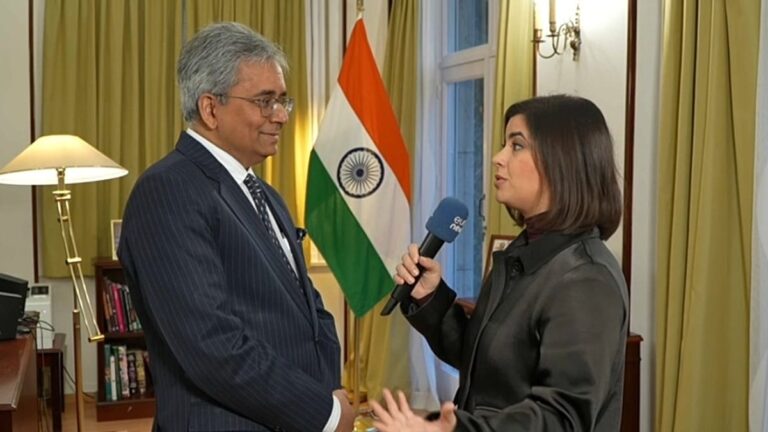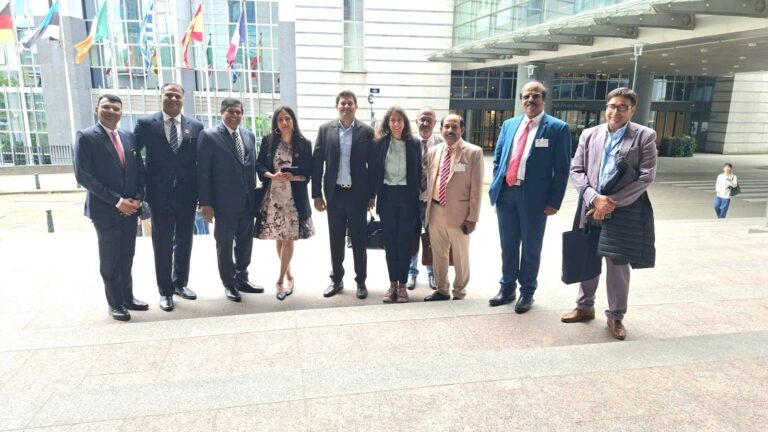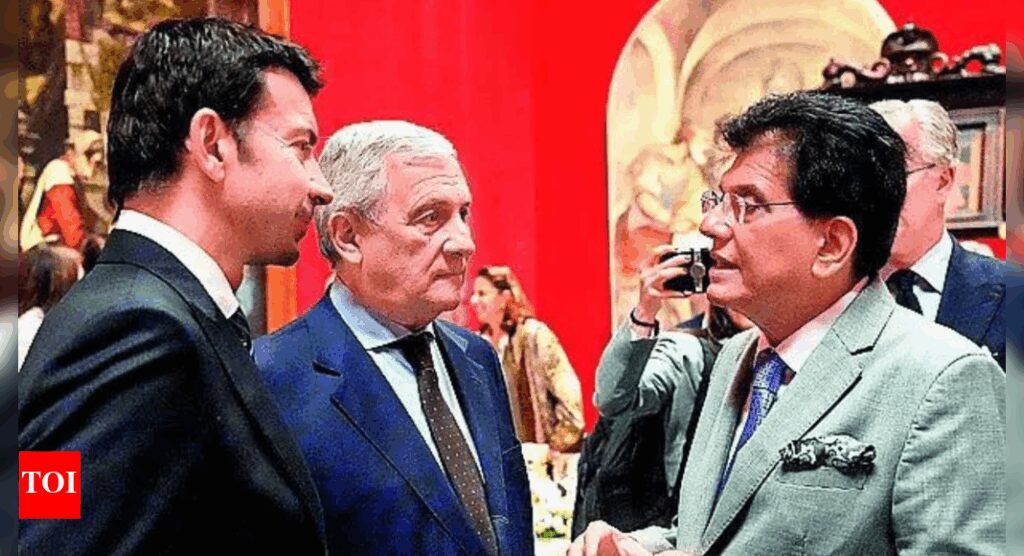
India has intensified its efforts to finalize a complete free trade agreement with the European Union, organizing three high-level meetings in just over a month to advance negotiations. The Minister of Commerce and Industry, Piyush Goyal, met the EU trade commissioner Maros Sefcovic three times in 35 days, stressing the urgency that the two parties endeavor to conclude the longtime commercial pact.According to Ani, Goyal, who is visiting two days in Italy, said that the frequency of discussions demonstrates a common commitment. “We held three meetings in 35 days. This shows our common commitment to the ALE … We are trying to do it faster,” he told journalists on Thursday.The commitments included meetings on May 1 and 23 in Brussels, followed by a third round on June 2 in Paris. India’s push comes after recently signed trade agreements with the United Kingdom and the European Free Trade Association (EFTA), which includes Iceland, Liechtenstein, Norway and Switzerland.India-EU trade negotiations were relaunched in June 2022 after being blocked for more than eight years. Discussions are also underway for an investment protection agreement and a geographic indication pact alongside the ALE.The political momentum culminated in February when Prime Minister Narendra Modi and the president of the European Commission Ursula von der Leyen agreed to aim for an agreement by the end of the year.“We are progressing quickly on the very dynamic Ale, which would open up opportunities for companies on both sides,” said Goyal, describing the agreement proposed as “very strong and mutually beneficial”.Despite the recent push, Goyal noted that the current bilateral trade with Italy remains “low and sub-optimal” to around $ 15 billion in goods, signaling more space for growth.The Italian Deputy Prime Minister and Minister of Foreign Affairs Antonio Tajani echoes the feeling, calling India and Italy “natural partners”. He said Italy wanted to increase exports to India and attract more Indian investment in the country.“Our goal is to reduce trade barriers,” said Tajani, in response to a question about American steel and aluminum prices. He added that “the functions are never positive” and have stressed the importance of relieving global trade restrictions.The accelerated pace of engagement in India-EU occurs at a time when the two parties seek to diversify trade links and reduce dependence on other significant savings. A successful agreement could not only reset the trade flows of India with Europe, but also serve as a model for future partnerships in the region.
About The Author