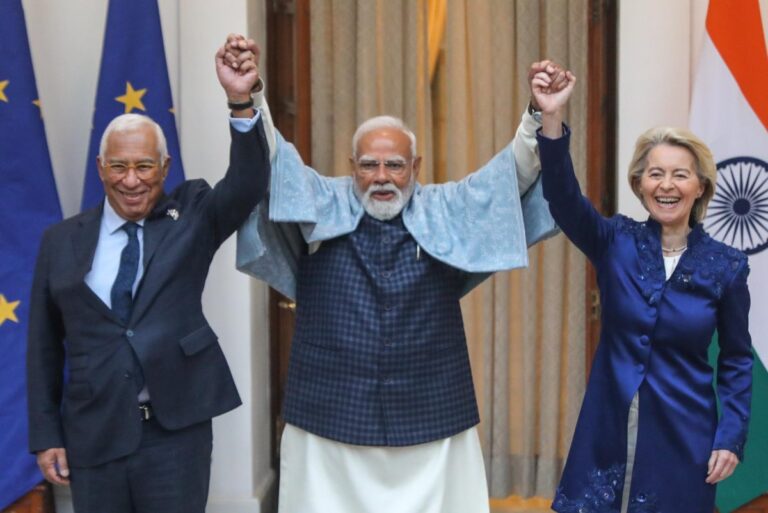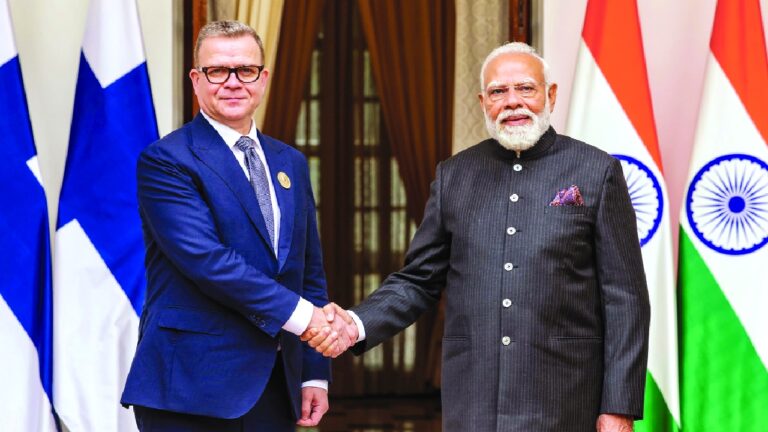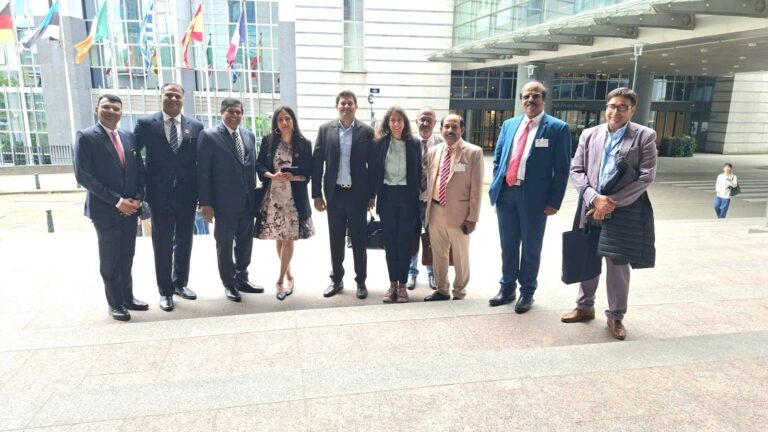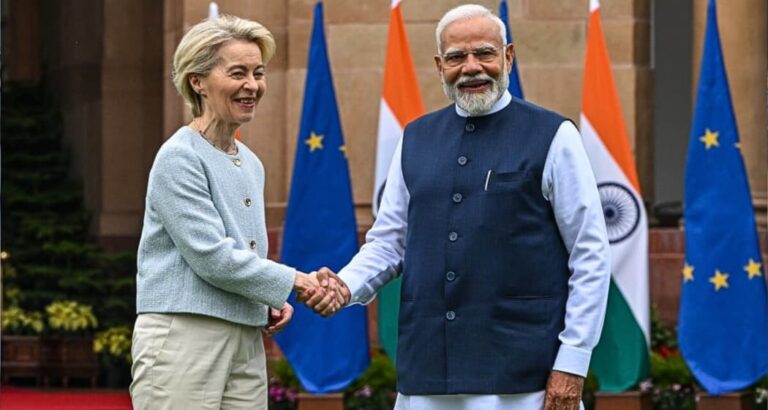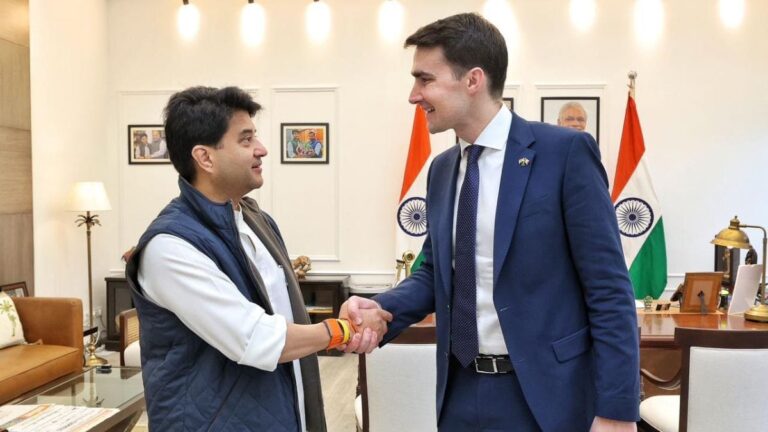
The European Commission made an official visit to India on February 27 to 28, marking a new stage in strengthening diplomatic and commercial relations between the two powers. This visit, which brought together more than twenty European commissioners, aimed to revive a “strategic partnership” between the EU and India, focusing on three key areas: trade, technology and the Ukrainian crisis.
A free trade agreement on the horizon
According to Mediapart, discussions led to a mutual commitment to “conclude a free trade agreement by the end of 2025”. This initiative aligns with the broader EU strategy to diversify its commercial partnerships while tensions persist with the United States and China. In 2024, the bilateral trade between the EU and India reached 120 billion euros, which made the largest trading partner in EU, representing more than 12% of its foreign trade, according to Brussels.
However, obstacles remain. A senior European official, quoted by Euronews, described the Indian market as “relatively closed”, in particular for the main export interests of the EU such as cars, wine and spirits. India imposes rates high on these products, posing a major challenge in negotiations.
Technology at the heart of dialogue
Beyond trade, technology is a crucial field of strategic cooperation. After taking over the talks in 2022, the EU and India created a trade and technology council in 2023. During this visit, the Council summoned for the second time to strengthen collaboration in critical sectors, including artificial intelligence (AI), quantum computer, electric vehicle batteries and the manufacture of semiconductors.
India, which should organize an AI summit in six months, could benefit from European cooperation to catch up with China, according to Anunita Chandrasekar, expert in the Center for European Reform. In addition, the current tensions between India and China – executed by the ban on India in 2020 on Tiktok – could push India to deepen its technological links with the EU.
India and the crisis of Ukraine
Ukraine was also a key subject in discussions between Indian Prime Minister Narendra Modi and the president of the European Commission Ursula von der Leyen. Brussels seeks to rally India to the cause of Ukraine, while European leaders remain excluded from American-Russian peace negotiations. However, India has maintained a neutral position, as evidenced by its abstention from a recent United Nations vote condemning the aggression of Russia.
The EU also wishes to ensure that India applies sanctions against Russia. In November 2023, Brussels sanctioned several Indian companies for having circumvented these measures, stressing the importance of this question in bilateral relations.
The India-Europe corridor: a strategic link
Another key discussion point at the EU-Indian summit was the Indian-Oriental-Europe corridor (Imeec). As confirmed by Indian Prime Minister Narendra Modi, detailed discussions took place with European leaders on this ambitious infrastructure initiative.
The corridor, already under development, aims to connect India to Europe via the Middle East (Western Asia) thanks to a combination of maritime, rail and road links. Prime Minister Modi expressed confidence that IMEEC would serve as a catalyst for world trade, sustainable growth and economic prosperity, as reported by NDTV.
This project is aligned with the EU Global Gateway Gateway Initiative, which seeks to develop secure and lasting infrastructure worldwide, positioning India as a central actor in global supply chains while providing Europe with an alternative trade route in the middle of changing geopolitical dynamics.
Global Gateway: an investment lever
EU investments in India are also part of the Global Gateway program, a European initiative aimed at developing smart, clean and secure infrastructure in the digital, energy and transport sectors. Between 2021 and 2027, Team Europe will mobilize up to 300 billion euros to finance sustainable and high quality projects while joining strict environmental and social standards.
According to Le Figaro, India often criticizes strict EU regulations, in particular in environmental matters, which caused friction, as when adopting the EU deforestation.
A long road to come for negotiations
Despite a clear desire to move forward, EU-India negotiations remain complex. As the Financial Times points out, commercial talks initially started in 2007 before being blocked for almost a decade. The main remaining obstacles include differences in the protection of intellectual property and EU environmental requirements, which India often considers excessive.
Despite these challenges, India and the EU seem determined to deepen their partnership in the midst of a changing geopolitical landscape where traditional alliances are redefined.
- The EU and India aim to finalize a free trade agreement by the end of 2025, increasing bilateral trade which has already reached 120 billion euros in 2024.
- The two parties strengthen technological cooperation, focusing on AI, quantum IT and the manufacture of semiconductors, in the midst of geopolitical tensions with China.
- While the EU seeks the support of India concerning the crisis of Ukraine and the application of sanctions against Russia, India maintains a neutral position.
About The Author