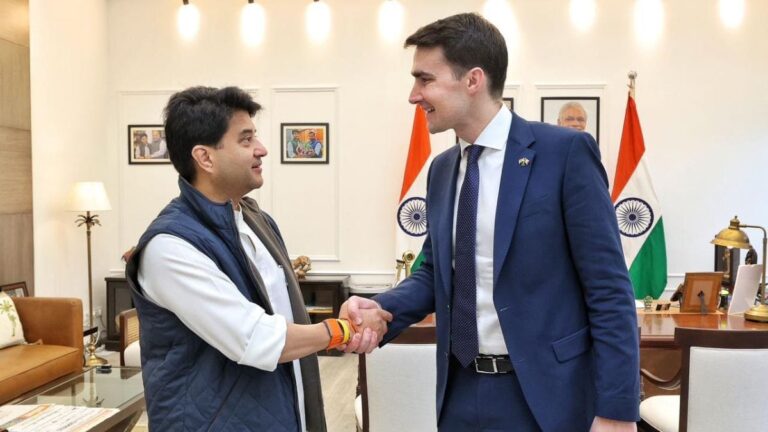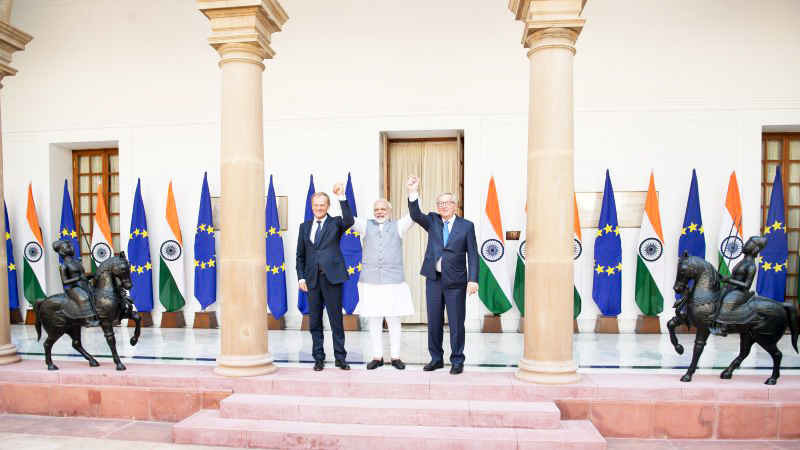
NEW DELHI: The results of the elections in the European Parliament in 2024 caused a seismic change in the political landscape of the European Union. More than four days of voting, citizens of 27 member countries elected 720 members of the European Parliament (MEPS), which led to a dramatic change to the right which transformed the dynamics of the transnational legislature directly elected to the world.
This electoral cycle, the first from Brexit, saw the far -right parties acquire important land, which questions conventional power arrangements in the crucial member states. The French national rally, led by Marine Le Pen, who received approximately 32% of the vote, brought a blow for the pro-European centrists of the French president Emmanuel Macron. This strong victory encouraged Macron to dissolve Parliament and to call for national snap elections, highlighting the volatile political situation of France. Likewise, in Germany, the social democrats of Chancellor Olaf Scholz received only 13.9% of the votes, their lowest performance after the Second World War. The extreme right alternative for Germany (AFD) took advantage of this vulnerability, bringing their share to 15.9% despite recent scandals. In Italy, the party of Prime Minister Giorgia Meloni, with its far -right history, won more than 28% of the national vote, placing itself as a central force in future EU alliances.
While the rise of the extreme right represents a radical change, political groups established such as the European People’s Party in Center-Direct (EPP) have maintained immense power. The EPP still forms the largest block in the European Parliament, with 191 seats. Despite the loss of land, the socialists and center-left democrats remained the second largest coalition, with 135 seats.
The inclination to the right of the European Parliament should have deep implications in various political fields, including economic, environmental and security policies. This also reflects an increasing predilection for protectionist measures in European voters. These policies are likely to promote national economic interests in relation to global integration. Far -right parties frequently argue for higher import checks, stricter limits on foreign investments and stages to protect the domestic sectors of international competition. These protectionist impulses could lead to higher prices, non -tariff barriers and regulatory measures, complicating trade links within the EU and with foreign partners.
The French National Rally stressed the importance of protecting French international competition industries, which could lead to measures that reduce imports while promoting local businesses. Likewise, the Germany’s alternative for Germany (AFD) and Fratelli of Italia Italian, led by Prime Minister Giorgia Meloni, supported policies that prioritize the economic interests of the house on globalization. These changes could lead to a more fragmented internal market within the EU, questioning the single market ideas that have long been the basis of European integration.
Impact on India
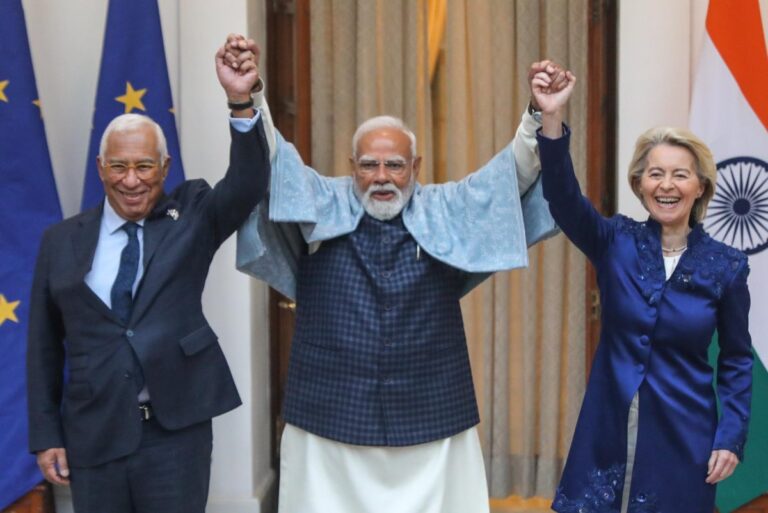
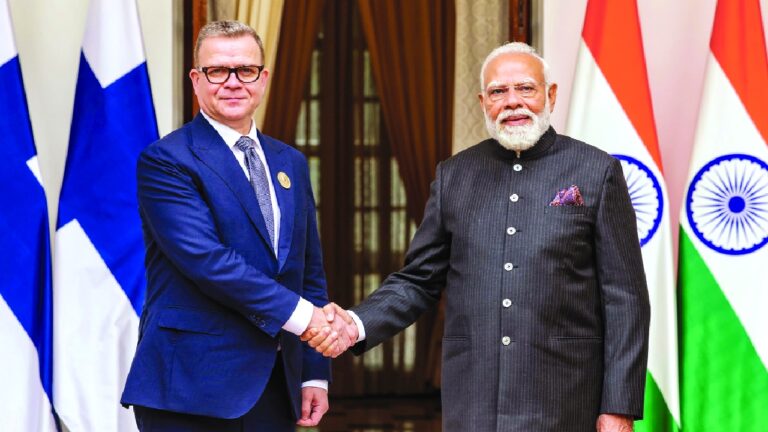
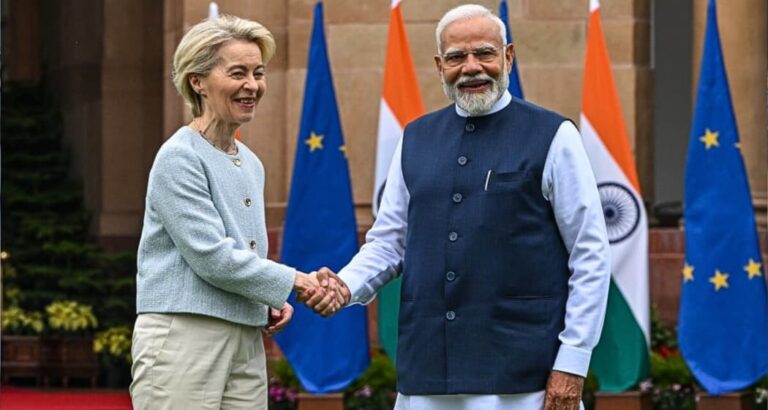
For India, these developments in the EU are important, at a time when Prime Minister Narendra Modi begins his third term. Improving EU relations was the cornerstone of Modi’s foreign policy, and election results could support or undermine this objective. The European Union is one of the most important business partners in India, bilateral trade reaching substantial volumes each year, the two having an exchange of 88 billion euros or 10.8% of total Indian trade in 2021. Impact on India-EU trade relations.
On the one hand, the protectionist position of the new European Parliament could complicate commercial negotiations by increasing the rates and obstacles not technology. On the other hand, the alignment of right -wing economic policies in the two regions could open new paths for partnership. The emphasis put by Prime Minister Narendra Modi on deregulation, the ease of doing business and market access can resonate with the new EU parliament, perhaps relaunch long-term discussions for an agreement of Indian-EU free trade. Longtime negotiations for an Indian-EU (ALE) free trade agreement can acquire new vigor. A more protectionist EU, focused on deregulation and market access, could supplement India’s economic strategy, in the process of paved the door for the increase in trade and investments. This potential alignment could be essential to strengthen economic ties and promote mutual progress.
Geopolitically, the evolution of the posture of the EU towards China is very important for India. Public opinion in Europe has become more and more skeptical of the global position of China, and this skepticism is likely to influence EU policy. This trend is in accordance with India’s strategic concerns about China, creating an opportunity for a deeper commitment between India and the EU. While the two areas navigate with delicate geopolitical waters, a united approach on questions concerning China can strengthen their bilateral relations.
The fight against terrorism, cybersecurity and maritime security are all areas where collaboration initiatives and intelligence sharing agreements can be trained to strengthen the security regimes of the two countries. However, security remains a critical point of divergence to a good extent. The new European parliament on the right should prioritize robust security measures and a stronger defense posture, in particular in the light of perceived Russian threats and regional instability. The long -standing links of India with Russia, as well as the more severe predicted position of the EU on Russia after the elections, could lead to the creation of a complex geopolitical dynamic. India can undergo increasing pressure to find a balance between its long -standing ties with Russia and the EU development foreign policy, which may influence India diplomatic initiatives and economic commitments on the world scene . This environment can force India to carefully negotiate its foreign policy, the way it took place in the past with regard to India-USA relations in the context of the Russian-Ukraine War, to protect its strategic interests While meeting the modification of alignments and international expectations.
Another area where India and the EU can agree is on environmental policy, but with a more nuanced approach. The agreement and measures of European green such as the mechanism of adjustment of carbon borders (CBAM) are essential components of the EU climate strategy. A right parliament can aim to put a compromise between environmental objectives and economic competitiveness, reflecting India’s approach to sustainable development under Modi. Collaboration efforts in this area could lead to new solutions to climate change while encouraging economic prosperity. Political realignment in Europe requires careful navigation to ensure the preservation of shared democratic values. The two regions must remain vigilant in maintaining principles such as democracy, human rights and the rule of law. The convergence of right -wing ideologies has narrower cooperation opportunities, but it also requires a commitment to maintain these fundamental values.
In conclusion, the elections to the European Parliament of 2024 are more than a simple regional political event; They signal a broader realignment which will shape the global dynamics. Whatever happens in Europe, it has large -scale consequences around the world. For India, the results underline the need for a robust and dynamic commitment with the EU. While the two regions sail in this new political field, the potential of a stronger alliance is obvious, with mutual benefits in trade, security and geopolitical policy. The result of these elections highlights the importance of strategic partnerships to meet global challenges, highlighting the interconnected nature of the world today.
Yashawardhana, researcher at the India Foundation
About The Author