Critics warn that Europe’s plan to tackle drug shortages runs counter to the EU-India deal, which will reduce trade barriers for Indian medicines. India is one of the two countries, along with China, where Europe is experiencing a worrying situation. dependence for critical drugs and their ingredients. For many medicines, these supply chains are considered “vulnerable,” with any disruption likely to lead to shortages for patients.
The European plan to combat medicine shortages — the Critical Medicines Act — which is currently under negotiation, aims to help companies manufacture essential medicines and their ingredients in Europe, while diversifying supply chains away from markets where existing dependencies exist.
“It seems to me that the Critical Medicines Act is unlikely to succeed with this trade deal in place,” said Diederik Stadig, an economist at Dutch bank ING, adding that the two policies are moving in opposite directions.
While the CMA aims to relocate production to Europe, reduce dependence on individual countries and manufacturers and secure European supply, the free trade agreement “does the opposite,” Stadig said, making imports cheaper and increasing reliance on India for active pharmaceutical ingredients and finished generics. More than 90 percent of critical medicines in Europe are generics.
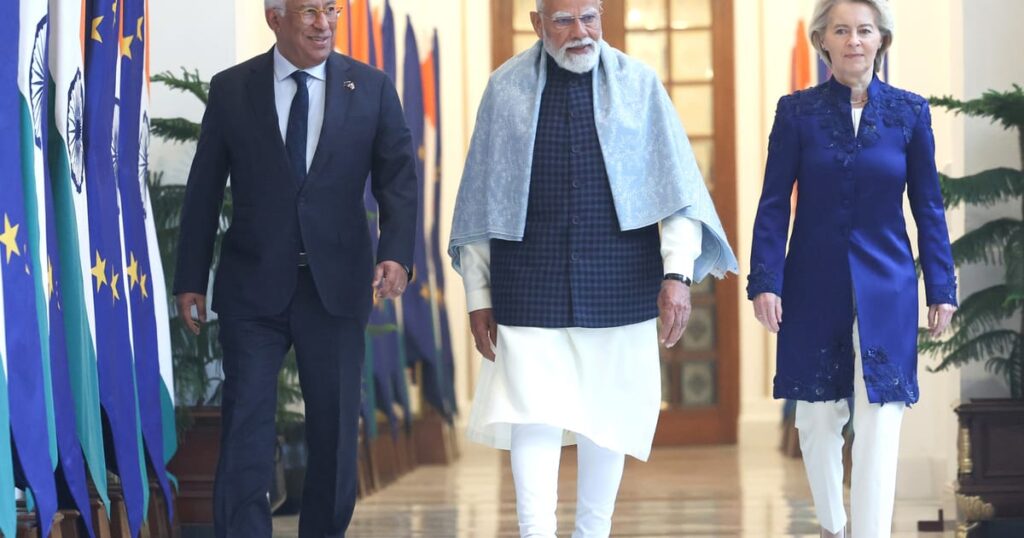
India and the EU have achieved a political breakthrough on a free trade agreement end of January, it would be remove tariffs on a wide range of EU exports – including an 11 percent tariff on pharmaceuticals. Both parties have also committed to reducing administrative formalities, which the European Commission has said should make trade faster, cheaper and easier.
Europe depends heavily on India for its medicines, especially cheaper generics. In 2025, the EU imported more than €3.35 billion worth of medicines and their ingredients from India, or more than 60,000 tonnes of medicines. At the same time, the EU exported 1.87 billion euros worth of medicines and their ingredients to India, weighing more than 16,000 tonnes, according to Eurostat data.
Agreement reduces import costs for India when purchasing from Europe pills and innovative biologics such as new weight-loss drugs known as GLP-1, while at the same time, “simplified compliance and reduced administrative costs are expected to reduce approval times for Indian exporters,” Stadig said. This means products from India – on which Europe already relies heavily for its essential medicines, with 40 percent of manufacturers of essential medical ingredients from India – could only increase.
About The Author