ANI |
Updated: February 06, 2026 11:52 STI

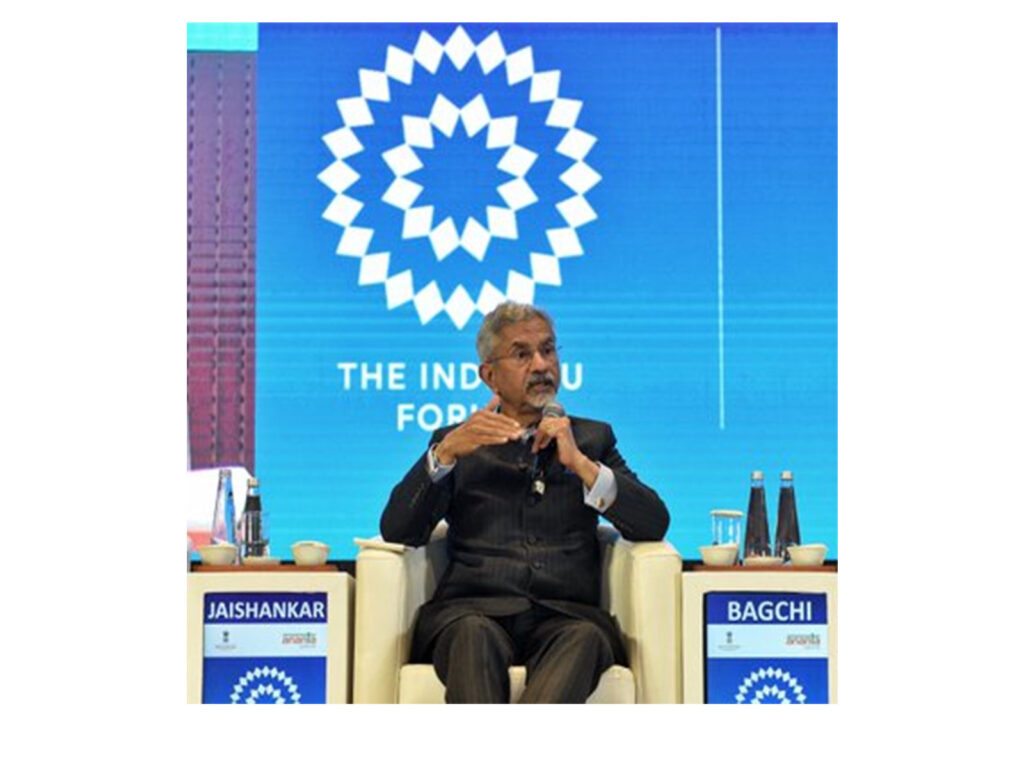
New Delhi (India), February 6 (ANI): External Affairs Minister S Jaishankar on Friday hailed the India-EU Free Trade Agreement as a “game changer” while addressing the first India-EU Forum, organized by the Ananta Center in partnership with the Ministry of External Affairs.
In an article on X, EAM Jaishankar wrote: “Speaked at the first India-EU forum this morning. He emphasized that the FTA was a game changer for our partnership. He also flagged other dimensions that hold great potential, including security, defense, climate, technology and talent flows.
Dr S Jaishankar of EAM said, “Addressed the first India-EU forum this morning. He highlighted that the FTA was a game changer for our partnership. He also flagged other dimensions that hold great potential, including security, defence, climate, technology and talent… pic.twitter.com/bqGnlqZygf
-ANI (@ANI) February 6, 2026
He expressed optimism about the role of the platform, adding, “I hope that the India-EU Forum will foster more conversations and create greater convergences between India and the EU. »
The remarks come a week after the landmark Free Trade Agreement (FTA) between India and the European Union was finalized and signed, as negotiations concluded on January 27, marking a crucial milestone in one of India’s most strategic economic partnerships.
Designed as a modern, rules-based trading partnership, the FTA responds to contemporary global challenges while enabling deeper market integration between the world’s fourth and second largest economies.
With a combined market estimated at over Rs 2,091.6 lakh crore ($24 trillion), the deal opens up unprecedented opportunities for the two billion people of India and the EU.
The FTA provides preferential market access for more than 99 percent of India’s exports by trade value, while preserving policy space for sensitive sectors and strengthening India’s development priorities.
Bilateral merchandise trade between India and the EU stood at around Rs 11.5 lakh crore ($136.54 billion) in 2024-25, with India exporting around Rs 6.4 lakh crore ($75.85 billion) to the EU. Services trade reached Rs 7.2 lakh crore (USD 83.10 billion) in 2024.
Despite robust growth, significant untapped potential remains given the size of the two markets, and the FTA provides a clear path for India and the EU to become major economic partners for each other.
The agreement transforms India-EU relations into a modern and multifaceted partnership, providing a stable and predictable environment for exporters and enabling Indian businesses, including MSMEs, to plan long-term investments and integrate into European value chains amid global uncertainties.
Building on this economic foundation, India gained preferential access to 97 percent of tariff lines, covering 99.5 percent of trade value.
Notably, 70.4 percent of tariff lines covering 90.7 percent of India’s exports will see immediate elimination of tariffs in labor-intensive sectors such as textiles, leather and footwear, tea, coffee, spices, sports goods, toys, gems and jewelry, and certain marine products.
Additionally, 20.3 percent of tariff lines will benefit from zero duty over three and five years, while 6.1 percent will benefit from tariff reductions or tariff rate quotas (TRQs) for products such as automobiles, steel and some shrimp products.
Key job-generating sectors currently facing EU tariffs of between 4 and 26 percent – together accounting for over Rs 2.87 lakh crore ($33 billion) in exports – will enter the EU market duty-free from the FTA’s effective date, significantly boosting competitiveness.
In return, India proposes the elimination or reduction of duties on 92.1 percent of its tariff lines, covering 97.5 percent of EU exports, with 49.6 percent eliminated immediately and 39.5 percent phased out over five, seven and ten years.
The FTA is expected to boost the growth of agriculture and processed foods through preferential access to tea, coffee, spices, grapes, pickles, cucumbers, dried onions, fresh fruits and vegetables, while prudently protecting sensitive sectors such as dairy, grains, poultry and soybean meal.
Product-specific rules of origin are aligned with existing supply chains, enable self-certification and include special flexibilities for MSMEs, including quotas for shrimp and downstream aluminum products.
In services, the EU has proposed broader commitments in 144 sub-sectors, including IT/ITeS, professional services, education and business services, while India has opened 102 sub-sectors covering EU priorities such as telecommunications, maritime, financial and environmental services.
The agreement establishes a robust mobility framework for Indian professionals, including intra-company transferees, contractual service providers and independent professionals across dozens of sub-sectors, as well as commitments to conclude social security agreements within five years.
Practitioners of traditional Indian medicine will benefit from greater access to provide AYUSH services in EU member states, with future opening for wellness centers and clinics.
The FTA strengthens intellectual property protections in line with the TRIPS Agreement, recognizes India’s Traditional Knowledge Digital Library (TKDL), and strengthens cooperation on sanitary and phytosanitary (SPS) measures and technical barriers to trade (TBT) through digitalization and mutual recognition.
Sectoral gains are expected in engineering goods, marine products, leather and footwear, gems and jewelry, textiles and clothing, plastics and rubber, chemicals, medical instruments and minerals, with the elimination of tariffs or deep reductions opening access to massive EU import markets and generating significant employment opportunities across India.
The India-EU FTA positions both sides as preferred economic partners, fosters innovation, protects livelihoods and builds a resilient, future-ready partnership – a foundation that Jaishankar’s speech at the forum seeks to further strengthen through broader convergences on security, defence, climate, technology and talent flows. (ANI)
About The Author