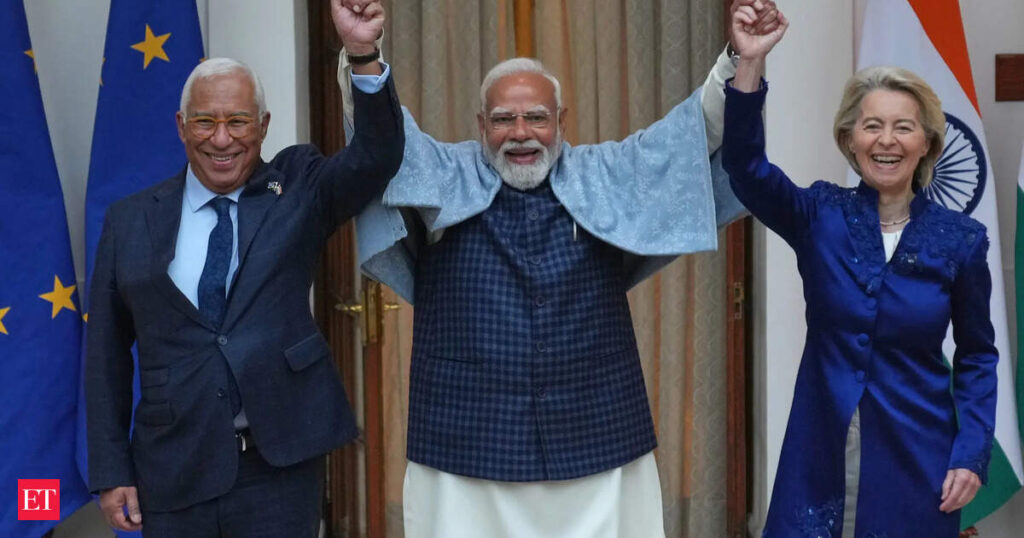
Ratification appears likely, given both sides’ strategic incentives to diversify economic and geopolitical partnerships. But the process could be lengthy and politically contested, said GeoQuant, a unit of Fitch Solutions.
Some EU members may express concerns over sensitive sectors and regulatory standards – including the Carbon Border Adjustment Mechanism – which could lead to delays or conditional approval. Domestic political pressures may also play a role in the ratification of the FTA, as in the case of previous EU trade agreements.
The Fitch unit said parliamentary oversight could also slow progress on ratification in India, particularly as stakeholders question the enforceability of FDI provisions or seek further review of carbon-related measures and agricultural market access.
The formal signing of the India-EU Free Trade Agreement will take place after a legal clean-up, Commerce Secretary Rajesh Agrawal had said earlier, after which the agreement will move towards ratification by both sides.

 AND online
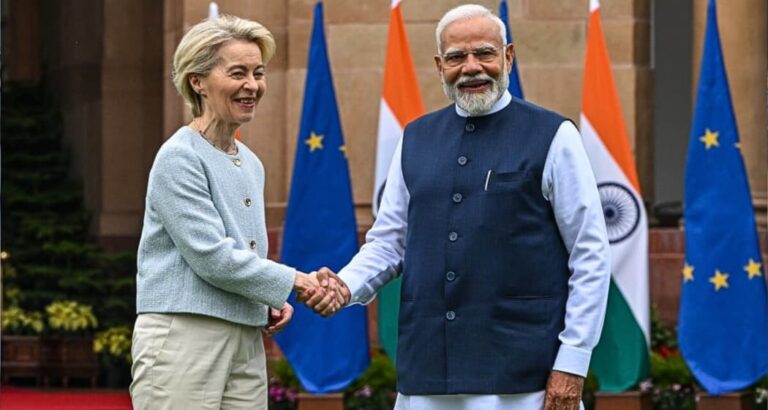
GeoQuant’s risk picture for India’s investment and trade policy continues to decline, supported by the conclusion of a historic free trade agreement with the EU on January 27. “The agreement is of major geoeconomic importance as it would cover a third of global trade and around a quarter of global GDP if fully implemented,” the technology company said.
India-EU trade agreement
The trade deal will cover almost 99% of Indian exports to the EU and around 97% of EU exports to India, making it one of the most comprehensive trade deals ever signed by the two sides. This ends nearly two decades of on-and-off negotiations between the two economies.
The India-EU trade deal is expected to benefit sectors such as machinery, automobiles, pharmaceuticals and financial services, while granting Indian exports, including textiles, engineering products and spices, better access to the EU market. It would also promote deeper integration in services, investment flows and labor mobility.
Commerce Minister Piyush Goyal said both sides had chosen to postpone or compartmentalize politically and economically sensitive issues to achieve what he described as a balanced outcome.
“Leave sensitive issues aside and achieve a balanced and fair FTA that is win-win for all sections of the industry, on both sides,” he said.
About The Author