India has rich trade relations with Europe dating back to 250 BC, even before the Silk Road. For most of the 2,000 years since, muslins, cotton, Indian crafts, spices, emeralds and precious stones have been the most coveted goods in international trade, much of which was shipped to Europe. In exchange, gold and silver flowed into India to pay for them. Indo-European trade reached great scale and considerable proportions in its halcyon days.

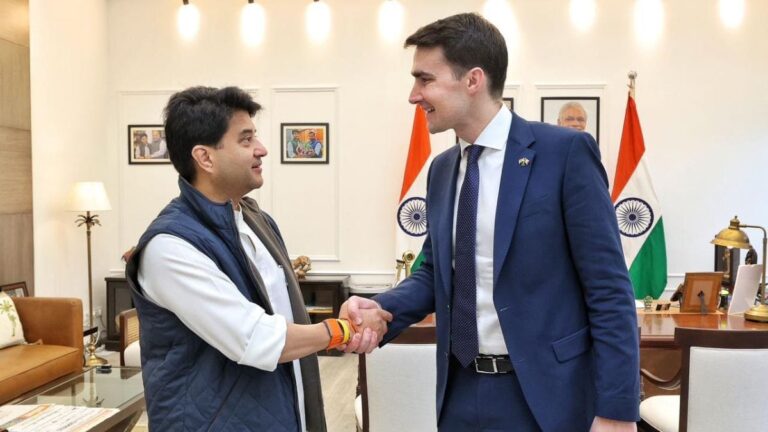
Efforts to consolidate this relationship through a comprehensive free trade agreement (FTA) with the European Union began in 2007. Negotiations had to be abandoned in 2013 due to serious differences in positions on multiple issues. Negotiations resumed in 2022 and, despite the enormity and complexity of the challenges, were only possible thanks to the strong commitment and visionary leadership of both parties. Importantly, the FTA negotiated by both sides is a reaffirmation of rules-based trade relations in an increasingly fragile global economic order. This agreement is historic, not only because of the breadth and depth of the topics and disciplines covered, but also because the two sides reached common ground on many difficult issues.
The India-EU FTA is perhaps the most important trade deal concluded in recent times. This could create one of the world’s largest free trade zones, bringing together nearly 2 billion people and 28 countries representing 25% of global GDP. Additionally, the agreement is modern and innovative in the way it addresses issues and concerns. The agreement includes up-to-date and substantive disciplines as well as procedural provisions aimed at deepening trade relations. The agreement establishes a new model for addressing market access and regulatory barriers on both goods and services, which reinforces traditional disciplines with innovative elements. For example, the chapter on rules of origin ensures that only products that have undergone substantial processing or production in partner countries are granted country of origin status; This is achieved through detailed and complex product-specific rules that seek to align with existing and newer supply chains. Additionally, the agreement replicates intellectual property protections with a greater emphasis on promoting technology transfer and information flows.
The essential objective of the agreement is for the two sides to open up their large and vast markets to each other. The agreement provides market access for over 99% of India’s exports by value, of which at least 90% will benefit from immediate elimination of customs duties once the agreement enters into force. In particular, labor-intensive products, such as textiles and clothing, leather, gems and jewelry, wood and wooden crafts, as well as marine products, will see rapid gains. It will also allow industries such as chemicals, electronics, food and minerals to diversify their exports into the dynamic EU common market. Although India has allowed access to the EU automobile market, this has been done in a gradual and calibrated manner, through tariff quotas. Similarly, India’s concessions on EU wine aim to protect the interests of the domestic industry, while encouraging competition in higher price segments.
Trade in services offers significant potential in India-EU trade relations. India received commitments from the EU for 144 services sectors under this agreement, which is unprecedented. Furthermore, the Mobility Chapter ensures that the temporary entry and stay of professionals and contractual service providers will be smoother and more assured, implying that talented service professionals from India can establish their presence in the EU market. The Financial Services Annex provides for increased engagement between India and the EU on electronic payment systems, including leveraging India’s technological expertise in digital payment systems such as UPI. The agreement also provides an opportunity for AYUSH and traditional medicine practitioners to provide their services in the EU with greater certainty.
The FTA seeks to foster a freer, fairer and mutually beneficial relationship between the two major markets. The chapter on trade and sustainable development defines a new model of cooperation in relation to sustainability concerns. The chapter globally integrates the objective of sustainable development into the commercial relationship, without seeking to harmonize the labor or environmental standards of the parties. The main objective of this engagement focuses on political dialogue, technical assistance and the mobilization of tools and financial resources. The two sides also negotiated mechanisms such as the Rapid Response Mechanism, non-violation complaints and stand-alone annexes that could address specific concerns regarding certain policy measures or product-specific measures.
The main challenge in negotiating the FTA was to achieve increased ambitions for market opening without compromising the concerns and sensitivities of key stakeholders, for example the dairy and agricultural sectors. Negotiators’ concerns over the income and livelihoods of small and marginal farmers and certain segments of the industry were at the forefront. To be fair, the EU has also shown much-needed flexibility in this regard.
At a time of supply chain disruption, the India-EU Free Trade Agreement will complement gains from the India-UK FTA, EFTA and other comprehensive trade agreements. As of 2021, India has concluded nine comprehensive trade agreements and is currently in negotiations for several more. The conclusion of the India-EU trade deal will serve as a catalyst to accelerate further economic and trade engagements.
The India-EU FTA represents a major step towards broader market access, closer economic integration and enhanced strategic autonomy and resilience, particularly in an uncertain and volatile global economy. As economic historians note, economic prosperity can be best achieved when nations trade with each other based on fair, rules-based, and predictable legal frameworks and institutions. The India-EU FTA seeks to uphold this proven principle.
Rajesh Agrawal is Commerce Secretary, Government of India. The opinions expressed are personal
About The Author