By Peggy Corlin and Maria Tadeo
Published on •Updated
European Union trade chief Maroš Šefčovič said a trade deal with India was “very close” as the bloc aims to reduce high tariffs for European companies in one of the world’s fastest growing, but heavily protected, markets.
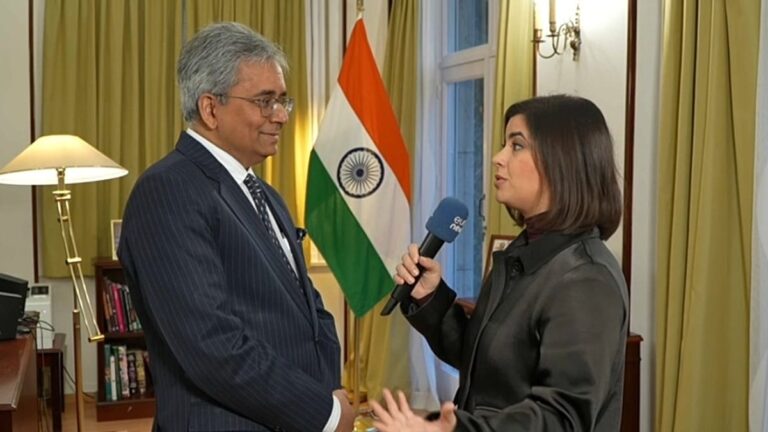
In an interview with Euronews, Šefčovič said the two sides were “verifying their final figures” and called the deal the “mother of all deals” as it aims to open a market of 1.4 billion people to European exports and services.
India maintains tariffs of up to 150% in some sectors, excluding European exporters from a large part of the economy.
“In some sectors, India imposes customs duties of up to 150%. Therefore, large parts of the economy have been completely closed to European exporters,” Šefčovič told Euronews in New Delhi ahead of the EU-India summit, adding: “Now the big advantage will be the opening of the economy.”
If completed, the deal would create a free trade zone covering 2 billion people and remove Indian tariffs on imports from Europe. Not all sectors will be included, said Šefčovič.
“We decided to keep the most sensitive areas for both of us out of this deal so we can really focus on the positive outcome.”
Around 6,000 European companies currently operate in India. Trade in goods between the EU and India has increased by almost 90% over the past decade, according to Commission figures, with €48.8 billion worth of goods exported in 2024.
“This is the biggest trade deal ever,” Šefčovič said.
The deal would support the EU’s broader strategy to diversify its trade relations and reduce its dependence on the United States and China.
He added that the deal would “help us (the EU) have insurance against the global trade crisis”.
India is currently subject to prohibitive 50% tariffs under the Trump administration, which last year added an additional 25% rate as punishment for Indian purchases of Russian oil.
For Brussels, the agreement would also be a signal to other partners, while delays in the ratification of the Mercosur agreement weigh on the credibility of the EU as a trading power.
The negotiations were difficult. The Indian counterparts are “very tough negotiators,” Šefčovič said, adding: “They had high customs duties, it is a developing country and we wanted to respect their specificity and, at the same time, protect the general European interest.”
Sustainability remains a major sticking point, particularly India’s opposition to the EU’s carbon border tax.
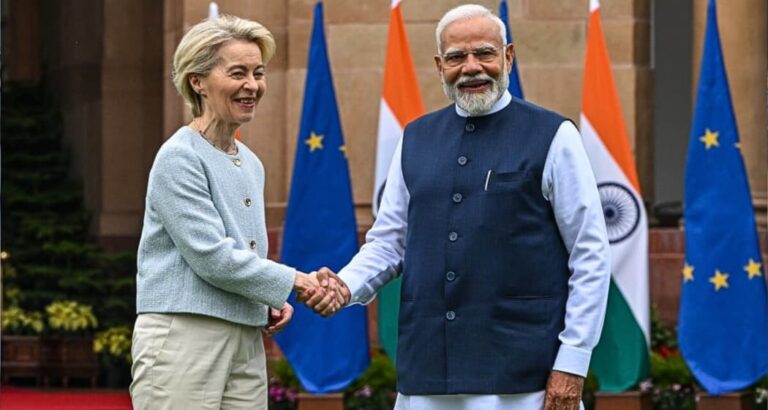
The free trade deal could be announced on Tuesday at the EU-India summit in New Delhi.
About The Author