The long-negotiated deal cuts tariffs and deepens strategic ties as both sides hedge against U.S. trade pressure.
ERBIL (Kurdistan24) — India and the European Union concluded a sweeping free trade deal on Tuesday after nearly two decades of negotiations, forging one of the world’s biggest trade deals and signaling a strategic realignment amid growing U.S. trade pressure on the two economies.
The deal, which the head of the EU’s executive branch hailed as “the mother of all deals”, will liberalize trade in almost all goods between India and the 27 EU member states, from textiles and engineering products to medicines, automobiles and wine.
Once implemented – likely after several months of legal review and ratification – it could affect nearly 2 billion people.
“This agreement will bring major opportunities to the people of India and Europe,” Indian Prime Minister Narendra Modi said in a virtual speech. “This represents 25% of global GDP and a third of global trade. »
Beyond trade, the two sides also agreed to a framework for deeper defense and security cooperation, as well as a separate pact to facilitate the mobility of skilled workers and students, underscoring a partnership that extends well beyond trade.
American pressure accelerates negotiations
Momentum for the deal grew when U.S. President Donald Trump imposed high tariffs on both India and the EU, disrupting global trade flows and prompting major economies to seek alternative partnerships.
Trump’s confrontational trade tactics, including threats against European allies and increased pressure on New Delhi, have injected urgency into long-stalled negotiations.
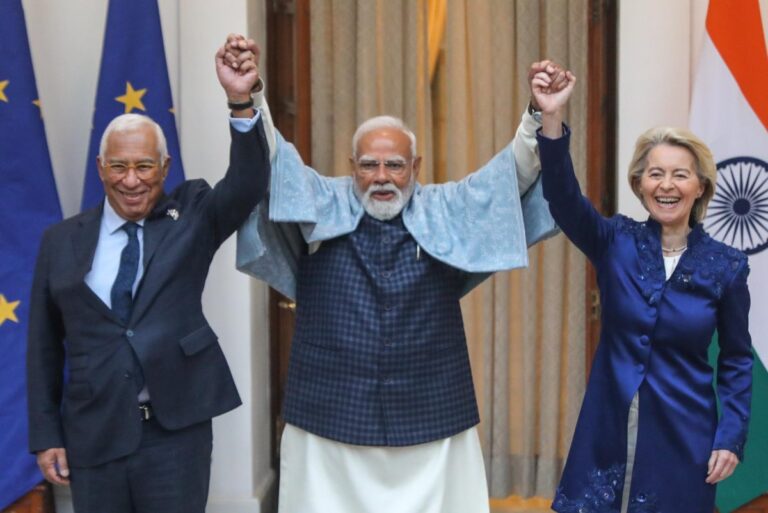
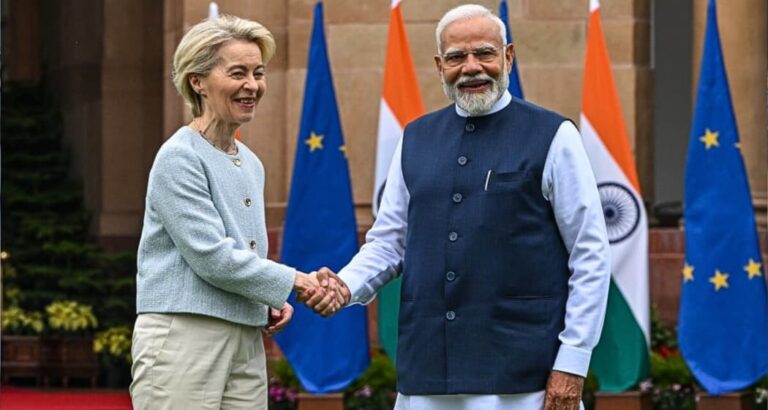
Speaking in New Delhi alongside European Commission President Ursula von der Leyen and European Council President António Costa, Modi said the partnership would “strengthen the stability of the international system” at a time of “turmoil in the global order”.
“Europe and India are making history today,” von der Leyen said, calling the deal a “true win-win” that sends “a strong message that cooperation is the best response to global challenges.”
Tariff reductions and sectoral gains
Under the deal, India will reduce or eliminate tariffs on 96.6% of EU exports, while Brussels will gradually implement reductions covering almost 99% of Indian shipments by commercial value, according to official statements. The deal is expected to cut up to 4 billion euros ($4.7 billion) in annual tariffs, further integrate supply chains and generate millions of jobs.
India’s export-oriented sectors, including textiles, apparel, engineering products, leather, handicrafts, footwear and marine products, are poised to benefit. The EU has everything to gain in the areas of wine, automobiles, chemicals and pharmaceuticals.
A quota system will gradually reduce India’s high tariffs on automobiles, wine and whiskey. Customs duties on cars made in the EU will fall from 110% to 10%, while duties on car parts will be removed within five to ten years. Indian customs duties of up to 44% on machinery, 22% on chemicals and 11% on pharmaceuticals will also be largely removed. Duties on premium European wines will fall from 150% to 20%.
Both camps have reserved sensitive areas for themselves. India excluded dairy and grains, citing domestic concerns, while the EU denied concessional access to Indian sugar, meat, poultry and beef.
Strategic coverage
India is seeking to diversify its exports to offset the impact of US tariffs, including an additional 25% levy linked to its continued purchases of discounted Russian oil, bringing total US tariffs on Indian goods to 50%. For the EU, the deal provides deeper access to one of the world’s fastest-growing major economies and reduces reliance on more volatile markets.
“This is the most comprehensive trade deal India has ever signed,” said Garima Mohan, a senior fellow at the German Marshall Fund, noting that it gives European companies a leading edge in India.
Bilateral trade stood at $136.5 billion in 2024-25, with both sides targeting a target of $200 billion by 2030.
“Ultimately, the agreement aims to create a stable trade corridor between two major markets at a time when the global trading system is fragmenting,” said Indian trade analyst Ajay Srivastava.
For Brussels, the deal also reflects a broader push for “strategic autonomy” as ties with Washington become strained. Over the past year, the EU has accelerated its contacts with partners from Japan to Indonesia, Mexico and South America, signaling a recalibration of global trade alliances in an increasingly uncertain order.
About The Author