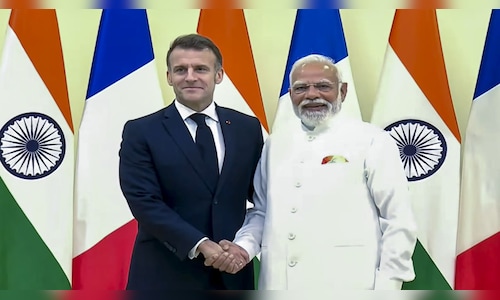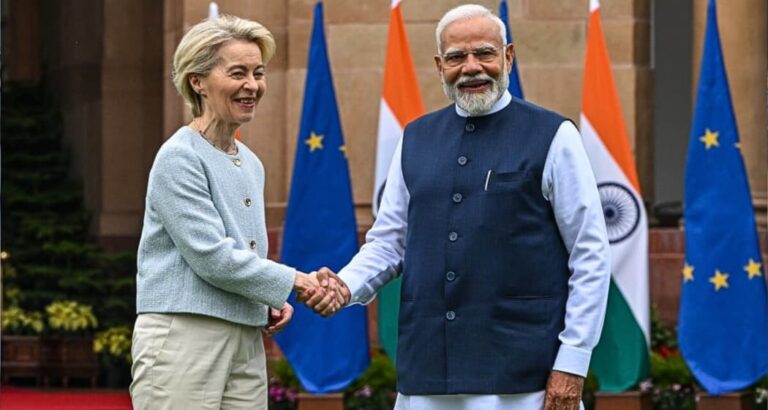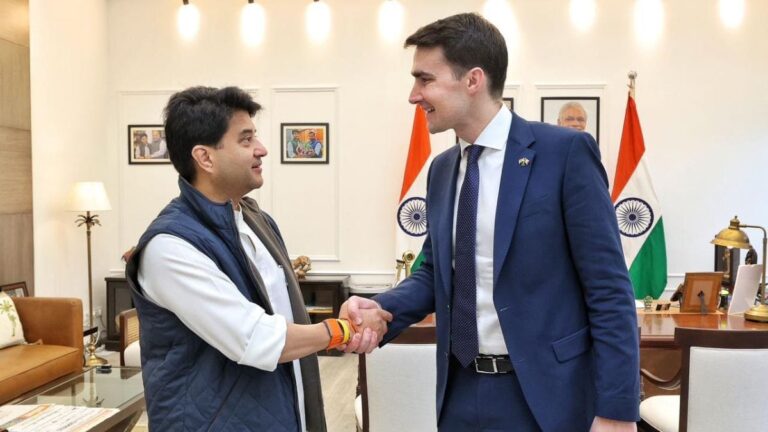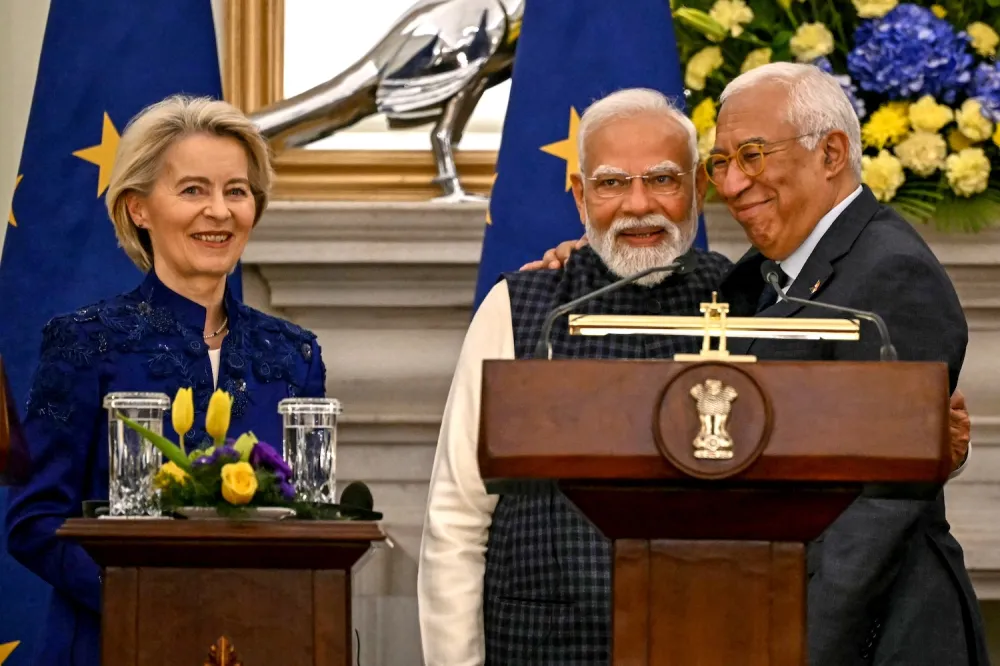
On January 27, after two decades of intense negotiations, India reached a major agreement free trade pact with the European Union which will end customs duties on almost all traded goods. Naturally, much media commentary has focused on the economic importance of this deal.
However, another agreement signed on the same day was almost completely eclipsed in the process: the Security and Defense Partnership. Under this agreement, the EU and India will strengthen their cooperation in the areas of maritime security, the fight against terrorism and cyber defence.
On January 27, after two decades of intense negotiations, India reached a major agreement free trade pact with the European Union which will end customs duties on almost all traded goods. Naturally, much media commentary has focused on the economic importance of this deal.
However, another agreement signed on the same day was almost completely eclipsed in the process: the Security and Defense Partnership. Under this agreement, the EU and India will strengthen their cooperation in the areas of maritime security, the fight against terrorism and cyber defence.
It is reasonable to argue that these two agreements would not have been concluded at this stage without the serious disruption that the Trump administration has caused in its relations with India and the EU. With a $4 trillion economy and growing defense needs, India turned to the EU and ultimately acted with alacrity on both fronts.
India’s defense needs are acuteespecially as it faces conflicting relations with Pakistan and China. Over the past five years, it has experienced militarized conflicts with both states, and relations remain strained. Despite strong, albeit highly asymmetrical, trade relations with Beijing, the two states remain locked in a close trading relationship. lasting rivalry. To confront these threats and confront a growing Sino-Pakistani conflict strategic linkIndia urgently needs to strengthen its existing military capabilities.
Yet despite decades of investment in attempting to build a viable national defense industrial base, India has unfortunately failed to address its shortcomings through its own efforts.
For decades, particularly during the Cold War, the Soviet Union provided most of India’s defense needs. Even after the dissolution of the Soviet Union, Russia remained a major arms supplier. New Delhi was until recently unable to shake off its dependence on Moscow. Even three decades after the end of the Cold War, between 60 and 70 percent part of its arsenal remained of Soviet or Russian origin.
Yet over the past decade, India has begun to diversify its sources of supply, in part because of Russia’s reluctance to supply weapons systems and spare parts at preferential rates as the Soviet Union had done. More recently, New Delhi accelerated this process, as Russia’s own defense needs in its war in Ukraine, led to its failure to honor existing defense contracts.
As a result, India has increasingly turned to the United States and various European countries, notably France, to meet its defense needs. Since 2008, India has agreed to purchase more than 20 billion dollars military equipment from the United States. It also purchased 36 French-built Dassault Rafale aircraft in 2016 and sign a $7.4 billion deal to buy 26 more. Meanwhile, in recent months, it has successfully concluded negotiations with Washington for the purchase of combat vehicles, anti-tank missiles and naval reconnaissance aircraft, although these have reportedly been canceled. put on hold amid the Trump administration’s draconian tariffs of up to 50% on some products.
Overall, over the past five years, Russian defense supplies have increased abandoned about 45 percent of India’s imports, while other suppliers, including the United States and France, account for the remaining 55 percent.
Given the unreliability of defense supplies from Russia and ongoing conflicts with the United States over trade issues, New Delhi is unlikely to turn to Washington for major arms acquisitions in the near future. And given the numerous bottlenecks within its own defense production base, it cannot afford to rely on domestic production for its security needs. Indeed, in a reckless moment, Indian Air Force Chief Amar Preet Singh declared the silent part out loud last February, when he chastised the public company Hindustan Aeronautics Ltd. for its continued failures to deliver promised fighter jets on time.
Under these circumstances, India has little choice but to turn to EU countries to meet its urgent security needs. Given that New Delhi already has effective defense relations with France, it is reasonable to assume that it will continue to develop them. India is also now close to purchase a fleet of German submarines to strengthen its naval capabilities. These are vital for its maritime security in a context of Chinese naval presence in the Indian Ocean.
Certainly, the public announcement of the defense agreement just signed with the EU focuses on defense cooperation in the face of traditional and emerging threats, from defending its territorial integrity to cyber threats. It does not include any immediate commitment to purchase military equipment. Nonetheless, it demonstrates New Delhi’s interest and willingness to partner with the bloc to ensure its national security. Despite the renewal of a 10-year defense deal with the United States late last year, India is clearly trying to diversify its security options beyond simple purchases.
This agreement is also entirely consistent with India’s preference for – and often expressed commitment to – the forge of a multipolar world. In the view of Indian foreign policy elites, such international order would give New Delhi greater room to maneuver in international politics.
Following this agreement, the key question facing Brussels and New Delhi is whether they can ensure that this is not simply a declaration of good intentions and noble aspirations. Given the many uncertainties that the Trump administration has introduced into the global order, India and the EU, working together on shared security concerns, could restore some stability – but only if they can bring this deal to fruition.
About The Author