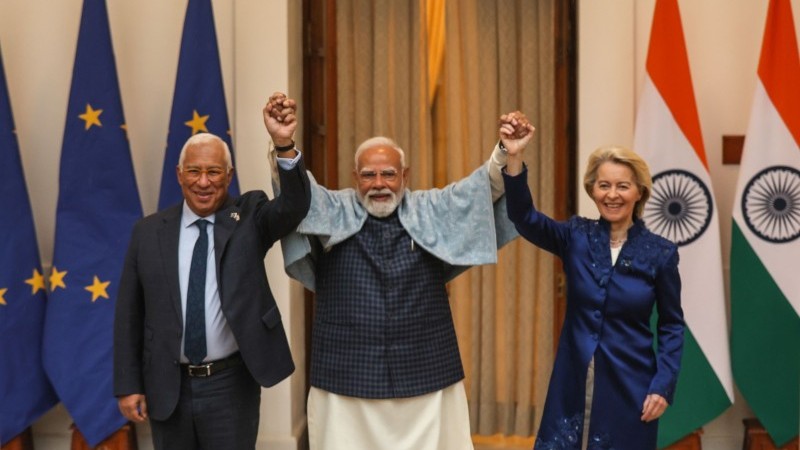
As the Mercosur agreement has shown, it is important not to be too optimistic when entering into trade agreements. Ratification and implementation can be tedious processes. The deal is expected to be officially signed after a legal review, a process that could take several months. Once the agreement is adopted by the Council, the EU and India will be able to sign it. Then, it will require the approval of the European Parliament before it can be applied. Rapid action on this side would send a strong signal to trading partners that the EU is capable of concluding and implementing a trade agreement without further problems.
If ratified, the EU-India trade agreement will constitute one of the most important economic partnerships ever concluded by the European Union. After two decades of stalled negotiations, this sudden breakthrough proves that Europe can act decisively when the pressure is really on. Combined with Mercosur, the agreement with India will provide only minor relief and economic benefits in the short term. But they open the door to future growth and show that Europe can actually act strategically. And this, despite these two trade agreements which suggest that Europe is still mainly banking on its export-driven growth model. This is a risky strategy because Chinese industrial competition is very present in the Indian market.
However, 2026 appears to be the year when Europe will have to demonstrate the degree of resilience and strategic autonomy that it wants – and can – build. In this regard, the first weeks of the new year have been promising. The ratification problems surrounding the Mercosur agreement show that some are not hearing the warning signs. However, these two trade deals should be just the start of the EU’s efforts to strengthen its autonomy and resilience.
About The Author