Formal negotiations on the long-awaited trade deal between India and the European Union, often referred to as the “mother of all deals”, have been completed and the official announcement will be made by both parties on Tuesday (January 27).
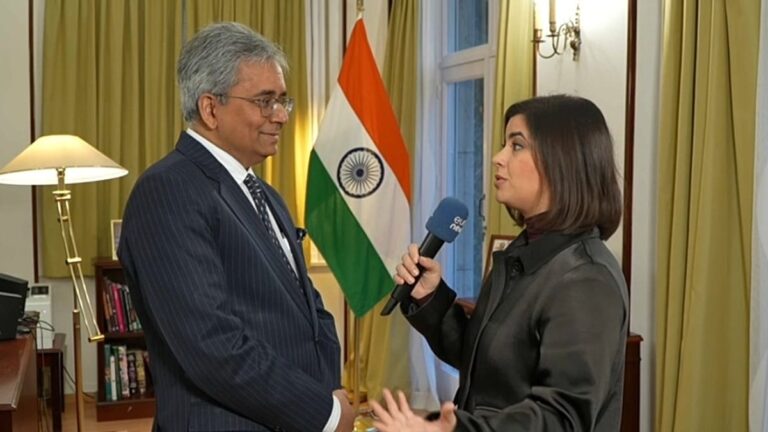
“Negotiations at the official level are being concluded, and both sides are ready to announce the conclusion of FTA negotiations on January 27, Tuesday,” Commerce Secretary Rajesh Agrawal said on Monday.
“Balanced and forward-looking”
Furthermore, he said that as far as India’s perspective is concerned, the trade agreement is balanced and forward-looking, which will contribute to India’s better economic integration with the EU, adding that it will boost trade and investment in both economies.
“The negotiations have been concluded successfully. The deal has been finalized,” Agrawal said. He further said that the legal cleansing of the FTA text was underway and the aim would be to complete the processes and sign the agreement as soon as possible.
Read also: From Viswaguru to labor supplier: hidden cost of India-EU trade negotiations
The agreement is expected to be signed this year and could come into effect early next year. Implementation of the agreement takes time, as it requires approval from the European Parliament. In India, this only requires the nod from the Union Cabinet.
The agreement is finalized after 18 years of negotiations. Negotiations began in 2007. Commerce and Industry Minister Piyush Goyal called this free trade agreement (FTA) “the mother of all agreements” that the country has signed so far.
EU leaders to hold talks with PM Modi
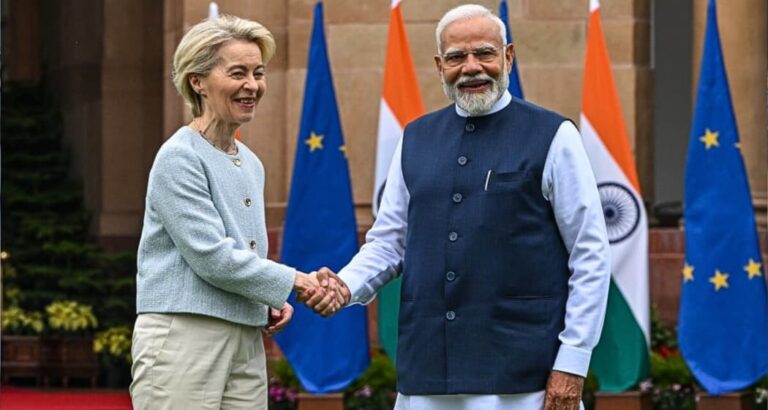
The conclusion of negotiations on the deal will be formally announced at the India-EU (European Union) summit after Prime Minister Narendra Modi held talks with European Commission President Ursula von der Leyen and European Council President Antonio Costa in New Delhi on Tuesday.
Read also: India-EU trade deal nears final stage, says EU trade chief
The deal is expected to provide duty-free access to a number of Indian products from labor-intensive sectors, such as textiles, chemicals, gems and jewelry, electrical machinery, leather and footwear.
Intended for mutual reduction of customs duties
EU tariffs on Indian goods are around 3.8 percent, but labor-intensive sectors face import duties of around 10 percent. India’s weighted average tariffs on EU products are around 9.3 percent, with particularly high duties on automobiles, parts (35.5 percent), plastics (10.4 percent), and chemicals and pharmaceuticals (9.9 percent).
Read also: India-EU trade deal: ‘India’s success makes the world stable,’ EU chief says
In an FTA, two parties reduce or eliminate import duties on more than 90 percent of goods traded between them. An FTA also liberalizes standards aimed at promoting trade in service sectors such as telecommunications, transportation, accounting and auditing. The NDA government has finalized seven trade deals since 2014: Australia, the United Kingdom, Oman, New Zealand, the United Arab Emirates, the EFTA bloc and Mauritius.
The deal is important because the imposition of high tariffs by the United States has disrupted global trade flows. India faces high tariffs of 50 percent. The FTA is expected to help Indian exporters diversify their shipments. This will also help reduce dependence on China.
The backdrop
Besides the FTA, the two countries are also negotiating a pact on investment protection and geographical indications (GI). The India-EU FTA covers 24 chapters, including trade in goods, services and investments.
Read also: As India and the EU close to a free trade agreement, here are the issues
India’s bilateral merchandise trade with the EU stood at $136.53 billion in 2024-25 ($75.85 billion in exports and $60.68 billion in imports), making the EU India’s largest merchandise trading partner. Services trade in 2024 amounted to USD 83.10 billion. India has a trade surplus of $15.17 billion in 2024-25.
The EU market accounts for about 17 percent of India’s total exports, and the bloc’s exports to India constitute 9 percent of its total overseas shipments.
(With contributions from the agency)
About The Author