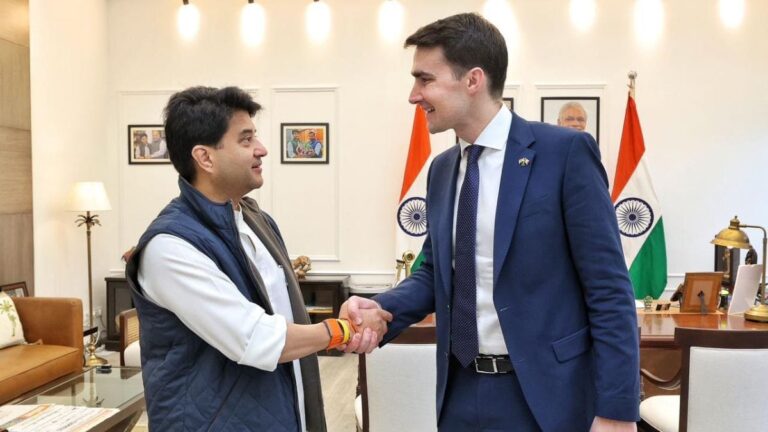
German Chancellor Friedrich Merz’s visit to India earlier this month highlighted a discreet but substantial recalibration of bilateral relations. Timed to mark 25 years of the India-Germany strategic partnership and 75 years of diplomatic relations, the two-day engagement in Ahmedabad and New Delhi went beyond symbolism.
This reflects a shared recognition that the relationship can no longer remain primarily anchored in trade and investment, but must evolve into a strategic partnership shaped by changing geopolitical realities.
The most important outcome of the visit was the joint declaration of intent on a roadmap for defense industrial cooperation. This marks a clear departure from the buyer-seller model that has long characterized India’s defense engagement with Europe.
By engaging in the co-development and co-production of military platforms, Berlin has demonstrated its willingness to relax export controls and facilitate the transfer of sensitive technologies – an issue that has historically limited defense cooperation.
Merz’s delegation, which included senior representatives of the German submarine industry, also highlighted tangible progress in India’s plan to acquire six advanced conventional submarines, a deal with both commercial and strategic implications.
Securing supply chains
Beyond defense, the visit reflects converging concerns about supply chain vulnerabilities in an era of growing protectionism and geopolitical fragmentation. The creation of a CEO Forum, designed to integrate business leaders into investment deliberations at the government level, illustrates an attempt to align state strategy with private sector capabilities.
Merz’s optimism that the India-EU free trade agreement could be concluded by early 2026 was politically significant, although past experience suggests caution about the timelines.
Agreements on semiconductors, critical minerals and telecommunications have further reinforced the common goal of “reducing the risks” associated with over-reliance on China. In this context, Merz’s optimism that the India-EU free trade agreement could be concluded by early 2026 was politically significant, even if past experience suggests caution about the deadlines.
Sustainability emerged as another pillar of the evolving partnership. Germany’s additional commitment of €1.24 billion under the Partnership for Green and Sustainable Development targets sectors critical to India’s energy transition, including green hydrogen, electric mobility and climate-resilient urban infrastructure.
The green ammonia purchase agreement between India’s AM Green and Germany’s Uniper demonstrated how climate cooperation is increasingly linked to industrial strategy and long-term energy security.
The visit also addressed softer but no less strategic dimensions. Visa-free airport transit for Indian passport holders and a new higher education roadmap – encouraging German universities to establish campuses in India and facilitating the ethical recruitment of Indian professionals – reflect Germany’s demographic and labor market imperatives, while deepening societal ties with India.
Taken together, these initiatives aligned the “Viksit Bharat” with Germany’s broader quest for strategic resilience. In an Indo-Pacific increasingly shaped by great power competition, Berlin appears to view New Delhi as a critical partner in maintaining a more balanced regional order.
The dynamics of relations between India and Europe will continue in the months to come. French President Emmanuel Macron’s visit to attend the India-AI Impact Summit highlights Europe’s growing engagement with India on emerging technologies.
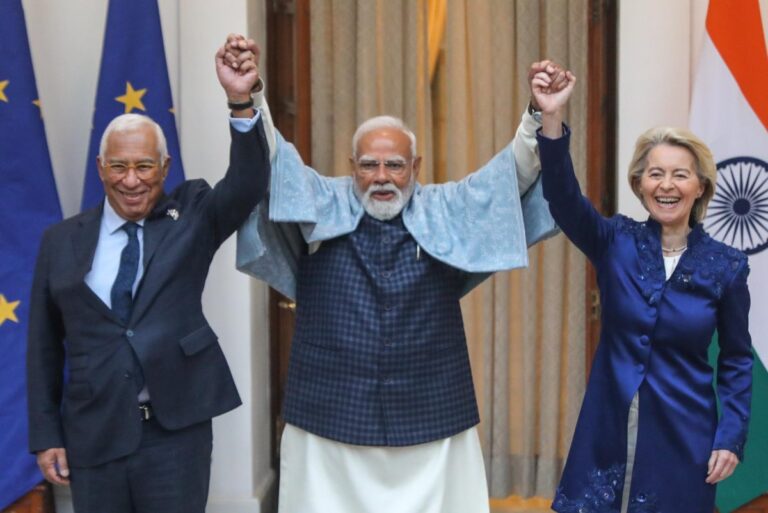
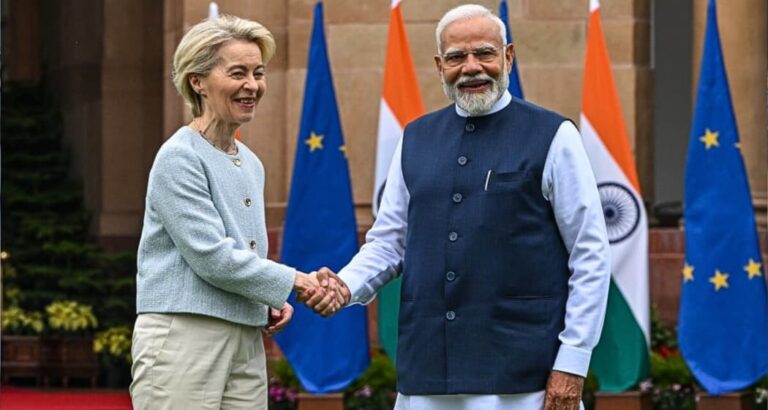
The state visit of European Council President António Costa and European Commission President Ursula von der Leyen next week will be another inflection point.
Co-chaired by the Prime Minister Narendra ModiThe summit marks a deliberate shift in the global discourse on AI – from abstract security concerns to questions of development impact – while reinforcing India’s assertion that the benefits of cutting-edge technologies must extend beyond the West.
The state visit of European Council President António Costa and European Commission President Ursula von der Leyen next week will be another inflection point. Their participation as chief guests at the Republic Day celebrations and co-chairing the 16th India-EU Summit underlines the political importance that Brussels attaches to New Delhi.
The India-EU Business Forum accompanying this event will focus on the economic underpinnings of these ties.
Global strategic convergence
India-EU relations are therefore shaped by a convergence of strategic concerns and economic opportunities. Shared concerns about an increasingly unstable world order, Chinese assertiveness, and uncertainties associated with renewed U.S. unilateralism have pushed both sides toward closer coordination, particularly in the Indo-Pacific region.
Negotiations on trade, investment protection and the resilience of supply chains reflect efforts to guard against over-reliance on a single market.
Technology and sustainability are emerging as central drivers of engagement, from digital public infrastructure and semiconductors to green hydrogen and climate finance. Yet frictions remain, mainly over regulatory instruments such as the EU’s Carbon Border Adjustment Mechanism and divergent approaches to standards and governance.
Technology and sustainability are emerging as central drivers of engagement, from digital public infrastructure and semiconductors to green hydrogen and climate finance.
Normative differences on human rights and regulatory practices also emerge periodically, although developing ties in education, mobility and research lend sustainability to the relationship.
In a period of systemic turbulence, India and the EU are seeking a multipolar order that preserves their strategic autonomy amid growing great power rivalry. It is this common momentum that has brought India and Europe closer together. Given the structural forces at play, this convergence is unlikely to be transitory and is likely to become more pronounced in the years to come.
This comment was originally published in Financial Express.
The opinions expressed above are those of the author(s). ORF research and analysis now available on Telegram! Click here to access our curated content – blogs, long forms and interviews.
About The Author