US Treasury Secretary Scott Bessent has attacked the India-EU free trade deal expected to be announced on Tuesday, accusing Europe of indirectly financing the war between Russia and Ukraine through energy trade through India. The agreement has been called the “mother of all agreements” by Indian and European leaders. President Trump’s top aide said European governments are compromising their own security by buying refined oil products from Russian crude from India, while Washington continues to impose punitive tariffs on New Delhi for the same reason.
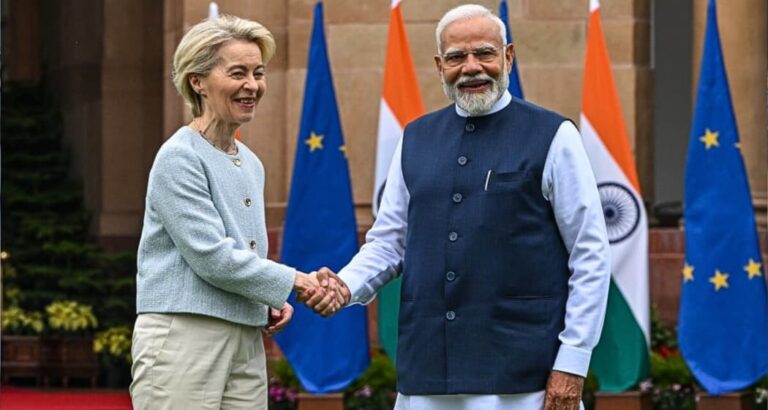
Speaking to ABC News, Bessent defended the Trump administration’s decision to impose high tariffs on Indian goods, directly linking them to India’s energy trade with Moscow.“We imposed 25 percent tariffs on India on the purchase of Russian oil. Guess what happened last week? The Europeans signed a trade deal with India,” he said.Bessent added: “And just to be clear again, Russian oil comes into India, the refined products come out and the Europeans buy the refined products. They are financing the war against themselves.”Also read: India, EU finalize FTA, deal expected to be announced today The remarks come as Indian and European leaders prepare to formally announce the conclusion of negotiations on a comprehensive free trade agreement at a high-level summit on Tuesday, marking the end of talks that lasted 18 years. The announcement comes as European Commission President Ursula von der Leyen and European Council President António Costa are on a state visit to India and were also the chief guests at the country’s 77th Republic Day celebrations.Bessent framed the problem as an imbalance in burden-sharing between the United States and its allies, arguing that even as Washington has pushed for energy decoupling from Moscow and imposed tariffs, Europe continues to benefit from what he described as loopholes in the global oil trade. He said President Trump had borne a disproportionate economic and political cost in working to negotiate a settlement to the Russian-Ukrainian conflict, adding that under Trump’s leadership, “we will eventually end the war.”Earlier in Davos, at the World Economic Forum, Bessent made a similar argument, calling Europe’s purchase of refined products from India an “act of stupidity”.
India-EU trade deal close to finishing line
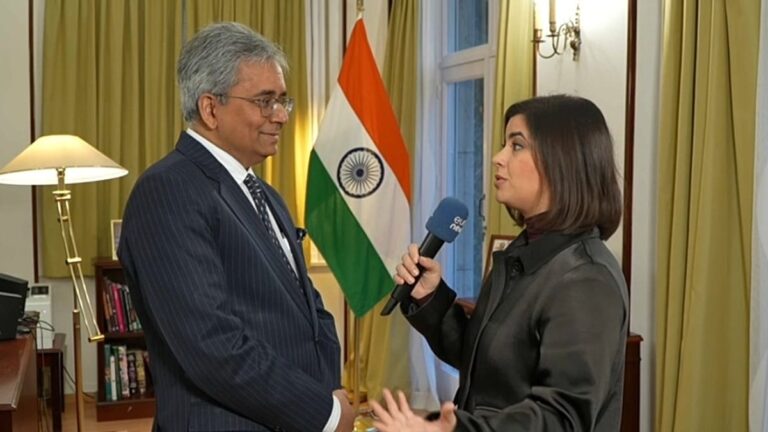
Indian Commerce Secretary Rajesh Agrawal confirmed on Monday that India and the EU have concluded negotiations on a free trade agreement covering goods, services and other areas of cooperation.“It will be a balanced and forward-looking agreement for better economic integration with the EU. It will boost trade and investment between the two sides,” Agrawal said.
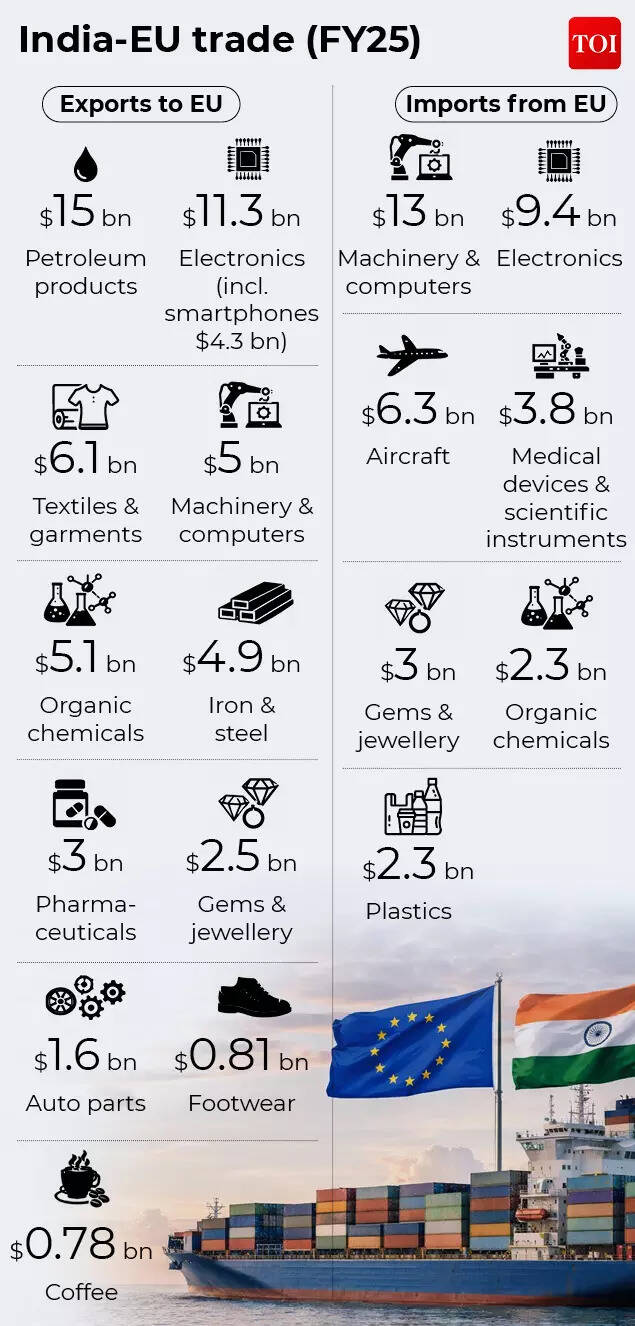
Commerce and Industry Minister Piyush Goyal had said in January that the India-EU free trade agreement, whose negotiations are in the final stages, would be “the mother of all agreements” signed by the country so far. Later, European Commission President Ursula von der Leyen, in a speech at the World Economic Forum in Davos on Tuesday, called the potential India-EU deal the “mother of all deals”.“I will be traveling to India. There is still work to be done. But we are on the cusp of a historic trade deal. Some call it the mother of all deals. A deal that would create a market of 2 billion people, representing almost a quarter of global GDP,” she said. Officials said the deal, which gained new momentum in 2024 amid global trade realignment, including Trump’s reciprocal tariff policies, would provide zero or preferential access to a wide range of Indian exports. These include textiles, leather, marine products, chemicals, gems and jewelry, electrical machinery, footwear and automobiles. In return, India is expected to offer concessions in sectors such as automobiles, wines and spirits.EU Trade and Economic Security Commissioner Maros Sefcovic said the aim was to achieve full or partial tariff reductions on 97 to 99 percent of goods, while taking into account sensitivities in agriculture and dairy. He said the EU was seeking a combination of lower tariffs on a specified number of vehicles and gradual reductions, noting that the auto sector was complementary for both sides.“We are exploring ways that would help us find solutions, create new supply chains and present an even better business case for European car manufacturers, while opening new possibilities for cooperation,” Sefcovic said, highlighting the agreement’s strategic objective of building resilient supply chains and reducing risky dependencies. The agreement is expected to take several months to be legally reviewed and ratified by the European Parliament and could come into force in early 2027.EU’s top diplomat and Vice President Kaja Kallas said on Tuesday, while holding delegation-level talks with Defense Minister Rajnath Singh to finalize the security and delay partnership between India and the EU, “Thank you very much for having us and yesterday’s Republic Day was quite an experience. Thank you for that too… It was a proud moment to see that our operations were also part of this parade. This shows how we were able to work together. The signing of the security and defense partnership is an important step on which we can build. There are many other areas where we can work together in multilateral and bilateral forums to further develop defense cooperation. I really look forward to our discussions today and our continued cooperation in the future. »
Prices and possible reductions
The Trump administration has imposed tariffs of up to 50 percent on Indian goods, including a 25 percent levy directly linked to India’s purchases of Russian oil, with measures doubling in August. However, Bessent recently suggested that there could be a solution to relax these tariffs. Speaking to Politico on the sidelines of the World Economic Forum, he said purchases of Russian crude by Indian refineries had fallen sharply. “Indian purchases of Russian oil by their refineries have collapsed. So it’s a success. Tariffs are still in place, 25 percent tariffs on Russian oil are still in place. I imagine there is a way to remove them,” Bessent said.Reuters data shows India’s imports of Russian oil fell to their lowest level in two years in December, while the share of oil from OPEC producers rose to its highest level in 11 months.
About The Author