India and Poland dispute Russia and Pakistan amid wider India-EU engagement
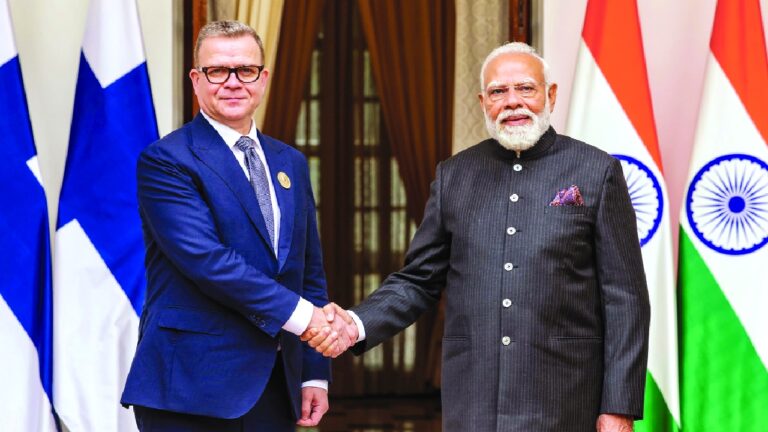
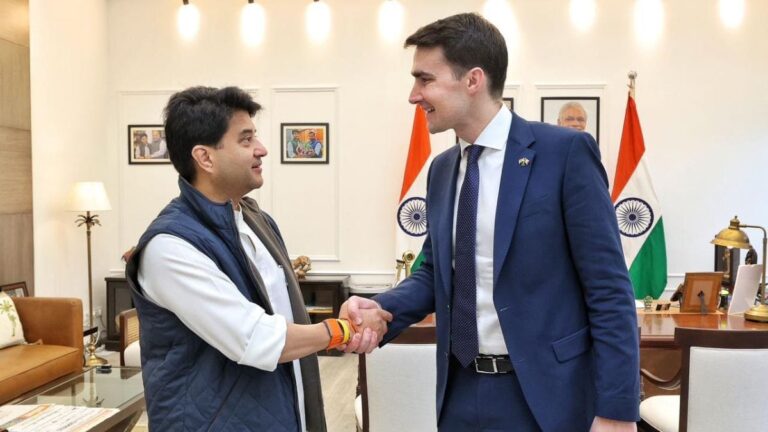
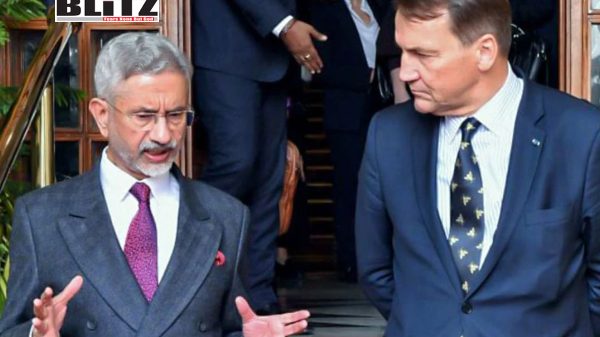
India and Poland have publicly aired their differences on two sensitive geopolitical issues – Pakistan and Russia – highlighting the complexities that increasingly characterize relations between New Delhi and parts of the European Union. The exchange, which took place during Polish Foreign Minister and Deputy Prime Minister Radoslaw Sikorski’s visit to India on January 19, underlined India’s growing assertiveness in defending what it considers core national security interests, even as it deepens its strategic and economic engagement with Europe.
At the heart of the disagreement are New Delhi’s long-standing concerns about terrorism from Pakistan, as well as India’s unease over what it sees as selective and unfair European sanctions linked to its trade with Russia. While India and Poland stressed the importance of dialogue and partnership, the meeting revealed fundamental differences in how the two countries assess regional security and global responsibility.
Indian Foreign Minister S. Jaishankar used the bilateral meeting to express New Delhi’s unease over Sikorski’s visit to Pakistan in October 2025. The visit, according to Indian officials, was particularly ill-timed, as it took place just months after a serious military confrontation between India and Pakistan in May of that year. The conflict, although limited in duration, has once again focused global attention on the volatility of South Asia and India’s repeated claims that Pakistan provides sanctuary and support to terrorist groups targeting Indian territory.
In his opening speech, Jaishankar made India’s position clear. He said India expects its international partners to demonstrate “zero tolerance” towards terrorism and, importantly, avoid actions that could be construed as legitimizing or enabling terrorist infrastructure in India’s neighborhood. Without directly naming Pakistan in his remarks, the message was unambiguous.
From India’s perspective, diplomatic engagement with Islamabad – particularly from influential European states – carries political symbolism. New Delhi has long maintained that Pakistan has failed to take credible action against militant networks operating from its soil, despite repeated international commitments. Accordingly, India is sensitive to any initiative that it believes could dilute the pressure on Pakistan to combat terrorism.
For Poland, Sikorski’s visit to Pakistan was part of a broader diplomatic engagement with South Asia, rather than an endorsement of a specific policy pursued by Islamabad. Warsaw has traditionally aligned closely with the European Union’s foreign policy framework, which emphasizes dialogue and multilateral engagement, even with difficult partners.
Sikorski, while acknowledging India’s concerns, signaled no immediate change in Poland’s approach. Instead, he focused on broader international norms, notably regarding Russia’s actions in Ukraine, which remain a defining issue for Poland’s foreign policy.
The second major point of contention was the European Union sanctions against Russia and their indirect impact on India. Since the escalation of the Ukrainian conflict in 2022, the EU has imposed several rounds of sanctions targeting Russian energy, finance and trade. India, however, maintains economic ties with Moscow, particularly in the energy sector, arguing that its actions are driven by national interest and energy security rather than political alignment.
Jaishankar criticized what he described as “selective targeting” of India under EU sanctions regimes. His remarks were in part a reference to the EU’s 18th sanctions package, which included measures affecting Nayara Energy’s Vadinar refinery in Gujarat, the second largest private refinery in India’s Gujarat. Nayara is partly owned by Russian state oil company Rosneft.
From New Delhi’s point of view, such measures are “unjust and unjustified”, especially since several European countries continue to import Russian gas. Indeed, despite sanctions, Russia remains the European Union’s second-largest gas supplier, a fact that Indian officials frequently cite to argue that Europe’s sanctions policy lacks coherence.
Responding to India’s criticism, Sikorski defended the EU’s sanctions policy by invoking international law and historical commitments. At a press briefing in New Delhi, he said Russia’s actions violated the 1994 Budapest Memorandum, under which Ukraine agreed to give up its nuclear weapons in exchange for security guarantees.
According to Sikorski, Russia’s violation of this agreement justified the collective countermeasures of the international community. “Under these circumstances, imposing sanctions against the aggressor is justified,” he said, reinforcing Poland’s tough stance towards Ukraine. Given Poland’s proximity to the conflict and its historical experience of Russian domination, Warsaw is among the strongest advocates within the EU for strong action against Moscow.
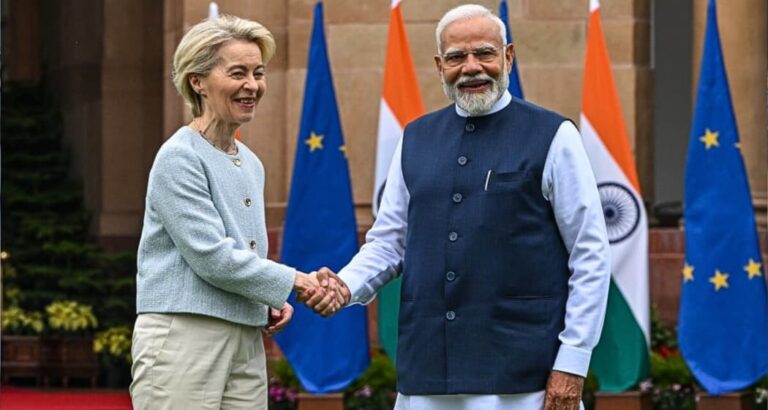
Despite these disagreements, neither side has suggested that the differences could derail broader cooperation. India and the European Union are currently negotiating a major trade deal that could significantly increase bilateral trade and investment. German Chancellor Friedrich Merz, during a recent visit to India, said the two sides were close to sealing the deal, indicating strong political momentum.
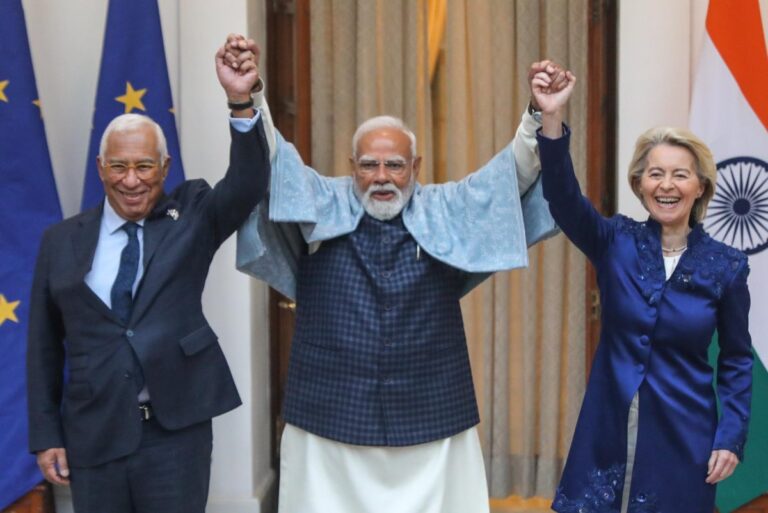
The diplomatic calendar further reflects the importance that both sides attach to their relations. European Commission President Ursula von der Leyen and European Council President Antonio Costa are expected to attend India’s Republic Day celebrations on January 26 as chief guests – a rare honor that underlines the strategic value New Delhi places on ties with Europe. An India-EU summit is also planned for January 27, during which leaders are expected to address trade, technology, climate cooperation and geopolitical challenges.
The India-Poland exchange illustrates a broader trend in global diplomacy: emerging powers like India are increasingly unwilling to accept what they perceive as double standards from their Western partners. At the same time, European countries, particularly those in Eastern Europe, view the Russia-Ukraine conflict as an existential security issue that demands firm collective action.
As India seeks to balance its relations with Europe, Russia and its own immediate neighbors, such frictions are likely to recur. However, the willingness of New Delhi and Warsaw to openly express their differences – while continuing their engagement – suggests a maturing rather than fragile relationship.
In an increasingly multipolar world, India and its European partners do not always see eye to eye. Yet their ability to manage disagreements while pursuing common economic and strategic interests will shape the future trajectory of India-EU relations in the years to come.
Tajul Islam is a special correspondent for Blitz. He is also a local producer for the Arabic channel Al Jazeera.
About The Author