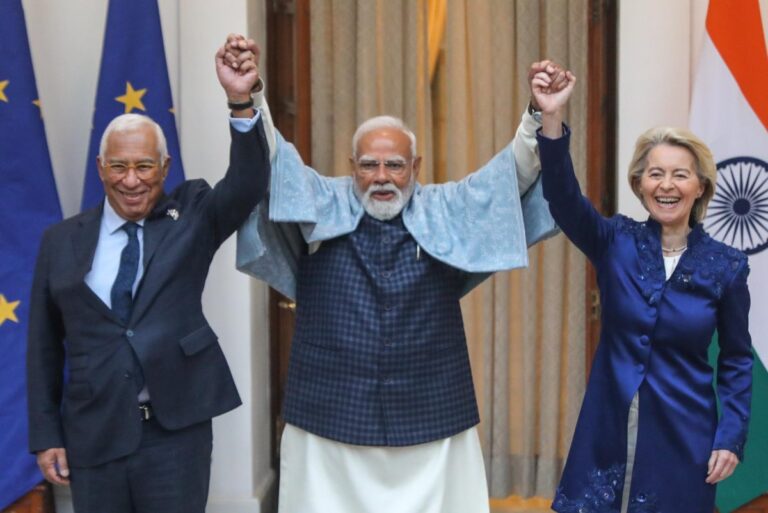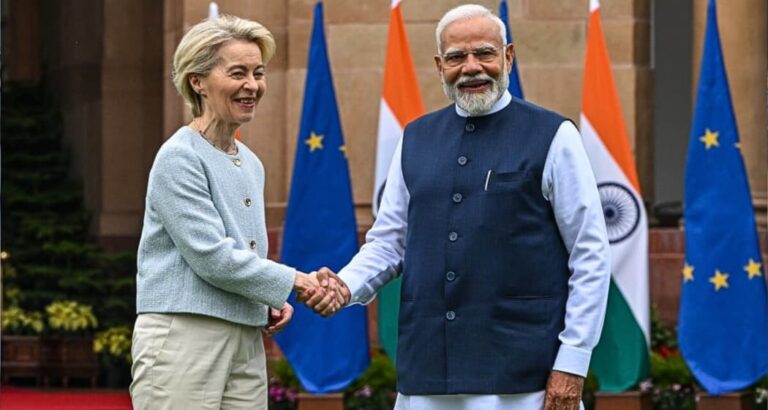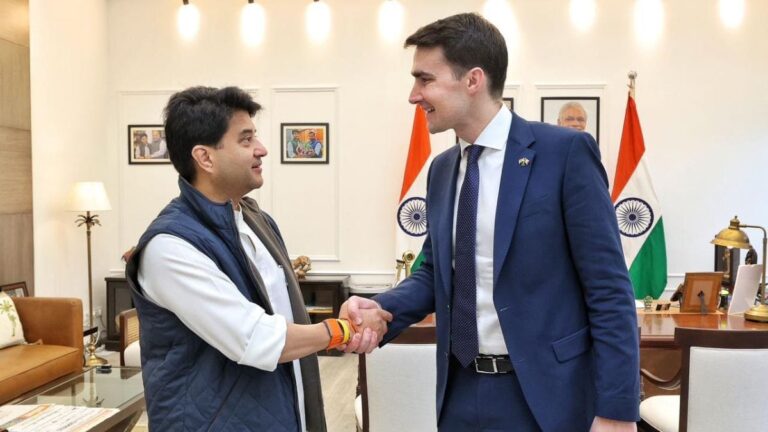
NEW DELHI: Next week’s India-EU summit will see both sides announce in an agreement that negotiations on the free trade agreement (FTA) have been successfully concluded, although the actual signing will take place later. According to diplomatic sources, apart from the FTA, the signing of a security and defense partnership to facilitate defense industrial collaboration and another agreement on mobility will be two other major outcomes of the summit which would mark the “high point” of India-EU relations. The Presidents of the European Council and the European Commission, Antonio Costa and Ursula von der Leyen respectively, will arrive in India on January 25 to co-chair the 16th India-EU Summit alongside Prime Minister Narendra Modi. The leaders will also be the chief guests at the Republic Day parade. It is learned that the leaders will adopt a joint comprehensive strategic agenda for 2026-2030 at the summit, based on the EU’s new strategic agenda for India that the 27-nation bloc released last year. The Indian side described the agenda as “very positive” as it also largely aligned with Indian interests. Ahead of the summit, it was also learned that negotiations on the historic FTA are still ongoing, with both sides working to iron out differences over contentious issues such as the CBAM (EU border carbon tax) and Brussels’ insistence that commitment to the Paris Agreement, to which both countries are signatories, on climate change be enshrined in the deal. Sources said that while a compromise solution is likely on the CBAM, the Paris Treaty will also be mentioned by both sides in the FTA, but not in a way that would “impose a straitjacket” on India. While the EU maintains that there cannot be a deal without incorporating both sides’ commitment to the Paris Agreement, India’s position is that it is an issue of sovereignty which should not be mixed with trade. The official signing of the FTA is expected once the legal clean-up process is completed and after its approval by the European Parliament. The whole process is expected to be completed this year. “The intention is that both parties commit to speeding up this process so that the entry into force of the FTA happens as quickly as possible,” said a source speaking on condition of anonymity. While the EU is unlikely to waive CBAM for India or any other country as the same is imposed even on its own companies, sources said it is discussing with India what can be done to facilitate India’s ‘decarbonisation’. The security and defense agreement, the second most important outcome of the upcoming summit, is seen as an acknowledgment that both sides see each other as “trusted, like-minded partners” despite their differences over India’s ties with Russia. Under this new defense partnership, the two sides will soon launch negotiations for an information security agreement that will facilitate the exchange of classified information and stronger cooperation in security and defense-related areas. According to the EU, this could also pave the way for India’s participation in EU security and defense initiatives, in line with EU treaty-based frameworks. While Ukraine is expected to dominate discussions on regional and global issues, issues related to the transatlantic conflict, including the Trump administration’s threat to seize Greenland, are also expected to be discussed at the summit. According to diplomatic sources, the EU is currently encouraging India to provide more humanitarian aid to Ukraine, as Russia targets the country’s energy facilities. “Ukraine badly needs generators and equipment to restore power plants. Schools have already stopped functioning. Ultimately, this is aimed at harming civilians,” a source said. The mobility agreement should also allow both parties to manage migration in a “reasonable” way. According to the EU, this means tackling illegal flows while supporting balanced talent mobility that meets India’s development priorities and the EU’s economic needs.
About The Author