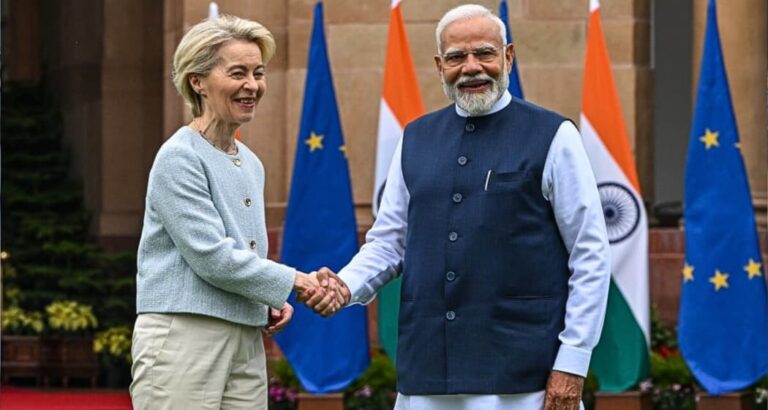
The warning comes at a critical time. Negotiations on the India-EU trade deal are in their final stages, with access to the auto market one of the most closely watched issues. Although the deal is expected to ease tariffs and boost trade, industry leaders fear it could also open a loophole for businesses outside Europe, according to the ToI report (by Saksham Mehta).
Hardeep Singh Brar, chairman and managing director of BMW Group India, flagged the risk of low-cost cars entering India under the deal, which he said could hurt automakers that have already invested heavily in local operations. He argued that production costs in many foreign markets are significantly higher than in India, making direct price competition difficult if smaller, cheaper vehicles are allowed entry without restrictions.
To address this, BMW suggested that only vehicles above a certain price threshold should receive the benefits of the trade deal.
Brar said a cap of between €20,000 and €30,000, which translates to over Rs 21 lakh, could be considered. Such a move, he said, would support buyers in the luxury segment without affecting the mass market or harming the domestic manufacturing industry.

Beyond prices, BMW also stressed the need for strict controls to prevent circumvention. Brar warned that Chinese manufacturers could route their vehicles through Europe to benefit from preferential access, a possibility he said must be clearly addressed in the deal.
Ensuring robust rules of origin and compliance mechanisms will be essential, he added. These concerns are more widely shared in the Indian automotive sector. Domestic automakers have asked the government to include strong safeguards in the trade deal, citing the risk of Chinese electric vehicle makers entering India through what they describe as a “back door”.
Industry representatives have called for a combination of high price thresholds, limited import quotas and strict value-added standards to be enshrined in the deal.
While raising these caveats, BMW is also gearing up to launch a major product in India. Brar said the company will launch 10 new products this year, including six completely new models and four upgrades of existing models.
Three of the new launches will be electric vehicles, reflecting BMW’s strategy to expand its electric vehicle presence in the country.
The company plans to position its electric models at a price close to that of internal combustion engine vehicles, a move aimed at accelerating their adoption.
BMW will also continue to focus on long-wheelbase cars, a segment that Brar says has performed well. He noted that the combination of electrification and extended wheelbase models has been particularly successful for the brand in India.
However, Brar emphasized that the growth of the electric vehicle and luxury car markets is highly dependent on supporting infrastructure. Charging facilities remain the most significant gap, he said, and called for a public-private partnership approach to install and maintain chargers across the country.
About The Author