January 13, 2026
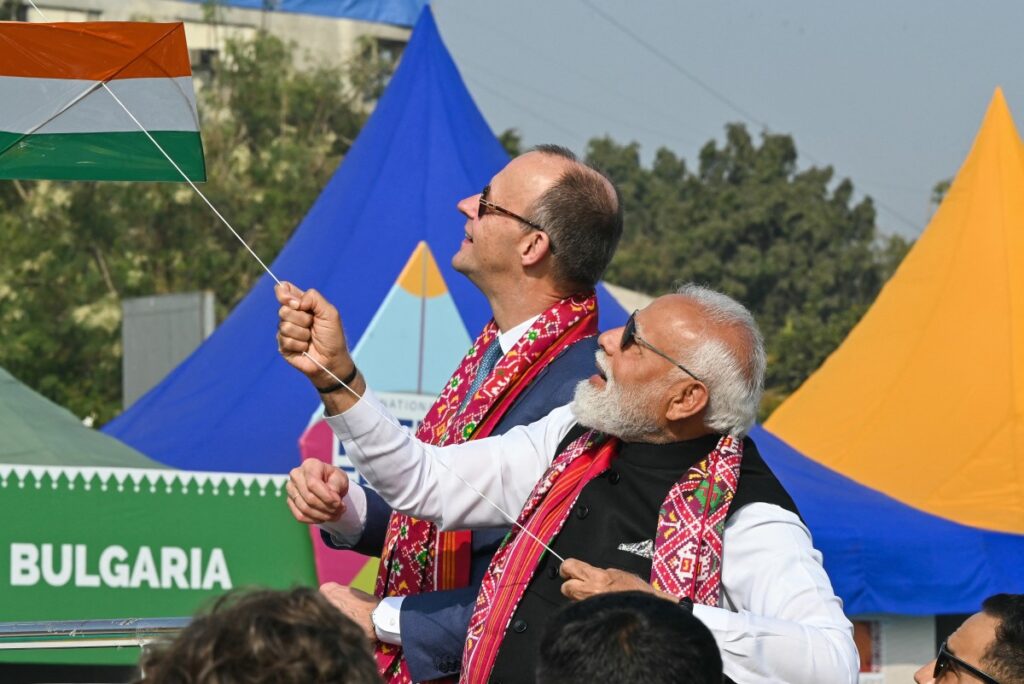
NEW DELHI – Meeting against the backdrop of the January 3 US action in Venezuela, Prime Minister Narendra Modi and German Chancellor Friedrich Merz on Monday agreed to strengthen defense and security cooperation, unequivocally condemned terrorism and reiterated their support for an early conclusion of the India-EU Free Trade Agreement (FTA).
In a joint statement issued at the end of the talks between the two leaders in Gandhinagar, the two leaders also reaffirmed their commitment to a free and open Indo-Pacific and their strong support for the India-Middle East-Europe Economic Corridor (IMEC) and reiterated the urgent need for comprehensive reforms of the UN Security Council through the expansion of permanent and non-permanent membership categories to reflect contemporary realities.
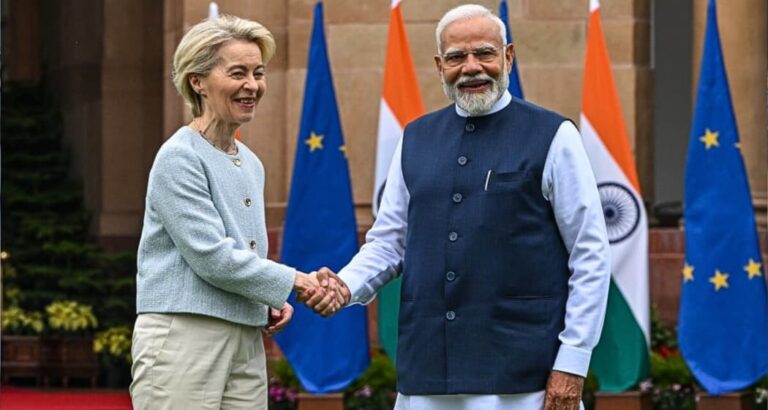
In his first visit to Asia since taking office last year, the German chancellor indicated that the India-EU trade deal could be signed as early as this month. His comments assume particular significance as the presidents of the European Commission and the European Council will visit India later this month as chief guests of the Republic Day parade.
Addressing a joint press conference with the visiting leader, Prime Minister Modi said he discussed with the German Chancellor the ongoing conflict in Ukraine, the situation in Gaza and regional developments, and both countries favored a peaceful resolution of all these issues. However, no mention of the developments in Venezuela was made in the remarks made by the two leaders or in the joint statement issued by the two sides.
“Close cooperation between the economies of countries like India and Germany is important for all of humanity. Growing trade and investment ties have injected new energy into our strategic partnership. Our bilateral trade has now reached its highest ever level and crossed the $50 billion mark,” the Prime Minister said.
He said India and Germany were jointly advancing new projects in areas such as climate, energy, urban development and urban mobility. The new green hydrogen megaproject involving companies from both countries will be a game-changer for the energy of the future, he added.
India and Germany have signed as many as 19 agreements or MoUs, including on bilateral defense industrial cooperation, semiconductor ecosystems, critical minerals, investment, education, health, science and technology and sports.
Of particular importance is the Joint Statement of Intent to develop a roadmap for defense industrial cooperation to promote long-term collaborations at the industrial level, including technology partnerships and co-production of defense platforms and equipment.
At a press conference, Foreign Minister Vikram Misri confirmed that negotiations between the two countries on the much-anticipated submarine deal would maintain positive momentum now that Germany has started facilitating rapid export approvals for defense equipment.
The joint statement also mentioned that the two leaders condemned terrorism in all its forms and manifestations, including cross-border terrorism, and called for concerted international efforts to combat this menace. They condemned the terrorist incidents in Pahalgam and Delhi.
On bilateral trade, both leaders welcomed the sustained growth in trade and investment and noted that bilateral trade reached a record high in 2024, with a positive trend continuing through 2025. They were confident that the Indo-EU free trade project would facilitate trade flows and provide further impetus to economic relations between the two countries.
Given that India and Germany are candidates for permanent seats in the UN Security Council, the joint statement calls for moving forward towards the start of text-based negotiations under the Intergovernmental Negotiations (IGN) framework for reforms in the world body.
About The Author