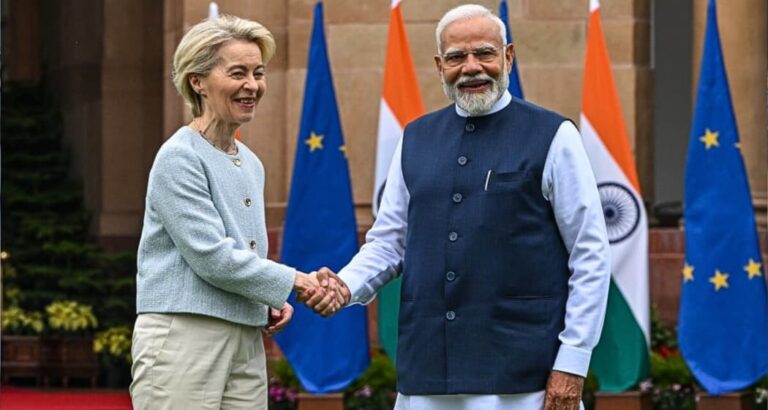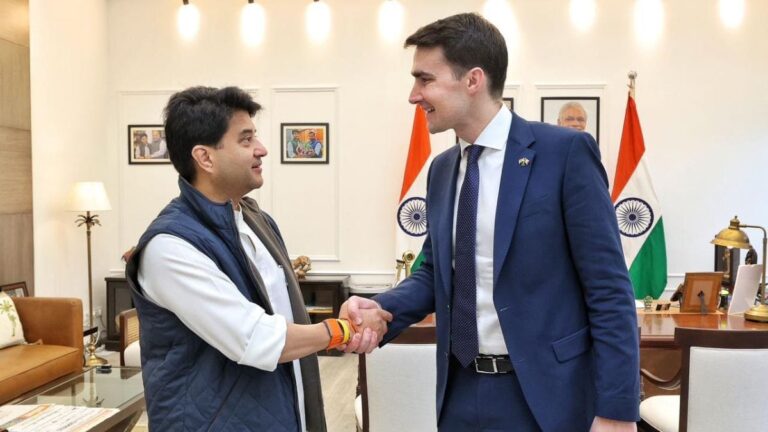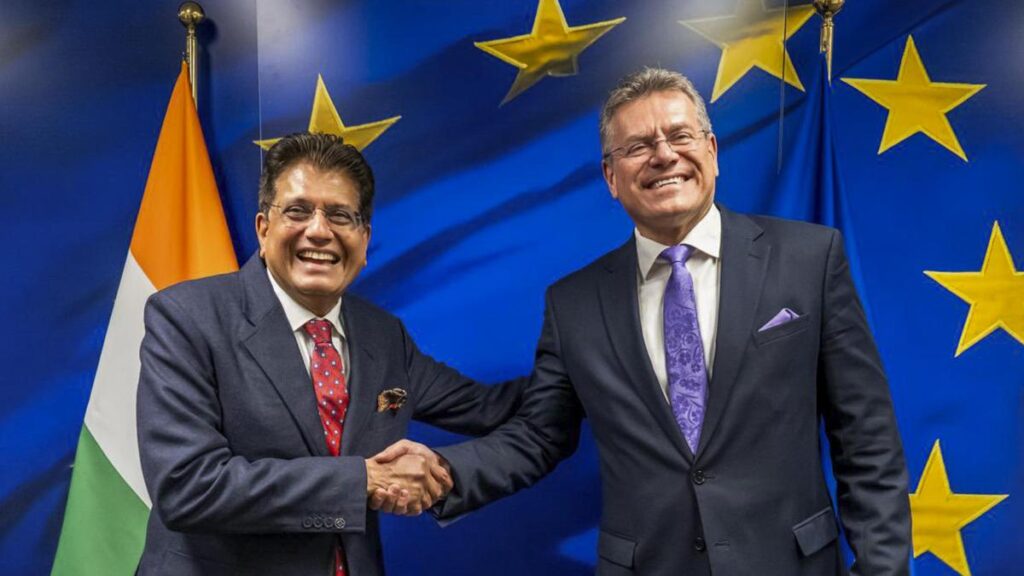
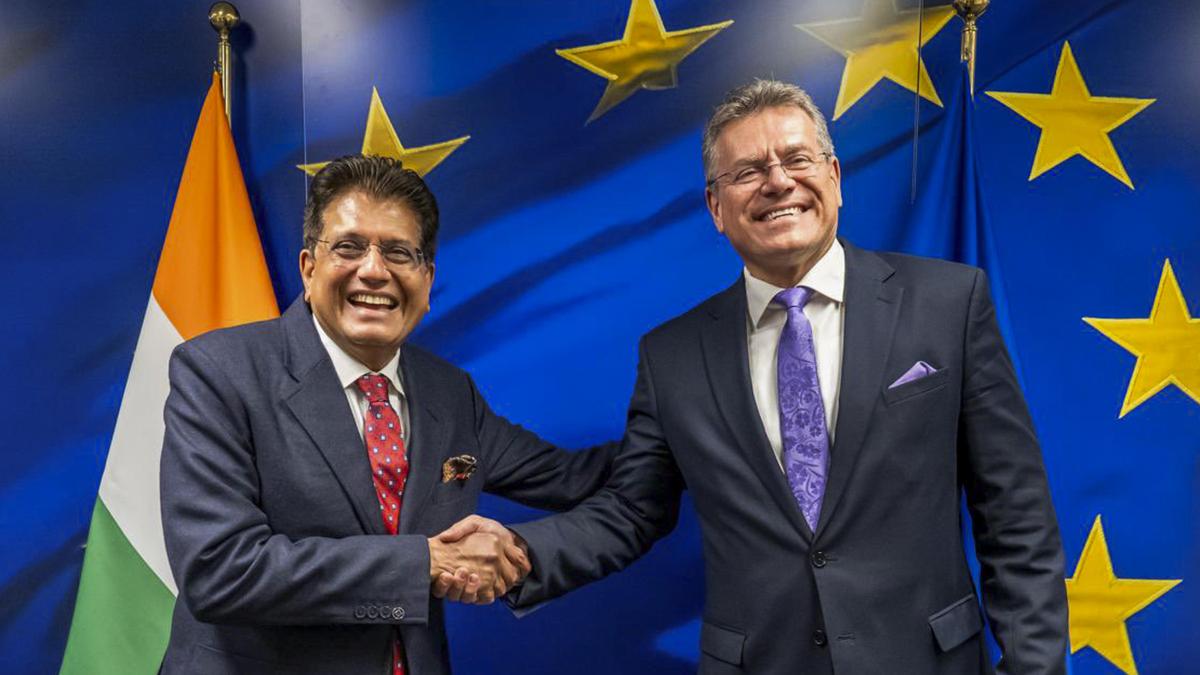
Union Minister of Commerce and Industry Piyush Goyal during high-level talks with European Commissioner for Trade and Economic Security Maros Sefcovic in Brussels on January 9, 2026. Photo credit: @PiyushGoyal/X via PTI
India and the European Union (EU) held discussions in Brussels on Friday (January 9, 2026) on the proposed Free Trade Agreement (FTA) and reaffirmed their commitment to a rules-based trading framework and a modern economic partnership that protects the interests of farmers and MSMEs.
Commerce and Industry Minister Piyush Goyal is on a two-day official visit to the EU headquarters for the negotiations.

He held high-level talks with the European Commissioner for Economic and Trade Security, Maros Sefcovic, to reach a mutually beneficial FTA.
“During this dialogue, we deliberated on the key areas of the proposed agreement. We reaffirmed our commitment to a rules-based trade framework and a modern economic partnership that protects the interests of farmers and MSMEs while integrating Indian industries into global supply chains,” Goyal said in a social media post.
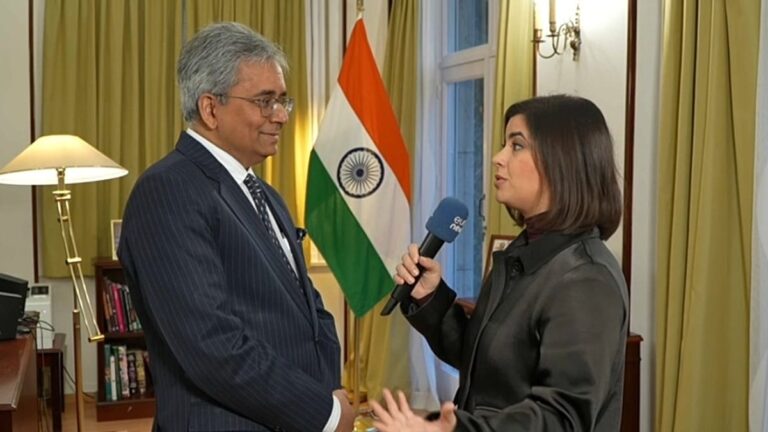
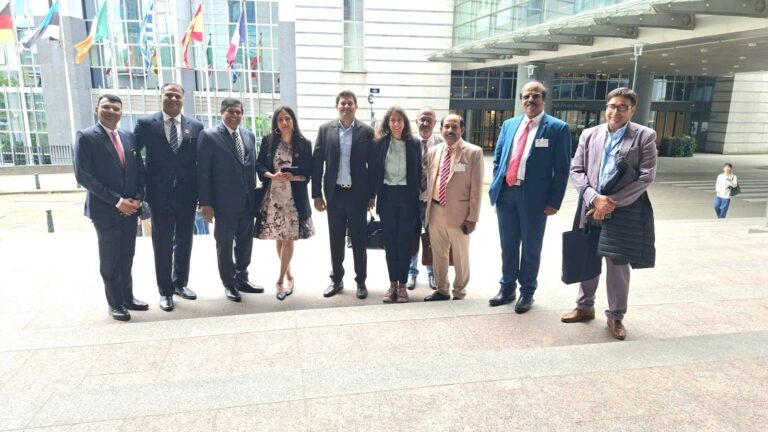
The ministerial commitments follow a week of intensive deliberations in Brussels, building on the groundwork laid during high-level discussions held earlier this week (January 6-7) between India’s Commerce Secretary, Rajesh Agrawal, and the European Commission’s Director-General for Trade, Sabine Weyand.
These talks are important as both sides seek to conclude the negotiations at the earliest. The India-EU summit is expected here on January 27 and the EU’s top leaders will participate in the Republic Day parade as the chief guest on January 26.
On December 15, 2025, Mr. Agrawal said negotiations between India and the 27-nation bloc, the EU, had entered the “most difficult” phase, and both sides were determined to iron out their differences and conclude the negotiations soon.
So far, 16 rounds of negotiations have taken place.
India is pushing for tariff-free access for its labor-intensive sectors, such as textiles and leather. On the other hand, the EU demands significant reductions in tariffs on automobiles, medical devices, wine, spirits, meat, poultry, as well as a strong intellectual property regime.
In June 2022, India and the European bloc resumed negotiations for a comprehensive FTA, an agreement on investment protection and a pact on geographical indications after a gap of more than nine years. Negotiations were blocked in 2013 due to differences over the level of market opening.
India’s bilateral merchandise trade with the EU stood at $136.53 billion in 2024-25 (exports worth $75.85 billion and imports worth $60.68 billion), making it the largest merchandise trading partner.
The EU market accounts for around 17% of India’s total exports, and the bloc’s exports to India constitute 9% of its total overseas shipments.
Exports of Indian products to the EU, such as ready-made garments, pharmaceuticals, steel, petroleum products and electrical machinery, can become more competitive if the deal is concluded.
Negotiations on the India-EU trade deal cover 23 policy areas or chapters, including trade in goods, services, investments, trade remedies, rules of origin, customs and trade facilitation, competition, government procurement, dispute resolution, intellectual property rights, geographical indications and sustainable development.
Published – January 9, 2026 at 2:28 p.m. IST
About The Author