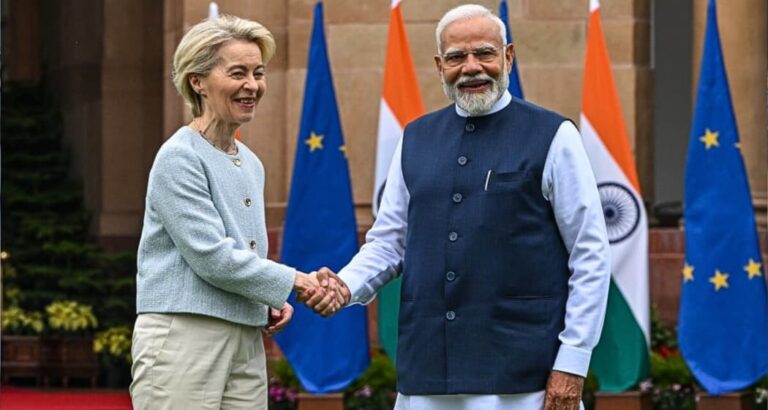
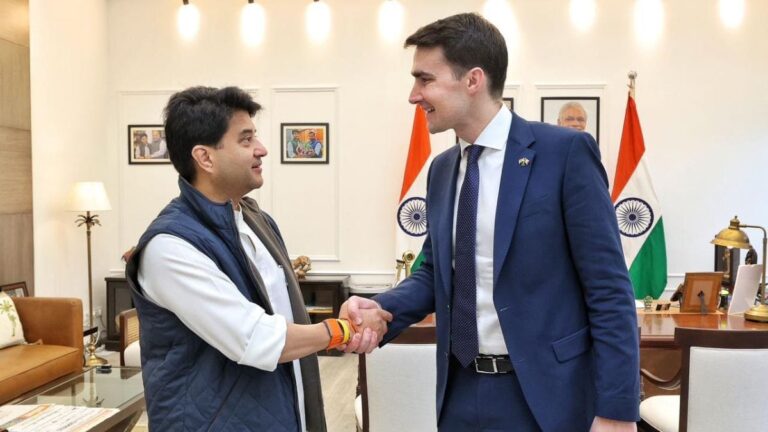
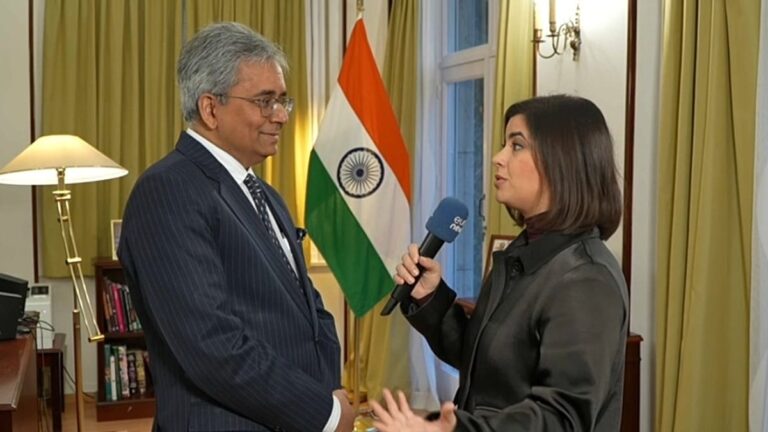
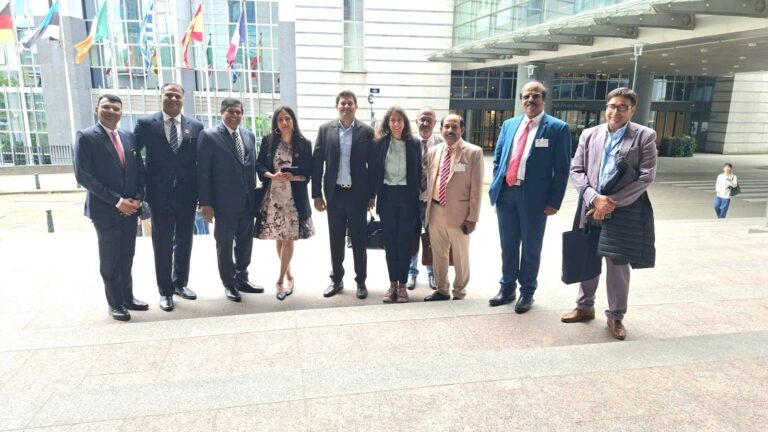
India and the European Union have stepped up efforts to push forward their proposed free trade agreement, with Union Commerce and Industry Minister Piyush Goyal holding high-level talks in Brussels aimed at speeding up negotiations and resolving outstanding issues.
India and the European Union took forward discussions on their proposed free trade agreement during Union Commerce and Industry Minister Piyush Goyal’s two-day visit to Brussels, which ended on January 9.
Goyal was in the Belgian capital on January 8-9, where he held high-level talks with the European Commissioner for Trade and Economic Security, Maros Sefcovic. The meetings focused on accelerating the long-pending India-EU FTA negotiations, with both sides giving clear instructions to their negotiating teams to resolve outstanding issues and expedite the process.
Push for a quick conclusion
According to the Ministry of Commerce, the two sides reviewed the progress made on the main areas of negotiation and stressed the need to conclude a fair, balanced and ambitious agreement. The discussions reflected the strong political will of New Delhi and Brussels to move beyond protracted technical negotiations and work towards a rapid conclusion of the agreement.
Protecting farmers and MSMEs
Discussions focused on balancing commercial ambitions and national priorities. India and the EU stressed that the agreement must safeguard the interests of farmers and micro, small and medium enterprises, while also helping Indian industries integrate more deeply into global supply chains.
In an article on
Built on high-level negotiations
The ministerial commitment follows high-level meetings held on January 6 and 7 between Commerce Secretary Rajesh Agrawal and the European Commission’s Director-General for Trade, Sabine Weyand. These discussions focused on taking stock of the negotiations, narrowing differences and clarifying unresolved issues before the ministerial review.
Progress on key business pillars
At the Brussels meetings, Goyal and Sefcovic held in-depth deliberations on key elements of the proposed FTA, including market access for goods, rules of origin and services. Both sides recognized steady progress and reiterated their commitment to reaching an agreement aligned with common economic priorities and a rules-based trading system.
At the end of the visit, India and the EU expressed confidence in the early conclusion of a modern and mutually beneficial FTA, which both sides consider strategically important for future economic cooperation.
Visit to Liechtenstein and EFTA engagement
Before arriving in Brussels, Goyal traveled to Liechtenstein, where he led a roundtable discussion with leading local business leaders. The discussions focused on the implementation of the India-EFTA Trade and Economic Partnership Agreement (TEPA), marking the first-ever visit by an Indian minister to the country.
Investment, technology and value chains
During the interactions, Goyal said the India-EFTA TEPA goes beyond trade liberalization and provides a broader framework for investment, technology collaboration, skills development and creation of resilient value chains. He encouraged Liechtenstein companies to explore investment opportunities in India, especially in view of the $100 billion investment commitment made by EFTA countries.
Industry and executive meetings
As part of the visit, Goyal visited the Hilti Group headquarters and met its Managing Director, Jahangir Doongaji. Discussions focused on expanding localization, increasing value addition and scaling up global shipments from India, as well as technology collaboration to support safer and smarter infrastructure.
The minister also met with Liechtenstein Prime Minister Brigitte Haas to discuss ways to deepen economic and investment cooperation under the India-EFTA TEPA. Discussions explored collaboration in skills development, professional training and industry-academia partnerships.
End of article
About The Author