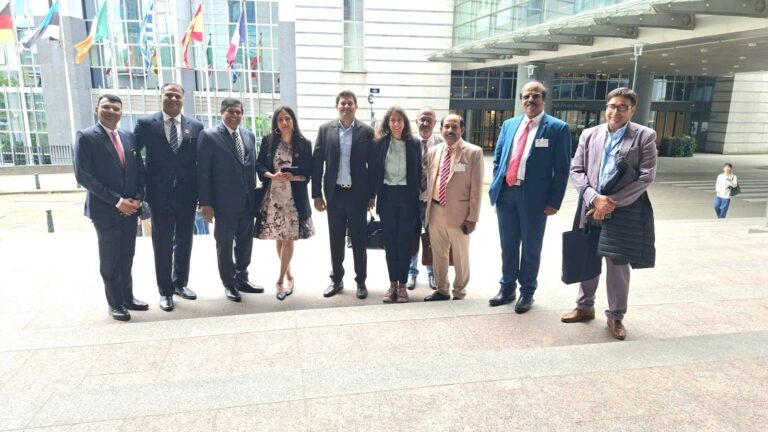
Government sources said the two sides are likely to hold discussions on issues such as Carbon Border Adjustment Mechanism (CBAM), Geographical Indications (GI), Critical Minerals, Intellectual Property Rights (IPR) and several other trade and regulatory issues. The two sides reportedly exchanged their respective lists for a possible deal on trade in GI-labeled products, even as separate negotiations continue on an FTA as well as an investment protection pact. India defines labeled products as “originating in a specific place and having a distinct nature, quality and characteristics linked to that place”.
Sources said the EU did not want any restrictions, including tariffs, on the export of essential minerals from India. Recently, the EU challenged Indonesia’s ban on nickel exports at the World Trade Organization (WTO).
Sources further noted that India is expected to seek exclusions or exemptions for its stainless steel exports to the EU, in view of the higher tariffs imposed by the bloc. Last week, the Ministry of Trade and Industry held meetings with stakeholders from the automotive and steel sectors. The EU has proposed extending CBAM to 180 downstream products, with CBAM certificates to be sold from February 1, 2027 for products imported in 2026.
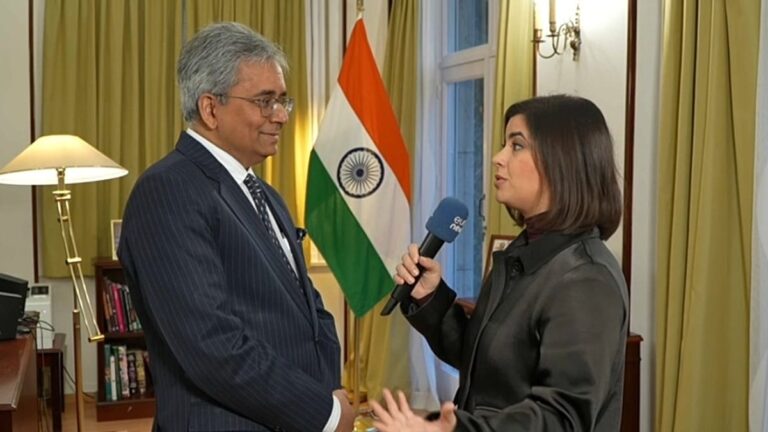
Minister Goyal held meetings with the European Commissioner for Trade and Economic Security, Maroš Šefčovič, in New Delhi on December 8-9, to provide strategic guidance to the negotiating teams as both sides strive to conclude the FTA at the earliest. EU Ambassador to India Hervé Delphin had previously described the negotiations as entering a fundamentally new phase, calling them “EU-India free trade negotiation 2.0”, after the 14th round. The EU is India’s largest trading partner, with bilateral merchandise trade reaching $137.5 billion in the 2023-24 financial year.
As India seeks greater market access and lower tariffs for its labor-intensive exports to the EU, the bloc aims to export more automobiles and alcohol to India. India has also sought recognition as a data security country to enable trade in digital services under EU data transfer rules, apart from increased access for its skilled professionals.
Earlier, government sources had said that EU approval of India’s fish exports could compensate for the loss of export opportunities due to US tariffs, adding that the negotiations were progressing well and were “on track to be concluded by the end of the year”.
About The Author