Key points to remember:
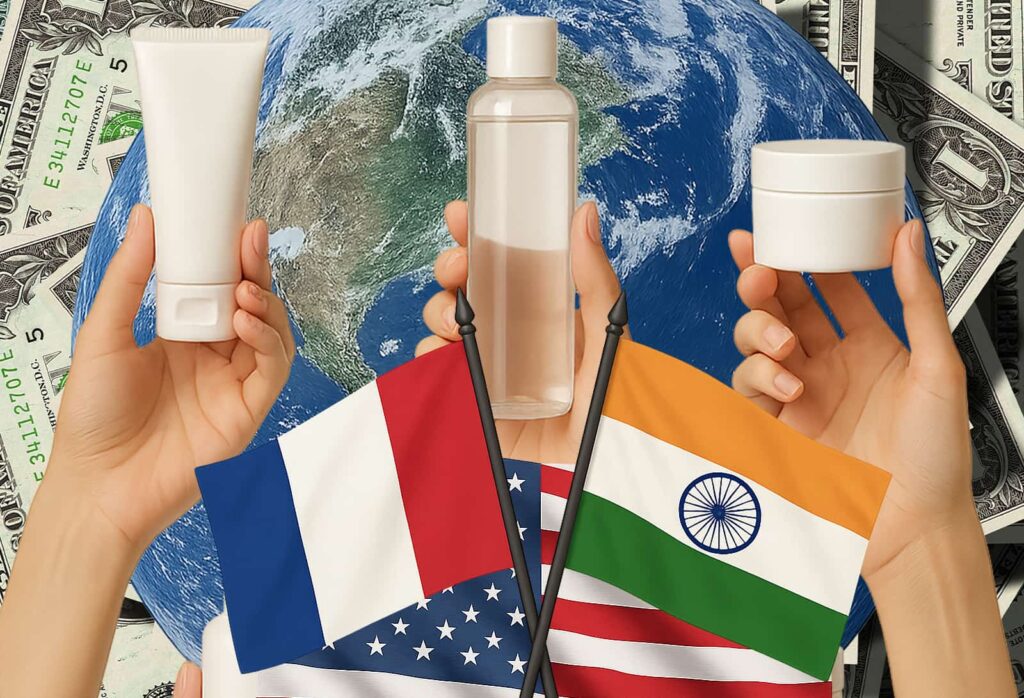
- French cosmetics exports to the United States could fall by 21% in 2026 due to tariffs imposed by President Trump, the French Beauty Federation warns, pushing companies to diversify into faster-growing markets like India.
- India’s beauty sector is expected to nearly double to $40.8 billion by 2030, driven by rising incomes, a growing middle class and a rapidly expanding e-commerce ecosystem.
- L’Oréal and Estée Lauder are embarking on a race for growth in India, from new innovation hubs to venture capital investments in local brands.
Western beauty product manufacturers face a well-documented problem: US tariffs. India, one of the fastest-growing beauty markets and the largest emerging market, may be the only country big and fast enough to offset the hit to its balance sheets.
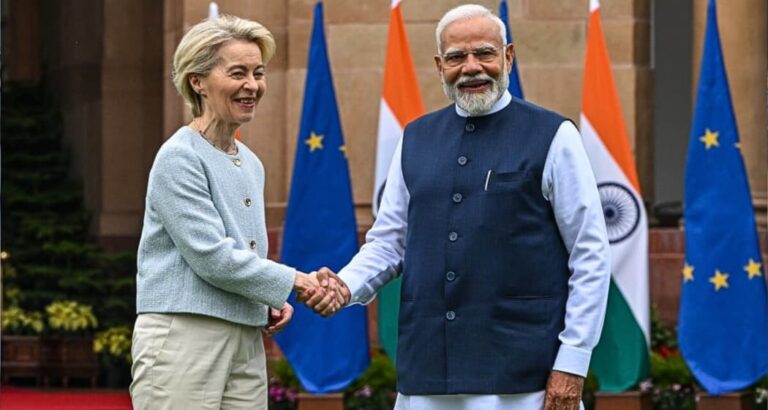
French beauty companies, the world’s largest producers of luxury and mass cosmetics, with L’Oréal leading the way, are counting on a free trade agreement between the European Union and India to soften the blow from falling U.S. exports due to President Trump’s policies. The agreement should be signed in early 2026, said Emmanuel Guichard, director general of FEBEA.
“India is a major priority,” said Guichard, who has led FEBEA since 2021. “We are investing a lot in India in anticipation of the free trade agreement.”
EU-India relations date back to 1962, when India became one of the first countries to establish diplomatic ties with the European Economic Community, a partnership later elevated to “strategic” status in 2004. Efforts to seal a broad trade and investment pact have faced setbacks. They launched in 2007, went off the rails in 2013, and were revived in 2021 before officially relaunching the following year.
Commerce is now at the center of the relationship. In 2023, the EU became India’s largest trading partner, with goods flows reaching €124 billion ($144.41 billion), or 12.2% of India’s total. Even as trends changed in 2024, the bloc remained India’s second-largest partner, accounting for 120 billion euros ($139.75 billion) in merchandise trade. On the other hand, India is the EU’s ninth partner, and bilateral trade in goods has almost doubled over the past decade – a momentum both sides hope to channel into the long-awaited deal.
FEBEA is among the leading cosmetics associations advocating for the agreement to be adopted, as it warns that U.S. tariffs in 2026 could lead to a 21% drop in French cosmetics exports to the United States, worth 620 million euros ($722 million).
By the numbers, India may be just a fraction of the roughly $150 billion U.S. market, but it is moving at a speed and scale that is reshaping the maps of global expansion. The beauty industry is expected to reach $40.80 billion by 2030, up from $22.77 billion in 2023, according to Grand View Research, a figure that has nearly doubled in seven years. What drives it is a convergence that few markets can match: a growing middle class, rising discretionary incomes, and an e-commerce ecosystem that spreads luxury and mass brands deep into Tier 2 and Tier 3 cities.
As Europe stagnates and US tariffs squeeze margins, India has become one of the few markets that can still provide a real boost to businesses. Its economy is expected to grow more than 6% annually, according to the International Monetary Fund, making it one of the fastest-growing emerging economies in the G20.
The opportunity is “huge, especially from an e-commerce perspective,” Nicolas Hieronimus, L’Oréal’s chief executive, said during the company’s latest earnings conference call. The French conglomerate aims to double its operations in India by 2027 and is establishing one of its largest global capability centers for technology, innovation and global research in the city of Hyderabad, according to Indian media reports.
American players with significant exposure to Europe, such as Estée Lauder, which opened its manufacturing and distribution campus in Belgium in 1965 and now produces more than 100 million prestige beauty products a year there, are also racing for share. The New York group is deploying “a massive investment” in India, banking on what its managing director Stéphane de La Faverie recently described as “tremendous dynamism” in the market. The company is prioritizing smaller packaging sizes in its mass brands “because consumers’ ability to access luxury products is still limited”, he said, noting that India remains 90% mass and 10% prestige.
“Prestige is growing faster (in India), but it is very limited in terms of the number of consumers, so our ability to offer the luxury product at a more affordable price, future innovation will be essential for us to win in the market,” de La Faverie said.
In another way of deepening their presence, L’Oréal and Estée Lauder have taken stakes in Indian beauty companies through their venture capital funds in recent months, mirroring the approach they used in China as local brands gained popularity and market share.
France may be the birthplace of modern beauty, but its domestic market is barely contributing to the industry’s expansion, which is expected to remain flat or grow only 3% this year, well below the historic expansion rate of 5-7%.
“For major brands, the French market is absolutely marginal in terms of turnover,” underlines Guichard. “It’s very important in terms of image, because that’s where the company was founded, where the brand was created, and that gives legitimacy, but in terms of the actual size of the market, France is not a very attractive market.”
For years, French companies have compensated for a weak domestic market with booming American demand.
North America was by far the top destination for French exports in 2024, with 3 billion euros ($3.49 billion) of cosmetics shipped at customs value. But President Trump’s tariffs are quickly eroding that pillar and giving an advantage to South Korean beauty brands, which compete aggressively on price and prioritize volume. These brands are now taking market share from both international and American players, Guichard said.
The first signs of damage are already visible. Cosmetics exported from the European Union are now subject to customs duties of 15%, plus hefty surcharges on aluminum and steel used in luxury packaging, bringing effective rates to 20% to 30% on many products. As a result, French beauty companies’ exports fell by around 17% over the last three quarters, although one of those quarters was still not subject to any customs duties, according to FEBEA data.
The pressure is greater on the premium and masstige segment, which represents around half of French cosmetics exports to the United States, and which is very sensitive to price increases and Korean competition. Consequence: France is losing ground in its most important market, the United States, while domestic sales are stagnating and China continues to decline.
Guichard pointed out that China, until recently the top destination for French beauty exports, has now fallen to second place, with shipments increasing from around 3 billion euros ($3.49 billion) to between 2.5 and 2.6 billion euros ($3.03 billion). The market has become increasingly difficult for international businesses as consumers become more conscious about their spending. American and Japanese players are declining and French brands are under pressure from high prices in China, particularly in the premium and high-end segments where they are highly concentrated, which continue to weigh on demand.
Beauty industry executives are concerned about this landscape, but are also optimistic, Guichard said. “They see opportunities in new markets like India and Southeast Asia, and believe that French brands can remain leaders. »
About The Author