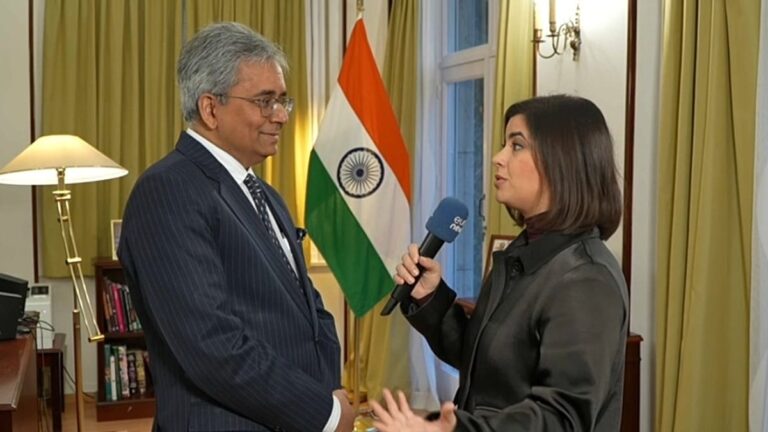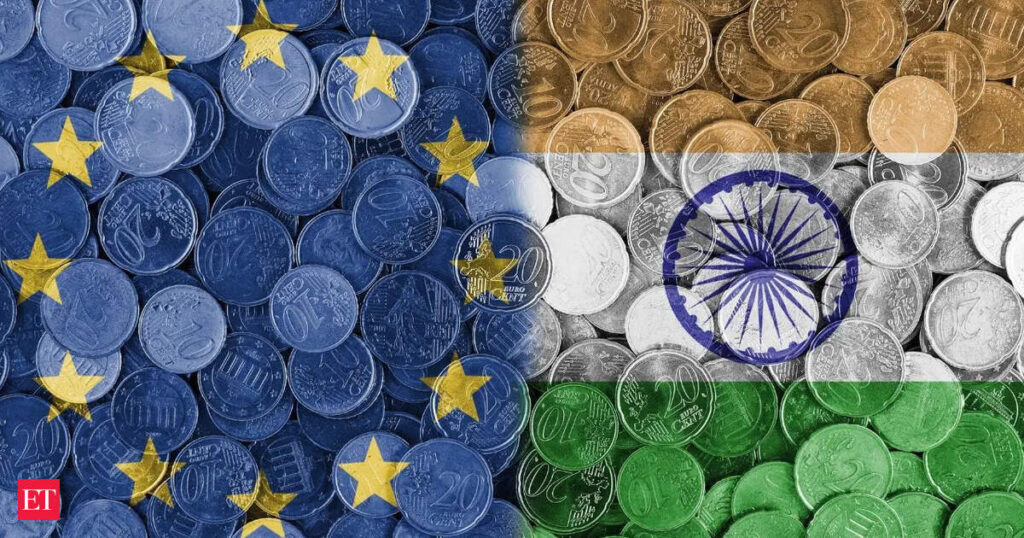
He said the European Union’s (EU) Carbon Border Adjustment Mechanism (CBAM) was on the table for discussion.
“We are in the most difficult phase, the most difficult issues are on the table…we are trying to mitigate that wherever we find a right balance. There are a series of issues on the table…CBAM is definitely on the table,” he told reporters here.
The 16th round of negotiations between the two sides concluded here earlier this month (December 3-9).
Key chapters such as goods, services, investment, rules of origin and technical barriers to trade were discussed.

“We are narrowing the differences…we are working tirelessly to close the negotiations,” Agrawal said.
Asked if the two sides were considering dropping a few chapters to conclude the deal sooner, the secretary said the decision would be made at the last moment. “I don’t think we are abandoning (any chapter) yet. Everything that is on the table is on the table. But in case, in the interest of a deal at some point, we feel that certain issues or certain areas need to be abandoned, they can be (abandoned). That call will be taken either at the level of the chief negotiators, or my ministers, or my level, but that is not the stage we are at,” he declared.
Regarding the December deadline for concluding negotiations, the secretary said there are internal deadlines and that does not mean things will stop if those deadlines are not met.
Both sides reaffirmed their commitment to bridging remaining differences and concluding a balanced and mutually beneficial FTA (Free Trade Agreement) at the earliest.
The EU announced regulations such as CBAM and EUDR (Deforestation Regulation), which India strongly opposed.
Under the CBAM, Indian exports of steel, aluminum and cement to the EU could face tariffs of 20 to 35 percent.
In June 2022, India and the European bloc resumed negotiations for a comprehensive FTA, an agreement on investment protection and a pact on geographical indications after a gap of more than eight years. The project was blocked in 2013 due to differences in the level of market opening.
India’s bilateral merchandise trade with the EU stood at $136.53 billion in 2024-25 ($75.85 billion in exports and $60.68 billion in imports), making it the largest merchandise trading partner.
The EU market accounts for about 17 percent of India’s total exports, and the bloc’s exports to India constitute 9 percent of its total overseas shipments.
In addition to demanding significant reductions in tariffs on automobiles and medical devices, the EU wants reduced taxes on other products such as wine, spirits, meat, poultry, as well as a strong intellectual property regime.
Exports of Indian products to the EU, such as ready-made garments, pharmaceuticals, steel, petroleum products and electrical machinery, can become more competitive if the deal is concluded.
Negotiations on the India-EU trade deal cover 23 policy areas or chapters, including trade in goods, services, investments, trade remedies, rules of origin, customs and trade facilitation, competition, government procurement, dispute resolution, intellectual property rights, geographical indications and sustainable development.
About The Author