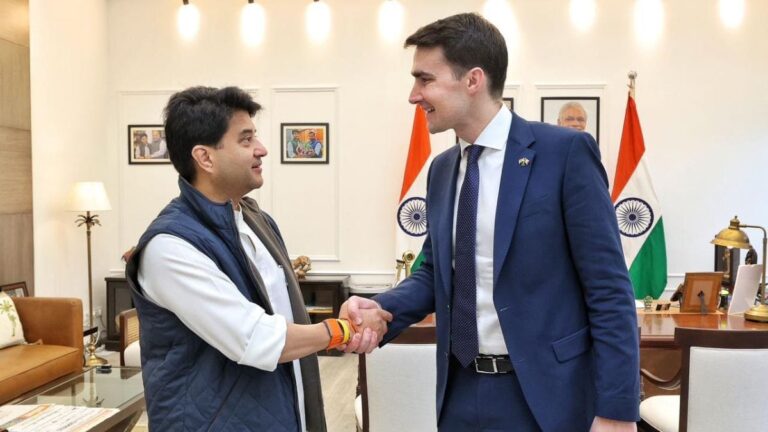
“We held a productive meeting with the European Commissioner for Trade and Economic Security, Mr. @MarosSefcovic. We discussed the progress made under the India-EU FTA and explored ways to resolve issues to move the negotiations forward,” Piyush Goyal said.
Trade and Industry Minister Piyush Goyal and EU Trade Commissioner Maros Sefcovic on Monday held discussions on outstanding issues related to the proposed India-EU trade deal.
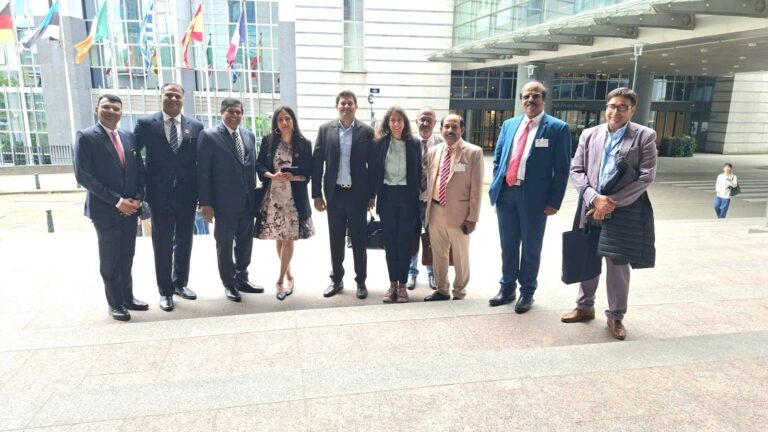
Sefcovic is leading a delegation of European Union officials to New Delhi for the ongoing negotiations.
The talks come at a crucial stage as both sides want to finalize the deal at the earliest.
Regarding
Held a productive meeting with the European Commissioner for Trade and Economic Security, Mr. @MarosSefcovic.
We discussed the progress made under the India-EU FTA and explored ways to resolve issues to move the negotiations forward.
Looking forward to continued cooperation towards a… https://t.co/zTmYL9DR7N
– Piyush Goyal (@PiyushGoyal) December 8, 2025
Looking forward to continued cooperation towards a mutually beneficial FTA, he added.
In a social media post, Sefcovic said: “To India, for a two-day marathon of meetings with @PiyushGoyal to advance our trade and investment negotiations.”
The visiting EU delegation includes Directorate-General for Trade Sabine Weyand, EU Ambassador to India Hervé Delphin, EU Chief Negotiator Christophe Kiener and Petros Sourmelis, Head of the Trade Section of the EU Delegation to India.
The main differences that remain to be resolved include issues related to steel, carbon tax at EU borders, automobiles and non-tariff barriers.
India and the 27 EU members resumed negotiations in June 2022 for a comprehensive free trade agreement (FTA), an investment protection pact and a deal on geographical indications, after an eight-year break. Negotiations stalled in 2013 due to disagreements over market access.
Bilateral trade in goods between India and the EU stood at $136.53 billion in 2024-25, with Indian exports of $75.85 billion and imports of $60.68 billion, making the EU India’s largest trading partner in goods.
The EU accounts for around 17% of India’s total exports, while its shipments to India account for around 9% of the bloc’s global exports.
The EU is seeking to slash tariffs on automobiles and medical devices, as well as reduce taxes on wine, spirits, meat and poultry, and strengthen intellectual property protection.
If concluded, the deal could boost the competitiveness of Indian exports such as ready-made garments, pharmaceuticals, steel, petroleum products and electrical machinery.
Negotiations currently cover 23 policy areas, including goods, services, investment, rules of origin, customs and trade facilitation, government procurement, dispute resolution, intellectual property rights and geographical indications.
With the contribution of agencies
End of article
About The Author