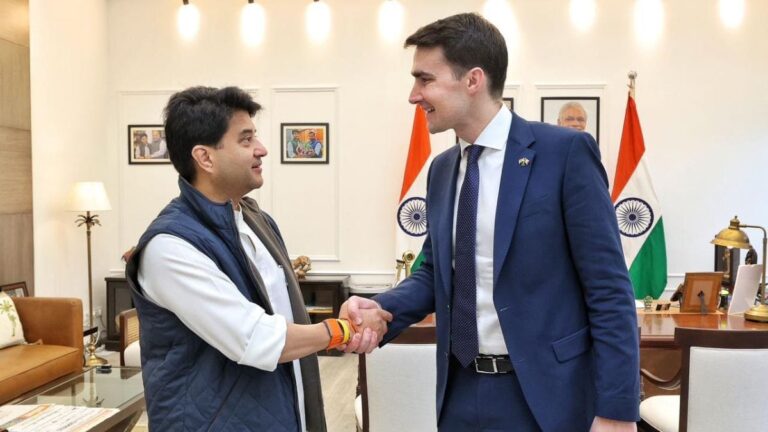
The year 2025 saw significant progress in relations between the EU and India. But while both sides are keen to deepen technology cooperation, including through a full-stack approach to de-risking supply chains and fostering joint innovation in areas such as semiconductors, AI and 6G, ECDPM has been tending to the trickier side of any growing relationship: facilitating the mutual dialogue and common understanding needed to turn ambition into a sustainable and equitable reality.
So far this year has proven to be a annus mirabilis in EU-India relations. Geopolitical and geoeconomic volatility has created a shared imperative for the EU and India to strengthen cooperation on national security and economic competitiveness. The pace of official exchanges has catapulted in 2025: it is now crucial to prioritize exchanges with think tanks, academics and the private sector to advance the partnership, particularly on technology.
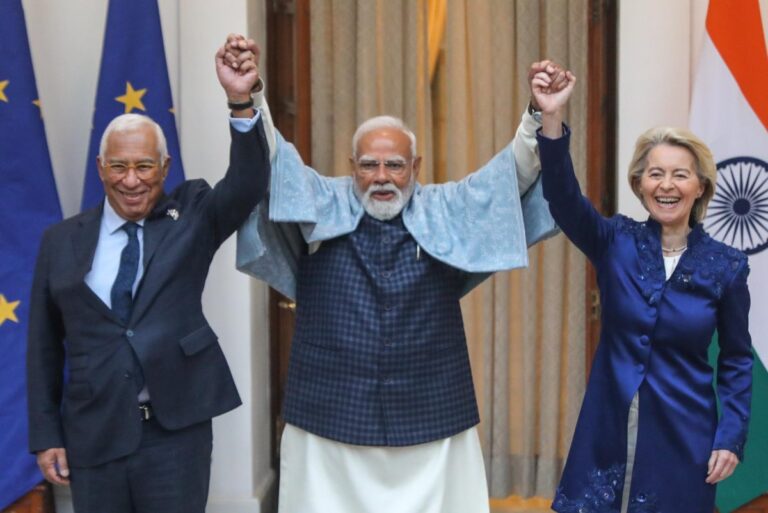
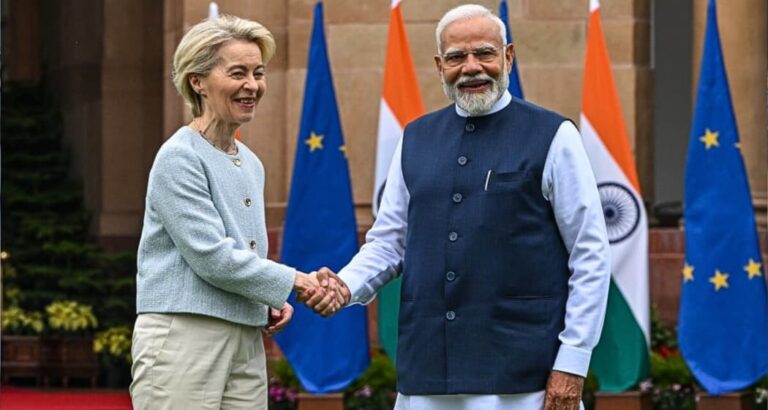
In February, the EU demonstrated the seriousness of its partnership by organizing an unprecedented visit of the entire College of Commissioners to New Delhi. This was followed by the publication of its joint communication on a new EU-India strategic agenda in September 2025, as well as a wave of exchanges and political pressure in recent weeks to finalize the free trade agreement negotiations.
In response, India has changed its view of its relations with Europe, particularly after the February visit. As contentious tariff negotiations and foreign policy shifts dominate India-US relations, Europe is increasingly seen as an important destination and reliable partner for Indian businesses and highly skilled talent. In fact, Indian companies are increasingly looking to expand into Europe: the value of mergers and acquisitions in Europe by Indian companies reached $5.7 billion in 2025, more than any other full year since 2020.
When it comes to technology, the EU’s vision of “open strategic autonomy” requires it to partner with key countries like India, Brazil, Japan, South Korea and others in a spirit of strategic interdependence. As the EU seeks to de-risk its industrial supply chains and deepen its alliances, now is the time to deepen people-to-people exchanges, including by launching a dialogue between key stakeholders on EU-India technology policy.
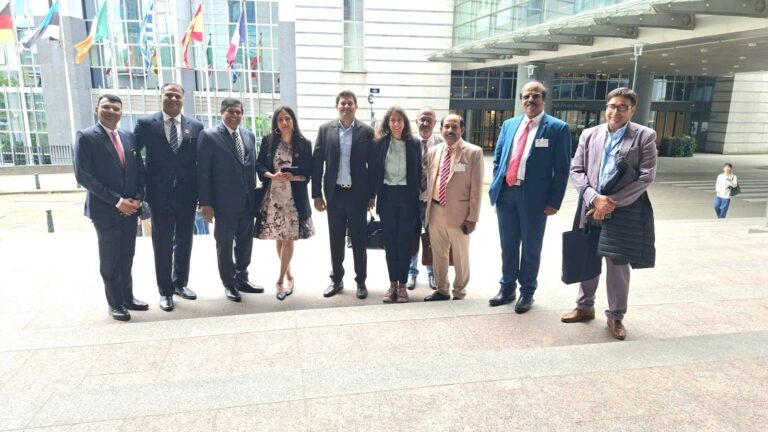
It takes more than diplomatic meetings to create a strong partnership between two powers. Even as official exchanges between the EU and India are growing, European and Indian societies do not know each other well, without meaningful exchanges and dialogues at a societal level, with few universities or think tanks on both sides having in-depth knowledge of the history, politics and regulatory culture of the other side.
At the same time, despite increasing private sector trade, the potential for joint innovation and investment remains largely underexplored. Deepening relations between the EU and India will require a major expansion of knowledge and exchange between the political and business ecosystems.
There is growing support on both sides for expanded EU-India trade, from regular meetings between bureaucracies to broader stakeholder platforms, involving think tanks, academia, civil society and industry. A similar process has taken place in the past alongside the EU-US Trade and Technology Council (TTC).
About the author:
Gautam Kamath is an independent policy consultant based in Brussels and associated in the ECDPM digital economy and governance team.
Chloe Teevan is the head of the digital economy and governance team at ECDPM.
About The Author