November 5, 2025
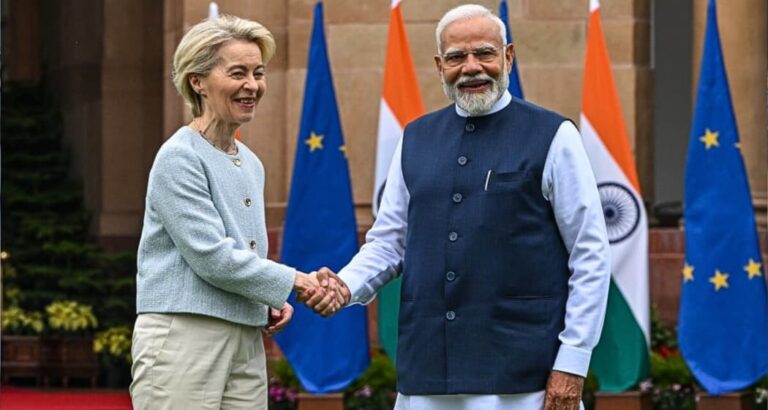
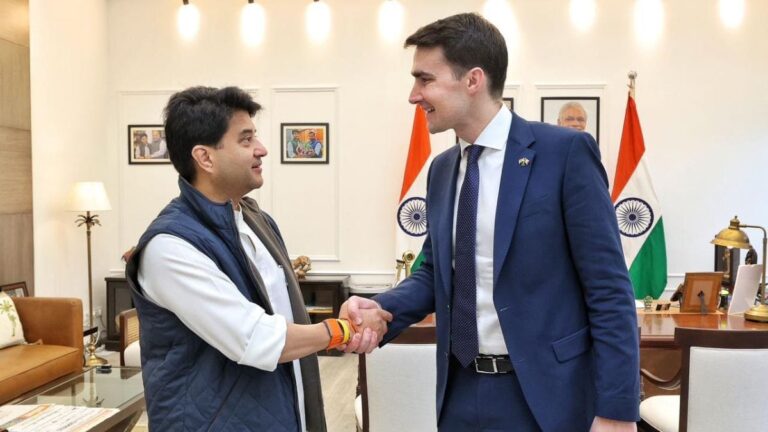
NEW DELHI – India and the European Union (EU) intensified trade talks as Union Minister of Commerce and Industry Piyush Goyal met European Commissioner for Trade and Economic Security Maros Sefcovic in New Delhi.
The meeting focused on reviewing the progress made under the India-EU Free Trade Agreement (FTA) and strengthening bilateral trade and investment relations.
Taking to social media, Goyal said, “Had a productive meeting with @MarosSefcovic, EU Commissioner for Trade and Economic Security, and @CHansenEU, Commissioner for Agriculture and Food. We discussed strengthening India-EU trade and investment ties, promoting FTA and deepening cooperation in priority areas. Both sides are committed to achieving balanced outcomes and mutually beneficial.”
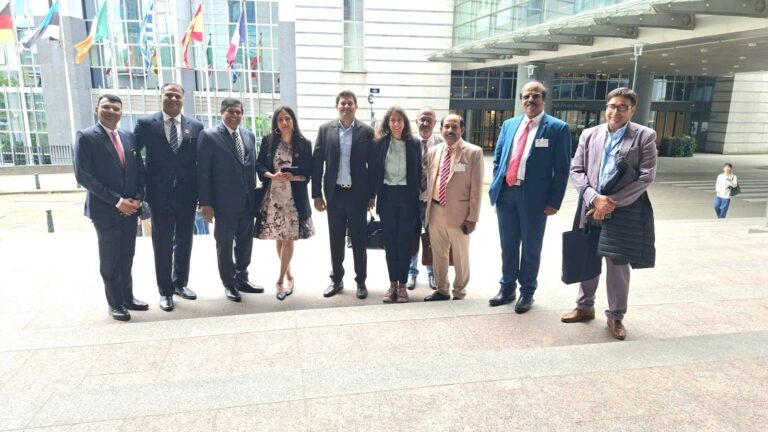
A high-level team of EU negotiators is currently in New Delhi from 3-7 November 2025 for discussions with their Indian counterparts on the draft FTA.
This visit follows Minister Goyal’s official trip to Brussels on October 27-28, 2025, where he held prospective talks with Maros Sefcovic, European Commissioner for Trade and Economic Security.
Furthermore, the Minister of State for Trade and Industry, Jitin Prasada, held a bilateral meeting with the Romanian Minister of Foreign Affairs, Oana-Silvia Țoiu, in Bucharest. Discussions focused on expanding trade, attracting investments and strengthening resilient supply chains within the broader economic framework between India and the EU.
During the meeting, both sides agreed to work towards concluding a fair, balanced and mutually beneficial India-EU Free Trade Agreement within this year, in line with the political direction guiding the ongoing negotiations.
Notably, India’s exports to Romania exceeded $1.03 billion in fiscal year 2024-25, while overall bilateral trade reached around $2.98 billion in fiscal year 2023-24.
Both sides agreed to deepen supply chain links in priority sectors such as petroleum products, engineering goods, pharmaceuticals and ceramics, and facilitate collaboration on standards, testing and investment partnerships to improve market access for both sides.
They also agreed to work together on diversifying production and building stronger and more resilient supply chains as trusted partners, ensuring stability and confidence for businesses in both countries.
About The Author