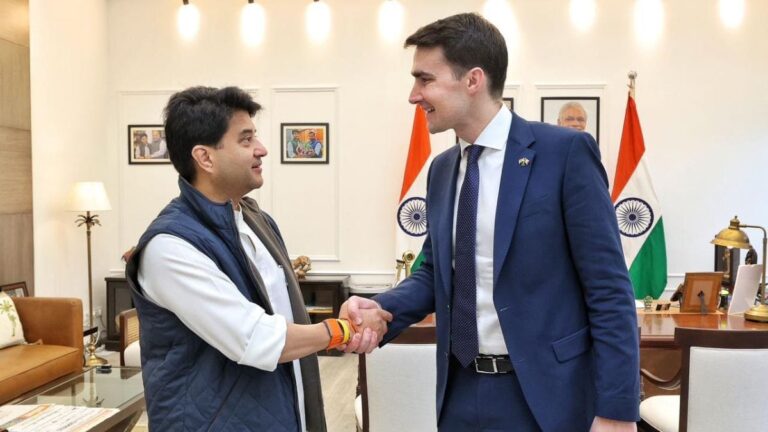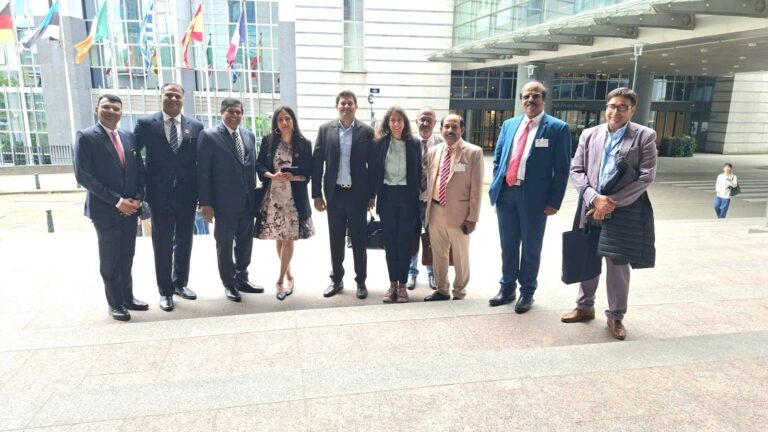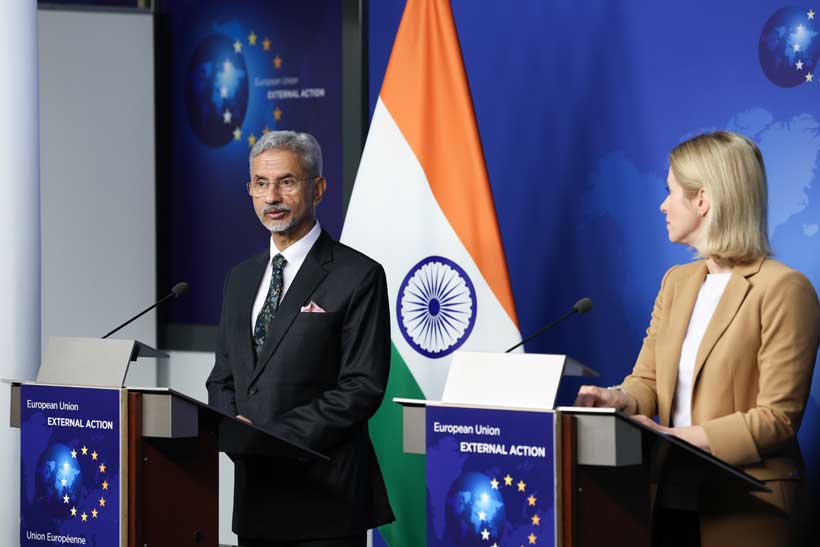
India and the European Union have agreed that sensitive issues including steel, auto and carbon tax at EU borders require further discussions before concluding their long-pending free trade agreement (FTA), New Delhi said on Wednesday. The talks took place in Brussels between Commerce Minister Piyush Goyal and European Commissioner for Trade and Economic Security Maros Sefcovic during Goyal’s visit from October 26-28.
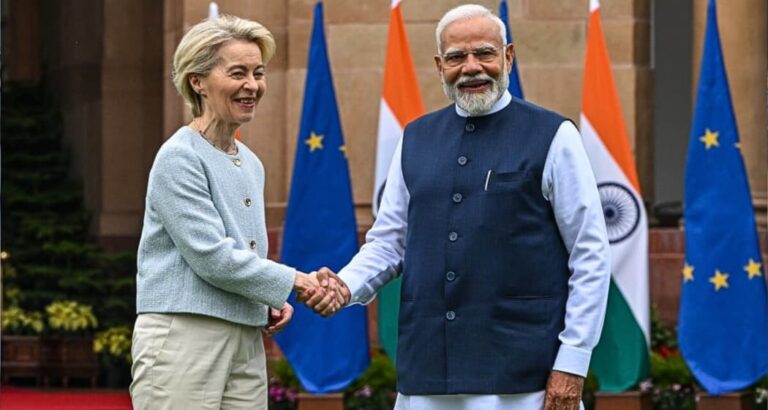
Both sides reaffirmed their goal of finalizing the FTA by the end of 2025, following the advice of Prime Minister Narendra Modi and European Commission President Ursula von der Leyen.
The negotiations, restarted in 2022, have gained momentum since the re-election of U.S. President Donald Trump, as Brussels strives to secure new trade deals with India, Mexico, Mercosur and others.
India is seeking a “balanced and fair” deal that improves market access while addressing regulatory challenges. Goyal described the talks as “productive and meaningful”, adding that both sides explored “possible landing zones” on outstanding issues and agreed to finalize non-sensitive industrial tariff lines.
Why it’s important:
The India-EU FTA could become one of New Delhi’s most important trade deals, linking it with its largest trading partner. Bilateral merchandise trade reached $137.5 billion in 2023/24, almost 90% more than a decade ago. However, differences over carbon taxes, car taxes and environmental regulations pose major hurdles, reflecting the broader challenge of aligning India’s industrial ambitions with EU green standards.
The main players are the Indian government, which advocates for preferential access for labour-intensive sectors such as textiles and leather, and the European Union, which aims to meet its climate and regulatory commitments under its Carbon Border Adjustment Mechanism (CBAM). Businesses in both regions, particularly steelmakers, automakers and exporters, have a vested interest in how these issues will be resolved.
And then:
A technical team from the EU’s Directorate-General for Trade will visit India next week to develop potential solutions identified during the Brussels negotiations. Progress in these working-level discussions will be crucial to maintaining momentum towards the 2025 FTA deadline, with both sides seeking to balance trade liberalization with environmental and economic security concerns.
With information from Reuters.
About The Author