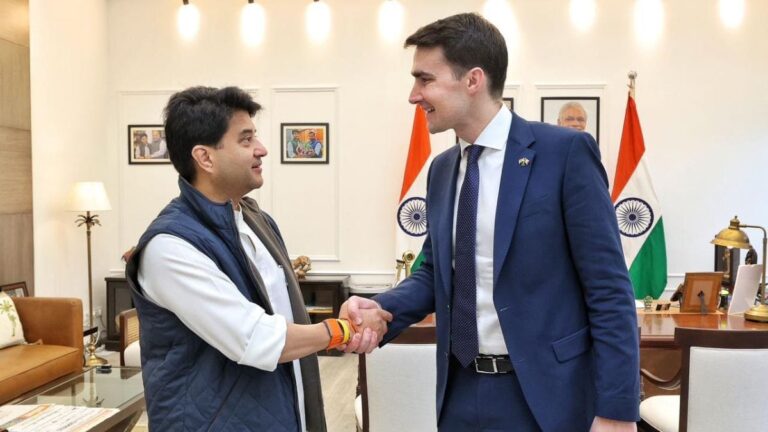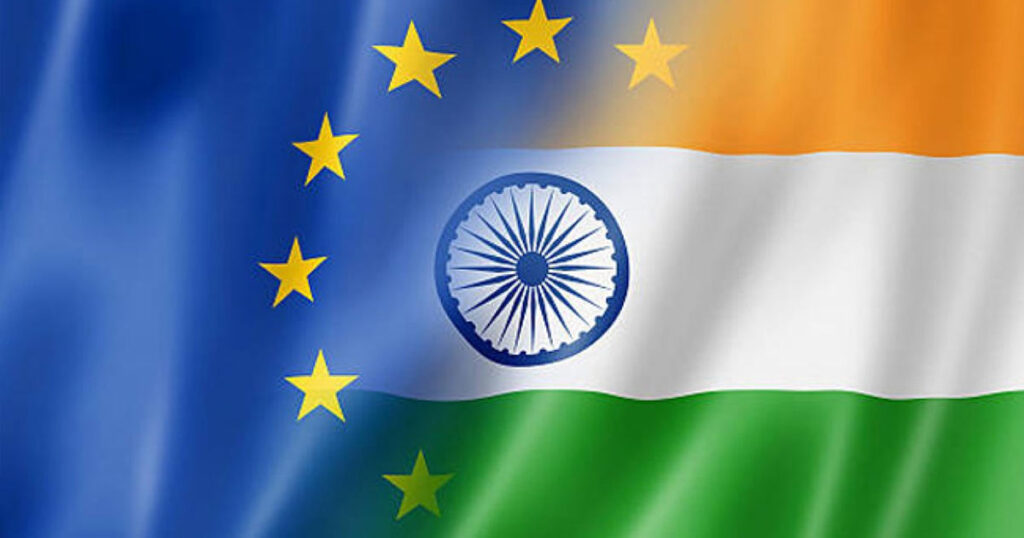

Like the European Union (EU) revealed the “new EU-India strategic agenda” by adopting a joint communication from the European Commission and the High Representative for Foreign Affairs and Security Policy, there is a clear message from Brussels. He wants to deepen his cooperation with New Delhi in the areas of trade, technology and defense. Composed of five pillars:Prosperity and sustainability focus on trade, investment and economic security; Technology and innovation building resilient digital societies and research cooperation; Security and Defense deepen regional collaboration on defense and industrial aspects; Connectivity and global issues promote cooperation in third countries to strengthen connectivity and shape global governance; Facilitators in all pillars targeting labor and skills mobility for broader engagement – Brussels wants to create new strategic partnership opportunities with New Delhi.
Launching the strategy on Indian Prime Minister Narendra Modi’s birthday, European Commission President Ursula von der Leyen highlighted India’s emergence as a critical partner during times of regional and global upheaval, including the conflict in Ukraine. Like the Roadmap to 2025launched during the 15th EU-India Summit in 2020, was about to be renewed, the EU began to closely monitor its geostrategic efforts, especially in the context of high tariffs imposed by the administration of US President Donald Trump on almost all countries in the world.
India’s careful assessment of the ongoing free trade negotiations with the United States certainly has long-term strategic implications for the EU-India partnership. If India manages to negotiate the 50 percent tariffs with Trump, the EU will be able to catch a breather as it is under pressure from the United States to reprimand India for its imports of Russian oil. Furthermore, the rage between the United States and China war The purchase of rare earths will have considerable consequences on the manufacturing sector, in particular on renewable energy, military equipment, smartphones and the automobile industry.
The EU, India and the need for lasting cooperation
It is therefore imperative that India and the EU join hands to ensure “mutually beneficial and transformative outcomes” for both stakeholders and the global community. As pluralist democracies sharing mutual interests and common values, alignment of efforts between the EU and India is crucial to easing trade tensions. While India’s imports of Russian oil continue to be a bone of contention for the West, sensitivities around the war in Ukraine have forced Europe to diversify its partnerships and, in turn, look to the South for support. This also involves doubling down on the India-EU Free Trade Agreement (FTA), which can open new avenues for trade, jobs and investment. According to the Federation of European Businesses in India (FEBI) According to the 2025 Business Climate Survey, around 6,000 European companies currently operate in India, generating around 8 million jobs, underscoring confidence in India’s economic prospects. Yet bottlenecks present themselves in the form of the Carbon Border Adjustment Mechanism (CBAM), the EU Deforestation Regulation (EUDR) and regulations. barriers High taxes, customs procedures and quality control orders (QCOs) persist.
As pluralist democracies sharing mutual interests and common values, alignment of efforts between the EU and India is crucial to easing trade tensions.
This reflects the need for the EU and India to go beyond rhetoric by channeling concrete actions for shared results. Collaboration in sectors such as green transition, trade, digital technology transfer, infrastructure connectivity, health and climate resilience should be a priority for both countries.
The promise of a joint EU-India development partnership
As one of the largest providers of development assistance in the world, EU official development assistance (ODA) continues to occupy an important place in the global help landscape. For example, in 2023, collective EU ODA amounted to €95.9 billion, or 42% of total global ODA contributions.
The Trump administration’s decision to gut the United States Agency for International Development (USAID) will likely have an impact on EU development aid policy and the global aid architecture as a whole. Naturally, the EU cannot completely compensate for these changes and may not be able to fully fill the resulting void. What Brussels can do, however, is strategically expand its influence to gain strategic depth in critical sectors such as trade, technology and capacity building.
Here, the EU-India Trade and Technology Council (TTC) offers promiseespecially after the signing of a Memorandum of Understanding (MoU) on semiconductors in 2023. Expanding supply chains for green and digital transitions, encouraging innovations in research ecosystems and strengthening mutual economic competitiveness are some of its key strengths. However, differences in digital privacy and data protection governance frameworks, disparities between regulatory and structural aspects of technological capabilities, and trade policy restrictions – which could be resolved by signing the FTA – remain significant obstacles impacting the implementation of the TTC.
Nonetheless, the new strategic agenda highlights the importance of “amplifying the impact of investments” in third countries by merging India’s growing role as a development partner with that of the EU. Global Gateway initiative. It is worth noting India’s rise as a reliable development partner in the Global South. His development interventions in several parts of Africa and Asia continue to facilitate disaster risk preparedness for climate shocks and natural hazards through initiatives such as the International Solar Alliance (ISA) and the Coalition for Disaster Resilient Infrastructure (CDRI). Organically geared towards the sustainability discourse, India’s interventions through Lines of Credit (LoCs), grants, and particularly the Indian Technical and Economic Cooperation (ITEC) programme, have been instrumental in supporting skills transfer and capacity building in many developing countries.
Promoting the EU-India Joint Development Partnership in third countries can facilitate an economic and strategic presence for the partners. The emergence of connectivity as a pillar of the current international order is a crucial factor. It has become increasingly imperative to facilitate trade flows and diversify supply chains to enable the exchange of resources, goods, services as well as human capital. With strategic investments in connectivity proposed by China’s Belt and Road Initiative (BRI), several countries, including those in the EU, are resorting to relocation to ensure business continuity and stable supply chains.
From a Southern perspective, it is imperative that the EU goes beyond its traditional donor role and enables locally driven development in key sectoral areas such as climate adaptation, energy transition, health systems and sustainable infrastructure.
With India GDP strong push which fuels its growth, countries visibly consider New Delhi as a popular local destination. Clearly, this also helps to strengthen connectivity, a common goal shared by the EU and India. In this context, the India-Middle East-Europe Economic Corridor (IMEC), launched during India’s presidency of the G20 in 2023, strengthens EU action. Global Gateway strategy. By attempting to strengthen trade, energy cooperation and digital governance in the Indo-Pacific region, IMEC aims to create shared economic and geopolitical benefits for India, the EU and relevant partner countries.
From a Southern perspective, it is imperative that the EU goes beyond its traditional donor role and enables locally driven development in key sectoral areas such as climate adaptation, energy transition, health systems and sustainable infrastructure. Combating internal fragmentation, aligning different priorities and leveraging collective impact are fundamental for the EU. By co-creating projects with India as a partner, the EU can help mobilize catalytic development finance for the Global South in areas such as digital governance, climate resilient infrastructure, food security, health and energy transition.
As formalities move forward, the new strategic agenda requires approval by the European Parliament and the Council before the start of formal negotiations at the India-EU summit in January 2026. Still, this agenda marks an optimistic step for the strategic partnership between Brussels and New Delhi in times of geopolitical turmoil.
Swati Prabhu is a member of the Center for New Economic Diplomacy (CNED) at the Observer Research Foundation.
The opinions expressed above are those of the author(s). ORF research and analysis now available on Telegram! Click here to access our curated content – blogs, long forms and interviews.
About The Author