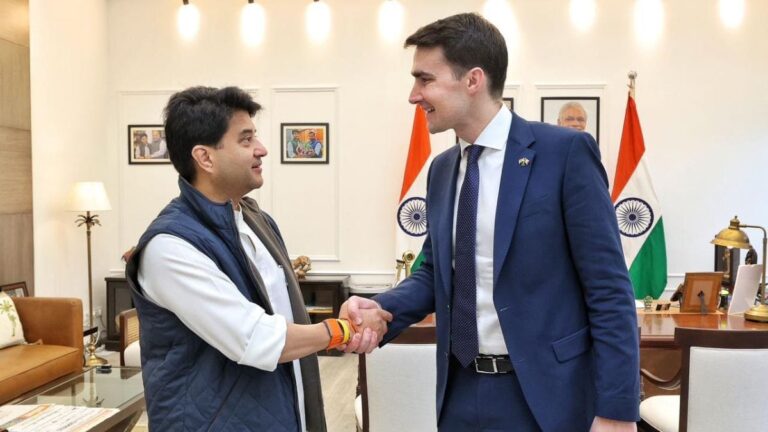
A fair trade partnership between India and the EU requires India to assert its strategic autonomy and seek reciprocity in trade, technology and defence.
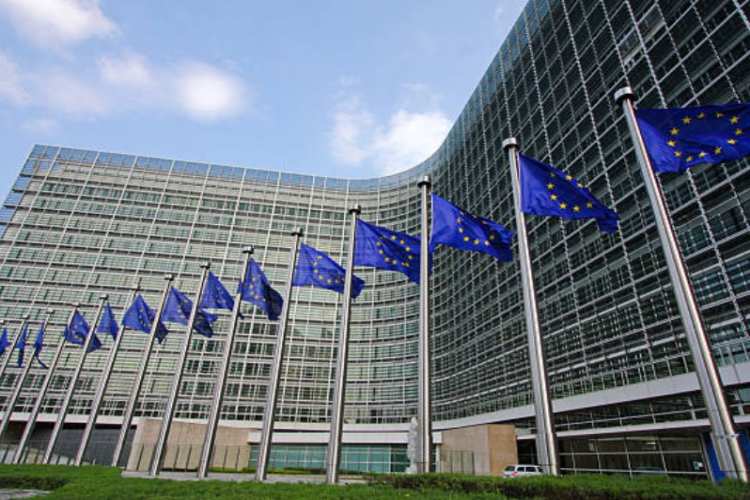
India-EU trade partnership: THE the European Union The decision to adopt a new strategy aimed at strengthening political, economic and security ties with India marks an important moment in global diplomacy. Brussels has unveiled an ambitious roadmap aimed at expanding cooperation in trade, technology, defence, sustainable development and global governance. The move reflects a growing recognition that India is not just an emerging economy, but also a central player in shaping the global order. Behind the celebratory tone of the communiqués lies a central question: will India approach this commitment as an equal partner, negotiating with strength and clarity of purpose? Or will it allow goodwill and rhetoric to replace strategic definition?
India must be clear-headed. The coming decade will test its ability to combine diplomacy with strategic intent – to ensure its ties with the EU advance its own long-term goals on trade, technology and security. The new partnership, if carefully crafted, can consolidate India’s global position; otherwise it risks becoming another wordy statement of intent.
READ | High-speed rail project to test India’s capacity and governance
The promise of a new partnership
The EU’s renewed openness to India comes at a time of changing global order. The return of great power rivalry, supply chain disruptions, and the shift in global production away from China have changed the map of economic interdependence. For the EU, India has become a natural partner in this new reckoning: an open economy with vast market potential, a functioning democracy and an expanding technological base.
According to recent briefings from the European Parliament’s research service, India’s central location in the Indo-Pacific and its growing maritime presence make it indispensable to any serious vision of global connectivity. Trade relations are already significant: bilateral trade in goods between India and the EU stands at around $140 billion, making the Union India’s third largest trading partner. For India, Europe offers what few other regions can: cutting-edge technology, long-term investment and stable demand for goods and services.
However, a shared opportunity does not automatically translate into a shared strategy. The real test is whether both parties can build a partnership based on mutual respect and reciprocity. India’s task is to define the terms of engagement, not simply adapt to the European institutional playbook.
Defining India’s strategic interests
For India, the way forward begins with a frank expression of its own interests. The first area of focus should be trade. Negotiations on the long-pending free trade agreement, which lasted more than a decade, have now reached an advanced stage. According to official statements, more than 60 chapters have been finalized. Progress must not come at the expense of balance. India’s manufacturing and agricultural sectors cannot resist asymmetric liberalization that opens domestic markets while restricting exports through regulatory barriers. Reducing tariffs must be accompanied by real access to Indian products, particularly in sectors such as textiles, pharmaceuticals and engineering products.
Technological cooperation constitutes the second pillar. Europe seeks to collaborate on semiconductors, batteries and digital regulation. These are areas where India welcomes partnership, but not dependence. The goal must be sovereign technological capability – not becoming a low-cost complement to European industrial strategies. Any joint venture or research collaboration is expected to strengthen India’s domestic innovation base and intellectual property rights.
Defense and security cooperation constitutes the third frontier. Europe’s interest in maritime security and freedom of navigation in the Indo-Pacific region aligns with India’s own priorities. Joint projects in manufacturing or defense connectivity must be based on co-ownership and co-leadership, not simple purchases or grants. India’s defense partnerships must increase its autonomy, not dilute it.
Finally, India must assert its voice in global governance and climate policy. Although well-intentioned, the EU’s advocacy for carbon border taxes and environmental regulations cannot impose uniform standards on developing economies. India’s engagement with Europe must emphasize the principle of common but differentiated responsibilities. Developmental equity is not an excuse; it is a necessity.
Articulating these priorities will help India present itself as an equal power with defined stakes, and not as a partner awaiting recognition.
Negotiate with force and not with feeling
Negotiation is not an exercise in cordiality; it is the art of balancing interests. India’s success will depend on its willingness to be assertive where it must and flexible where it can. The last round of FTA negotiations, a decade ago, failed because India feared unilateral commitments. This lesson must not be forgotten. A strong negotiating position relies on clarity – clarity on what India can offer and what it cannot concede.
When it comes to trade, India must emphasize that the benefits of access flow both ways. When it comes to regulatory standards and intellectual property, it should preserve its policy space to protect public health, digital sovereignty and industrialization goals. In the technological field, it should negotiate partnerships including joint R&D and local added value, rather than letting Europe set the conditions for cooperation. When it comes to defence, India should strive to co-develop and co-produce rather than import, ensuring that technology transfer is real and measurable.
In terms of sustainability and governance, India must reject conditionalities that penalize its development model. The European carbon border adjustment mechanism is a good example: it risks functioning as a disguised customs duty on exports from developing countries. India should advocate for a transition regime that recognizes the historical responsibilities and costs of green transformation. Negotiating with strength means not rejecting the partnership, but ensuring that the partnership does not become a dependency.
Leverage the global context
Paradoxically, the global environment now favors India. Europe’s own vulnerabilities – the post-war energy shock in Ukraine, the need to reduce China-related risks, and the uncertainties of transatlantic politics – have increased its appetite for reliable partners. The election of Donald Trump in the United States has increased Europeans’ concerns about their security and economic future. This anxiety, if judiciously managed, becomes a lever for India.
India is now seen as a strategic balancer, a country large enough to play an important role and independent enough to chart its own course. Europe needs India as much as India needs Europe. But this equation must be framed in India’s terms. The partnership should strengthen India’s autonomy, not subsume it into Western alliances. India’s ability to cultivate multiple relationships – deep ties with the United States, energy cooperation with Russia, and engagement with the Global South – should be seen as an asset, not a liability.
India-EU trade: a pragmatic roadmap
The next step lies in implementation. Statements must give way to deliverables. The “new EU-India strategic agenda”, approved by the 27 member states, provides a useful scaffolding but not a model. India should push for a clear timeline: the conclusion of the FTA within a year, the launch of technology and innovation platforms, as well as a strong partnership in green hydrogen, critical minerals and resilient supply chains.
Medium-term cooperation should focus on industrial clusters, defense co-production and academic collaboration. Institutional mechanisms already in place – such as the EU-India Trade and Technology Council – should be empowered with monitoring and review powers, ensuring accountability on both sides. The partnership must not remain at the level of ministerial declarations; this must translate into jobs, investments and shared innovation.
India’s engagement with the European Union is not simply a diplomatic project; it’s a strategic test. Europe’s renewed interest offers India a seat at the table where the future of trade, technology and global governance is being written. But one seat alone is not enough. India must bring clarity of purpose, consistency of strategy and confidence in execution.
Negotiating with strength requires more than rhetoric: it requires preparation, data and conviction. If India defines its interests precisely and insists on reciprocity, the new partnership could transform the country’s economic landscape. But if it gives in to polite diplomacy and indefinite ambition, the occasion could once again make history. India should enter the negotiations not as an applicant seeking approval, but as a partner offering partnership on an equal footing. This is the only basis on which a lasting and dignified relationship with Europe can be built.
About The Author