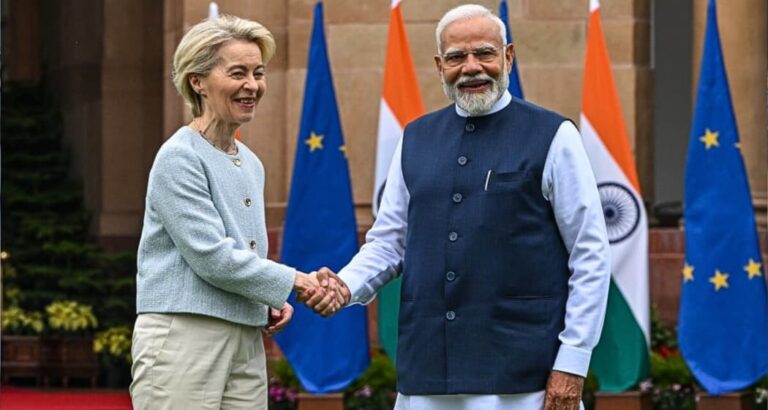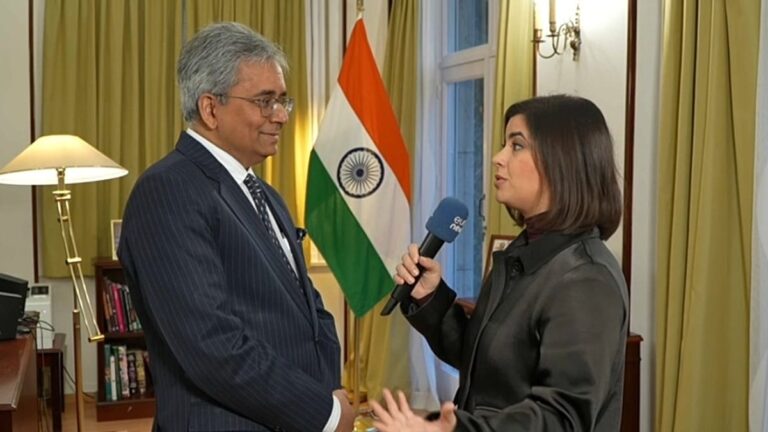
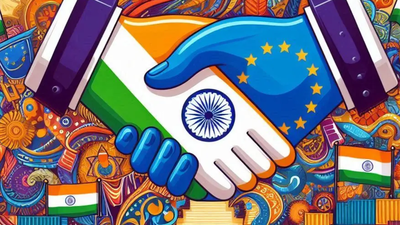
The potential free trade agreement (FTA) and investment protection pact between India and the EU could be a “game changer” amid rising tariffs and market access restrictions in other regions, EU Ambassador Hervé Delphin has said. Speaking ahead of the 14th round of FTA negotiations in Brussels, Delphin acknowledged that the negotiations remained “difficult” with several unresolved issues. The comments come after Prime Minister Narendra Modi and European Commission President Ursula von der Leyen pledged to conclude the trade deal by December 2025.
The EU is India’s largest trading partner, with trade in goods reaching $135 billion in 2023-24. Delphin, speaking to the Federation of European Business in India (FEBI) on Tuesday, highlighted the FTA’s potential to open up new opportunities and strengthen bilateral trade ties, especially in light of the trade disruptions caused by the Trump administration’s policies.“The FTA can open up new opportunities for European and Indian businesses and create the conditions for a significant increase in our bilateral trade and investment,” Delphin said.“As some countries increase tariffs or close their markets, we should use the FTA to diversify our trade, guard against uncertainties and strengthen our supply chains,” he added on Tuesday to the Federation of European Businesses in India (FEBI), whose scenario was published on Saturday.EU Ambassador Hervé Delphin also said that the negotiating teams of India and the EU were working diligently on the Free Trade Agreement (FTA). “(It is) fair to say that the negotiations are difficult and important issues remain to be resolved. The 13th round, in early September, with the direct participation of Commissioners (Maros) Sefcovic and (Christophe) Hansen on the EU side, did not result in the type of breakthrough expected,” he said.The 13th round of negotiations took place in Delhi, in the presence of EU Agriculture Commissioner Hansen and Trade Chief Sefcovic.Delphin added: “The EU was and still is ready to conclude a meaningful package. We look forward to the next round and continued negotiations towards a mutually beneficial agreement.”According to the EU, although 11 chapters, including on customs, dispute resolution and digital trade, have been finalized, key areas such as rules of origin and market access are still under discussion. The 13th round of negotiations in September, in which Commissioners Sefcovic and Hansen participated, did not result in the expected progress. Delphin underlined the EU’s desire to conclude a meaningful agreement, highlighting the strong economic complementarity between India and the EU. “Given that the EU and India represent the second and fourth largest economies in the world, the potential for expanding bilateral trade relations is significant,” he said.
About The Author