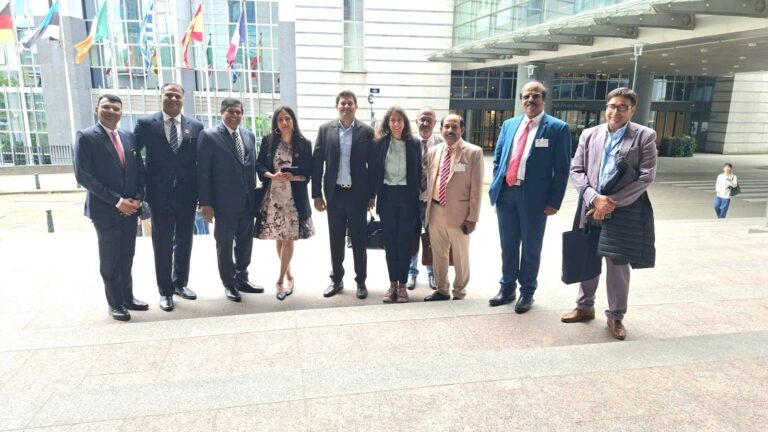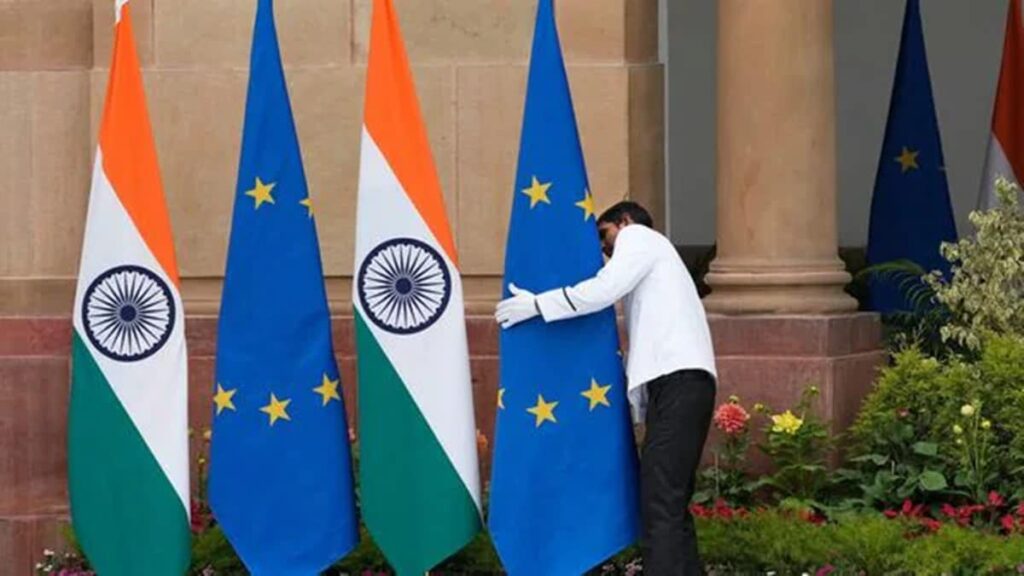
India and the European Union (EU) will return to the negotiating table in Brussels on Monday for the 14th round of talks on their free trade agreement (ALE) for the push of the last key to conclude it before the deadline of December 2025.
Officials on both sides have held meetings almost every two months since the announcement of the deadline. The last round, on the 13th since the negotiations began in July 2022, took place from September 8 to 12.

During this tour, the EU trade commissioner Maros Sefcovic and the agriculture commissioner Christophe Hensen were also in New Delhi to guide the negotiations and have an ignition that would have arisen.
“Their high -level interactions with the Indian authorities were useful for understanding the position of each team, but did not allow them to make enough progress in sensitive areas such as cars and agricultural products,” said the EU report on the Tour.
Standing progress in sensitive sectors
Speaking during an event after the 13th round of the EU ambassador to India, Herve Delphin, said that the Round was a missed opportunity to carry out a breakthrough in the negotiations.
The EU pushes India to reduce high import duties on cars, from 60% to 100% depending on the size of the vehicle – in part of the current trade negotiations. With additional samples such as cents and other costs, effective tax on imported cars can reach 160%. Brussels is also looking for wider access to the market for agricultural products, including European wines, because it seeks to deepen trade links with the most populous country in the world.
India’s requests in negotiations are free access to its imports with a high intensity of labor and to emerging sectors such as car, electronics. Another concern for New Delhi in negotiations is the imposition of the carbon tax by the EU on imports of steel, aluminum, cement and fertilizer from January 26.
Basic requests from India and CBAM concerns
The tax imposed by the carbon borders adjustment mechanism (CBAM) could put another barrier to India exports while the price barriers are reduced. Already, India exports to the EU of steel and aluminum have fallen because small businesses do not want to go through the difficulty of reporting carbon emissions at the stage of the production of their products. Carbon reports began at the end of 2024 before the taxation of the tax.
The FTA covers 23 political areas or chapters, including trade in goods, trade in services, investment, health and phytosanitary measures, technical obstacles to trade, commercial appeals, rules of origin, customs and trade facilitation, competition, commercial defense, government purchases, disputes, intellectual property rights, geographic indications and sustainable development.
About The Author