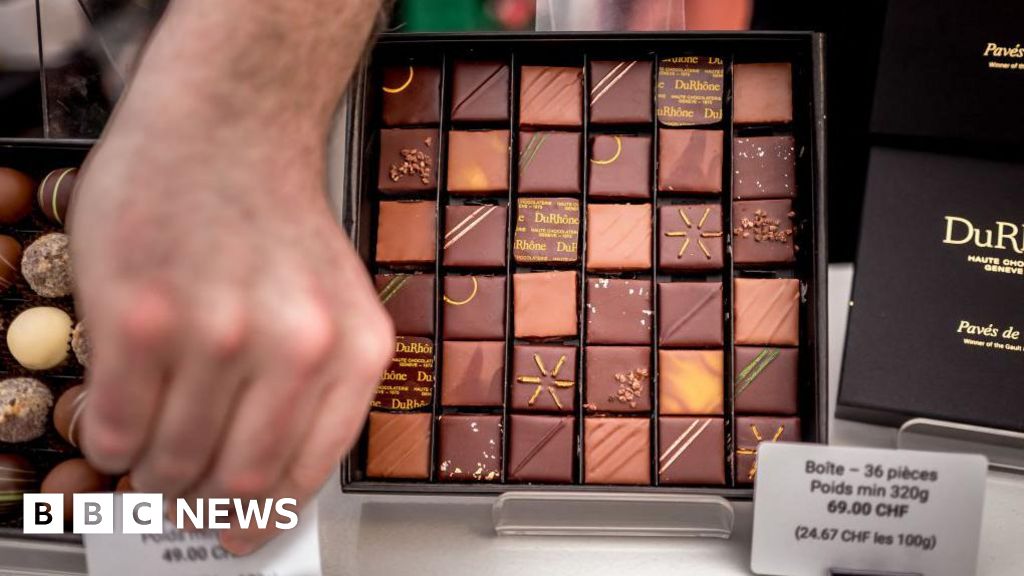
Swiss wines and chocolates should become cheaper in India after a new trade agreement that he signed with a block of four European nations came into force on Wednesday.
India signed the Commercial and Economic Partnership Agreement (TEPA) with the European Free Trade Association (EFTA) – which includes Switzerland, Norway, Iceland and Liechtenstein – in March 2024.
Under the agreement, India will reduce the prices to 80 to 85% of the goods from these countries at scratch, while Indian exporters will obtain a franchise access to 99% of the goods on the EFT markets.
The two parties also undertook to invest $ 100 billion (74 billion pounds sterling) and to create a million direct jobs over the next 15 years within the framework of the agreement.
This is India’s first trade agreement where market access is directly linked to these investment commitments.
Experts say that it reports a strategic change in the way in which trade agreements are being negotiated, with investment commitments and not only tariff reductions that are part of the agreement.
For India, products like Swiss chocolates and wines should become cheaper, while EFTA countries will benefit from zero rates from India on many medicines, dyes, textiles and iron and steel products over the next five to 10 years.
Imports from India from EFTA countries last year were $ 32.4 billion – most of which came from Switzerland, which represented a third of this number.
From this, imports of gold represented around $ 18 billion. Under the trade agreement, gold tasks remain unchanged.
India exports to EFTA countries during the same year were $ 2 billion, including 98% in industrial goods.
But industrial goods are already zero, so India will not see any additional advantage, according to Ajay Srivastava by Global Trade Research Initiative (GTRI), a Delhi -based reflection group.
“If there are gains, it may not be due to the prices but because of the construction of the perception, because it is the first trade agreement of India with a European country,” said Srivastava. This will send a signal to the world that “India is ready to liberalize”.
The agreement comes into force in the context of abrupt prices of 50% imposed by the United States on India. Trade discussions between the two countries are underway.
India also negotiates several trade agreements in order to compensate for the effect of American prices.
In July, he signed a free trade agreement (ALE) with the United Kingdom, which should come into force by 2026.
India is also negotiating an Ale with the European Union.
Some 6,000 EU companies operate in India and the EU block is India’s largest trading partner in goods, bilateral trade reaching 135 billion dollars in 2022-233 and almost dubbing over the past decade.
Follow BBC News India on Instagram,, YouTube,, Twitter And Facebook.
About The Author