Ani |
Update: Sept. 29, 2025 21:38 It

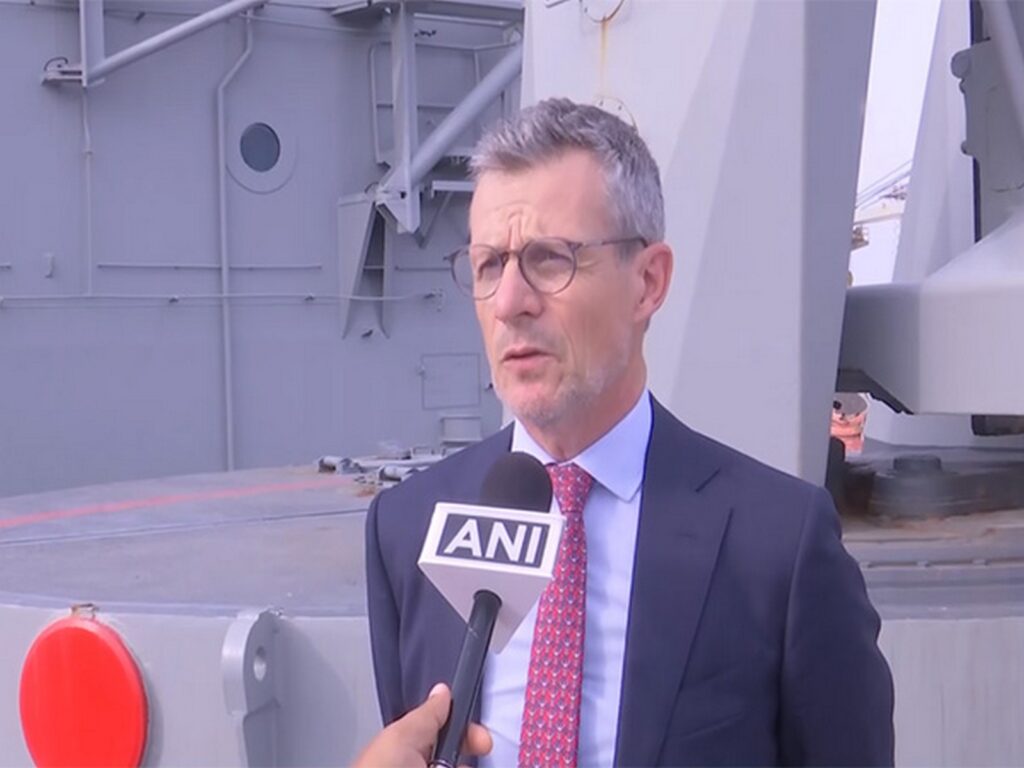
New Delhi (India), September 29 (Ani): EU Ambassador to India, Herve Delphin, said that the India-UE relationship had reached a pivotal moment, the two parties ready to raise their strategic links at the following level in its main speech during the launch of the problems of the number 5 of India.
The event, organized in partnership with The Heinrich Boll Stiftung, explored the trajectory of Indian-Europe relations against a context of global disorders, transfer of alliances and a rapidly evolving Indo-Pacific.
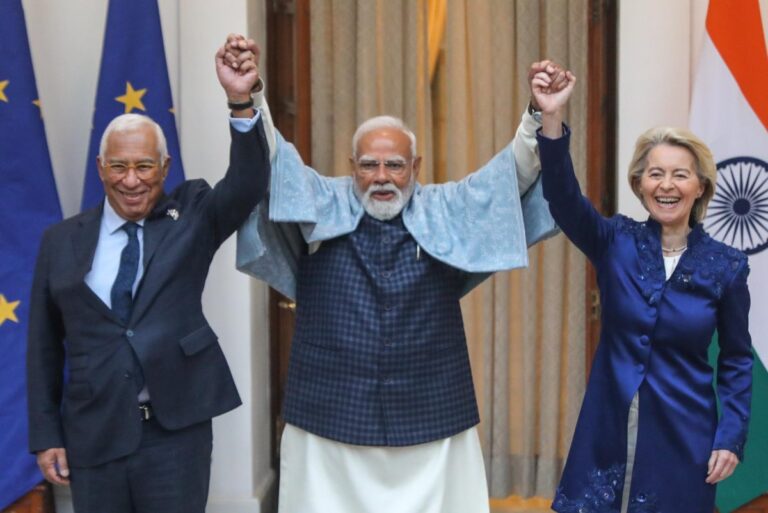
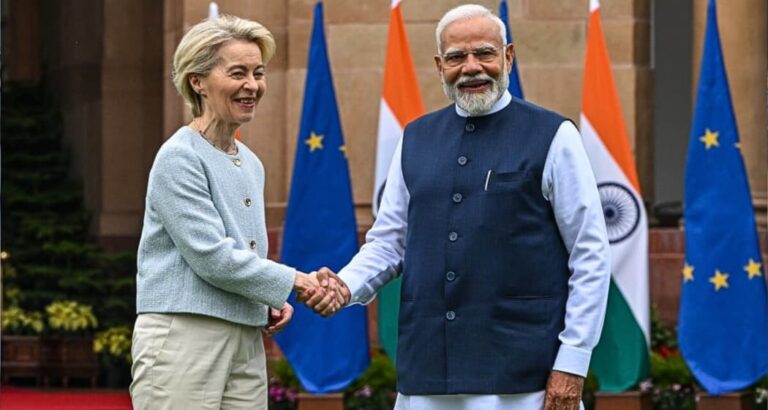
Delphin underlined the alignment of the planets, symbolizing the dynamics of the India-EU relationship. He noted that the recent visit of the president of the European Commission in Delhi and the release of a historic political document on the EU-Indic strategic agenda demonstrate the EU’s commitment to deepen links with India.
“When President Von Der Leyen met Prime Minister Modi on the occasion of the unprecedented visit of the European Commission college to Delhi last February, she said to him:” The planets are aligned “. She made not only reference to a rare phenomenon of alignment of seven planets of our solar system which took place that day, on February 28, 2025. European and India.
The main areas of cooperation include joint communication which offers an ambitious and concrete framework for the strategic agenda of India-EU, by focusing on five pillars: prosperity and durability, technology and innovation, security and defense, connectivity and global problems and facilitators for partnership.
“This version was to coincide with the planned release of a historic political document on the EU side: the joint communication of the Commission and the Kallas of high representative on the Council and the European Parliament on a new strategic EU-India strategic agenda.
He noted that the proposals include innovation hubs, Blue Valleys, a TTC 0.2 focused on supply chains, a gateway office for skilled ICT workers and a security and defense partnership for industrial cooperation.
“At the heart, joint communication offers nothing more than a greater connection and integration of our ecosystems. It is not short -term coverage. It is a long -term investment. It is the concrete and ambitious offer of the EU.”
Delphin underlined political support on both sides.
“The reference to India as a priority in the political directives for the new commission presented in July 2024 by the president von der Leyen was an important signal that only a few resumed. The visit to Delhi by the president with the college of commissioners last February, and the recent visit of the EU EU ambassadors to political conversation. They are a powerful political message of confidence and preparation of the EU. “”
He stressed that the leaders on both sides were aligned, noting the reference of Prime Minister Modi to the EU and India as “natural strategic partners”.
He underlined the growing maturity of dialogues, the convergence of global aspirations and the scale of shared influence.
“The EU and India represent together nearly 25% of world GDP, 25% of the world’s population. The EU is the largest trading partner in India in goods; we are both cooperative world actors involved in the rules based on the rules and the order based on rules.”
Delphin also stressed the importance of having the ability to act.
“The current 2020-2025 joint roadmap represents a list of 118 shares. The two parties agree that the completion rate exceeds 80%. However, there were probably too many actions, which are not necessarily formulated in terms of real deliverables. Now, the strategic case is clear. We must deliver.”
He added that delivery must include the finalization of the FTA by the end of the year and the negotiation of a new EU-Indian strategic roadmap for approval at the next summit in Delhi in 2026.
He stressed the importance of stronger institutional governance, the mobilization of the whole system and a greater involvement of companies, experts and reflection groups.
“Creating more familiarity is essential to update knowledge and develop a mutual understanding: like the EU position on China, which is still not entirely evaluated in India; Or India’s commitment with world South, and mini-laterals such as the BRICS or the OCS. I therefore salute the global initiative of India with this Lumiair problem on opportunities, forces, risks and limits. “”
Delphin stressed that the revival of ALE’s negotiations and the establishment of the Commerce and Technology Council were part of the EU revaluation.
He noted that even if Europe was not always important on the strategic horizon of India, the posture of the strategic autonomy of the EU had changed perceptions in Delhi.
“In short, the circumstances of the need to deactivate, to cover yourself by diversifying partnerships and the affirmation of greater strategic autonomy certainly give a strong momentum to deepen our strategic links.”
He said that by working together, India and the EU can exploit their additional forces and assets to create a truly transformer partnership.
Delphin said: “I am certainly more familiar with geopolitics than cosmology or eschatology, but on each account, it would seem that the EU and India have a hosendary with fate ”. A common destiny. Formula.”
On the question of circumstances, he noted that the policy of global power, technological races and the decline in multilateralism have created common challenges.
“At the heart, they face similar challenges: their economic development and their security are under stress; their vision of a world order based on rules and cooperatives is undermined.”
Citing the opening of Von der Leyen in Delhi, he recalled his words: “This world is charged with danger. But I believe that this modern version of high power competition is an opportunity for Europe and India to reinvent their partnership. In many ways, the EU and India are only placed to meet this challenge together.”
Delphin has recognized the challenges of the relationship, in particular differences on issues such as Russia War in Ukraine and economic coercion. However, he highlighted the importance of sensitivity and respect to navigate these differences.
“Let us be clear: there is a question of Russia. Putting the war in Ukraine with Russia which is truly engaged in a ceasefire and peace talks is certainly what everyone wants. However, it seems that President Putin has different opinions. India has spoken for peace. Russia is a strategic partner for India. India also aims to strengthen his terms.
He added: “It is time, however, that India ceases to see Europe through the eyes of Russia, as it has done since independence. Although Delhi must maintain a productive relationship with Moscow, he must also balance his links with Brussels and Moscow. The rapidly increasing issues of India with the European Union require such a recaltum.”
On democracy and human rights, he declared: “With regard to questions of democracy and human rights, Europe and India are what they are because of their belief in democracy, human rights, individual dignity and equality, putting people at the center. We both appreciate rich cultures, multifaceted civilization of our diversity.”
In conclusion of his remarks, Delphin said: “The degree of strategic convergence between the EU and India has never been higher, motivated by: the convergence of our geopolitical, economic and security interests. Complementarity of our respective needs and assets. Scale of what we can offer each other. Will of our leaders. in Delhi. “(Ani)
About The Author