Published on
•Updated

ADVERTISEMENT
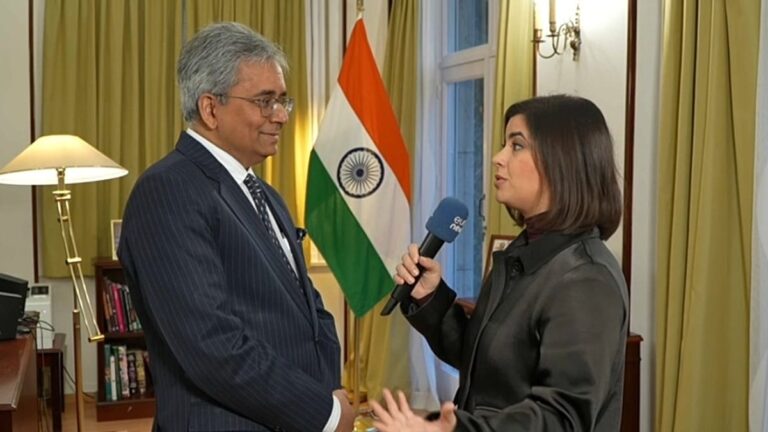
Negotiations on the chapter of the sustainability of the commercial agreement with India prove that the chief negotiator of the Christophe Kiener commission said Thursday at a meeting of the commercial committee of the European Parliament.
“We will have to adjust the approach that we usually adopt on trade and sustainable development to ensure that it is something that India can live,” said Kiener, adding: “Not having a chapter on trade and sustainability is not an option, but we must also make sure that this chapter cannot be an empty shell.”
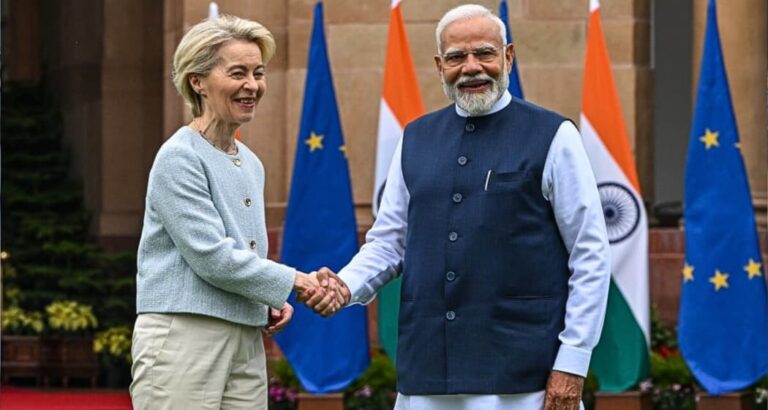
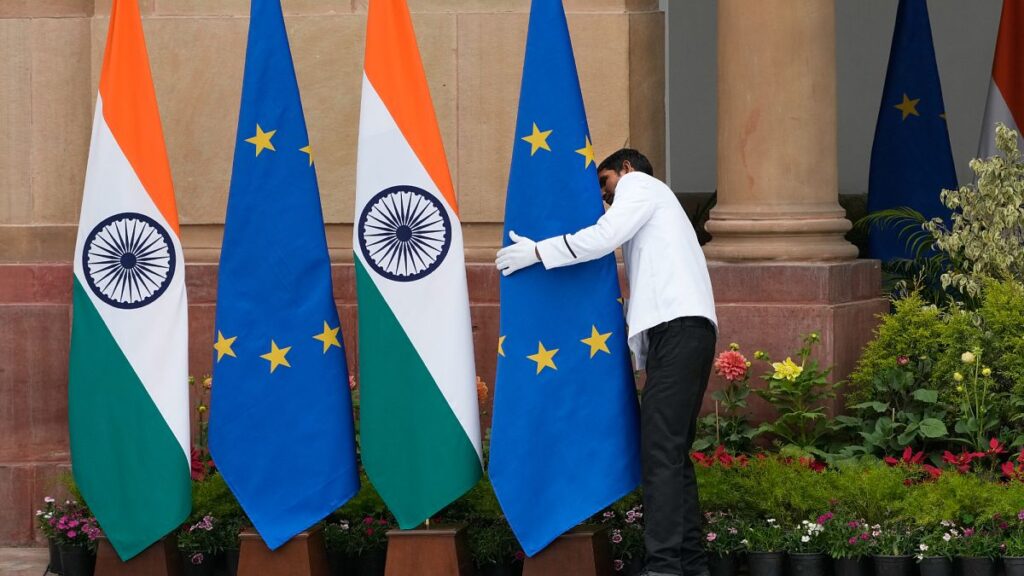
The EU and India aim to conclude negotiations on a trade agreement by the end of the year. On September 12, the EU trade commissioner, Maroš Šefčovič, and the commissioner of agriculture Christophe Hansen went to New Delhi for a new series of discussions. However, no breakthrough has been made.
One of the main snacks is the dispute settlement mechanism that the EU seeks to include in the agreement to ensure that India complies with environmental standards.
“The idea that there would be a dispute settlement, not to mention the sanctions that apply to these commitments, the idea that the commitments would be legally binding, that civil society would be involved in the management of the agreement from this point of view, but also that these commitments would apply at the subfederal level – these are very difficult elements for India,” Kiener told meps.
India ‘not like New Zealand’
Since its last mandate, the Commission has been pressure for the inclusion of environmental provisions in its trade agreements, including mechanisms to supervise their implementation and enforce compliance.
This same chapter turned out to be controversial during EU talks with the Mercosur countries – Argentina, Brazil, Paraguay and Uruguay – until an agreement was finally concluded in December 2024.
The Mercosur agreement includes a dispute settlement mechanism involving an external examination of independent experts and the participation of civil society. It also identifies membership of the Paris Agreement – the legally binding international climate treaty adopted in 2015 – as an “essential element” of the agreement. This means that the agreement can be suspended if a party was seriously violated or withdraws from the climate agreement.
“We must not fall into the illusion that India is a country like New Zealand,” said Kiener, referring to the EU-New Zealand agreement which entered into force in May 2024 and is considered a reference to integrate green standards into trade agreements.
EU Green Legislation, in particular the carbon border adjustment mechanism (CBAM) adopted in 2023, raised concerns among Indian negotiators, Kiener told MEPs. CBAM introduces a levy on the EU imports of certain products with high carbon intensity, a measure that India perceives as potentially protectionist.
About The Author