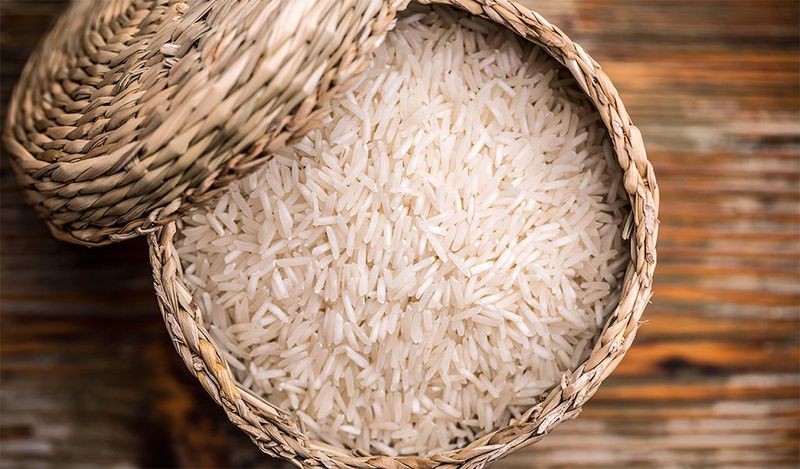

Basmati Rice disputes: The free trade agreement between India and the European Union, under negotiation for years, has entered an unexpected quagmire. The stumbling block is not prices on cars or pharmaceutical products, but basmati rice. India and Pakistan are claiming exclusive rights on the “basmati” designation, a dispute that has spread in the corridors of Brussels and threatens to derail the most ambitious trade agreement in India for decades. New Delhi hopes to conclude that the Pact ensures better access to its exporters, the competition on a venerated grain in the two countries of South Asia has become a disproportionate diplomatic and economic challenge.
For India, the free trade agreement proposed with the European Union is one of its most consecutive commercial initiatives. The EU is the third trading partner in India, representing more than 10% of its total trade, and an agreement could provide tariff concessions through textiles, leather, pharmaceutical products and agro-products where Indian exporters enjoy a competitive advantage. Beyond access to the market, the agreement promises to anchor India more firmly in world supply chains at a time when rivals such as Vietnam and Bangladesh already enjoy preferential terms with Europe.
Securing the ALE would therefore stimulate exports, attract European investments and signal India’s desire to line up on high -level trade rules – a critical step to maintain its growth ambitions.
Basmati rice has long been described as Champagne from India – a premium grain defined by its long stems, aroma and cultural heritage. India represents almost 65% of the world’s world trade in Basmati, while Pakistan provides most of the others. The grain commands a price premium of $ 200 to $ 300 per tonne compared to non -basmatic varieties. For both countries, the European Union is a key export market.
In 2018, India filed a request from the EU which seeks the status of exclusive geographic indication (GI) for basmati rice. Pakistan filed a rival complaint in 2023, extending its claim to certain parts of the cashmere administered by Pakistan, a decision that New Delhi considers politically untenable. The granting of Pakistan’s request would be equivalent to an implicit recognition of his complaint on the disputed territory, which Brussels is reluctant to do. However, approving the only risks of India’s demand that closed Pakistan from a lucrative market, relaxing Europe’s ties with Islamabad.
The EU, captured in the middle, slowed down the process. The two applications are considered in parallel, and those responsible emphasize that the sensitive nature of the question requires meticulous manipulation. The result will have consequences far beyond rice exports, shaping the credibility of geographic indications in trade law.
Geographical indications have become a powerful tool in world trade, protecting cultural products such as champagne, mam of Parma or Darjeeling tea. For India, winning gastrointestinal status for Basmati in the EU is more than a commercial gain. It is a question of safeguarding heritage and asserting intellectual property rights. The agricultural authority and transformed food export export products (APEDA) has invested years in the creation of the case, the supply of documentation and the original scientific evidence.
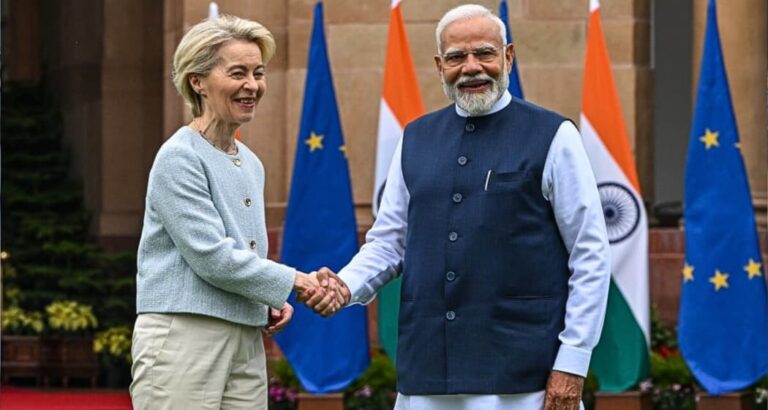
However, the Basmati dispute complicates the greatest ale. Brussels cannot finalize market access concessions without resolving the GI issue. European negotiators know that recognition of Pakistan’s demand could have geopolitical implications, while granting exclusivity to India risks diplomatic benefits. The result is paralysis, undermining the hope that the FTA would be signed this year despite the insurance of the president of the European Commission Ursula von der Leyen.
The EU is the third trading partner in India, representing 10.8% of total trade in 2022. An ALE could reduce prices on textiles, leather, pharmaceutical products and agricultural products – all sectors where India is competitive. Without the agreement, Indian exporters face rigorous prices that competitors like Vietnam and Bangladesh have already avoided through their own commercial pacts.
Basmati rice exports, worth $ 4.8 billion during the 20123 financial year, are an essential element of the agri-exporting basket of India. Europe is one of the most profitable markets due to the higher purchasing power of consumers. If Pakistan retains the right to use the Basmati label in Europe, Indian exporters risk dilution on their market share. Conversely, if India ensures exclusivity, Pakistan exporters can be pushed, triggering reprisals and more politicizing the dispute.
The danger is that the FTA could collapse under the weight of a single product. For an economy seeking to diversify exports and attract European investments, the price would be high.
Pakistan approached the EU with its own file, stressing that Basmati is also cultivated in the province of Punjab and adjacent areas. His 2023 request was remarkable to include four districts of the cashmere administered by Pakistan, a strategic decision which makes the dispute inseparable from the geopolitics of South Asia. For Islamabad, the Basmati label is not only to preserve access to premium markets, but also to internationalize the question of cashmere through trade law.
Pakistan exporters warn that the loss of the right to the basmati designation would exceed them from market and premium price shares. Agricultural exports already under stress, Pakistan considers Basmati GI as a red line. The EU, suspicious of alienating both sides, delayed arbitration, effectively using the dispute as leverage in wider trade negotiations.
This is not the first time that Basmati has launched international disputes. In the early 2000s, India and Pakistan jointly challenged the Ricec attempt based in the United States to patent Basmati hybrids and the name. The joint campaign was praised as a rare example of cooperation. But the spirit of collaboration evaporated after the Mumbai 2008 terrorist attacks. Since then, New Delhi has continued unilateral protection and Islamabad dealt with Basmati as a question of sovereignty as much as trade.
The lesson is clear: without waterproof documentation, the representation of stakeholders and political consensus, disputes of geographic indication can flow for years. India’s demand has already faced objections in New Zealand and Australia, where regulators have judged that the term could not belong to a single country. The EU dispute is therefore not an isolated case but is part of a broader competition on intellectual property in agricultural products.
What should India do? New Delhi must separate the FTA from the Basmati issue in negotiations with Brussels. While insisting on its legitimate demand, India should not allow a single product to hold the hostage a complete agreement which could reshape bilateral trade. India should also strengthen its Basmati file with rigorous scientific evidence, clearer geographic borders and a broader representation of stakeholders, including farmers from all producing states. This will improve credibility and reduce the reasons for objection.
New Delhi must be prepared for a compromise solution. An option could be joint recognition of India-Pakistan limited to specific regions, without prejudice to territorial complaints. Although politically difficult, such an approach would align themselves with global standards on shared heritage products. He must deal with geographic indications as a strategic border in commercial policy. Like future disputes on Darjeeling tea, Alphonso mangoes or other products are looming, India needs institutional capacity to defend its agricultural heritage in global forums.
Basmati dispute exposed how cultural pride and territorial rivalry can complicate modern trade agreements. For the EU, it is a question of balancing trade with geopolitics. For India, this is a test to know if commercial diplomacy can exceed intractable bilateral quarrels. The Ale with Europe is too important to be sacrificed at the altar of a grain, also fragrant. New Delhi must adopt a pragmatic approach, based on evidence and prospective. If he fails, the opportunity cost will be measured not only in lost rice exports, but also in a decrease in global credibility as a trading partner.
For almost 30 years of expertise in agricultural markets, Ukragroonsult has accumulated a large database, which has become the basis of the platform AGRIPP.
It is a multifunctional online platform with market intelligence for cereals and oil seeds that allows access to daily operational information on the Black Sea and Danube markets, analytical reports, historical data.
You are welcome to get a 7 days Access to the free demonstration !!!
About The Author