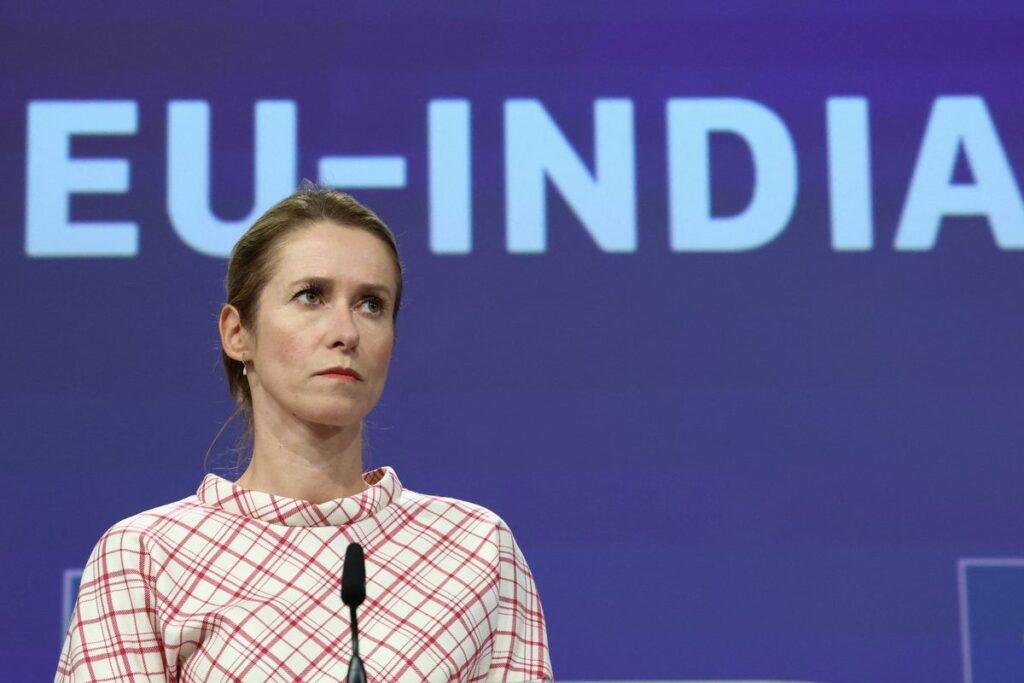
THE Ue said India’s growing relations with Russia were a major obstacle To finalize a Long-awaited free trade agreement Even if Brussels has unveiled a new “strategic program” to deepen cooperation with New Delhi for Defense, Technology and World Security.
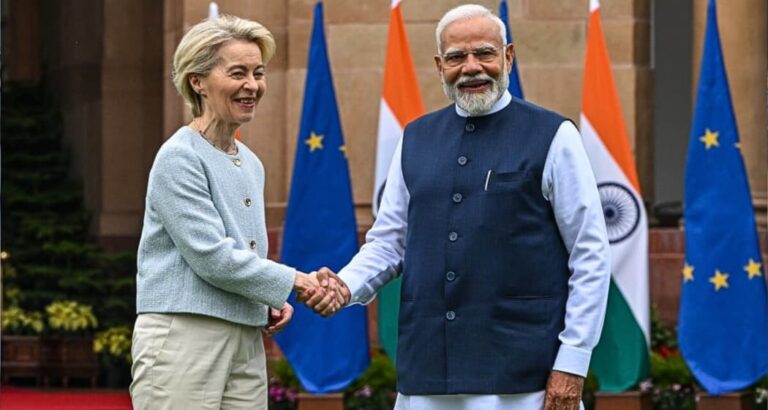
European Commission president Ursula von der Leyen said the initiative has marked a new phase of relations with the South Asian country. “It is now time to double the partnerships rooted in interest shared and guided by common values. With our new Ue-The strategy of India, we put our relationship to the next level, “she said.
The document defines proposals ranging from improving maritime cooperation and cybersecurity to the resilience of the supply chain and new businesses in digital innovation.
He also describes the plans for an EU-Indre commercial forum, academic mobility and extended workforce and trilateral partnerships with African and Middle East countries.
At the heart of the new agenda is the aim of concluding a free trade agreement by the end of this year.
Ms. von der Leyen described the agreement proposed as “the largest of its kind all over the world”, stressing that Europe was already the largest trading partner in India.

The head of the EU foreign policy, Kaja Kallas, and the Commerce Commissioner Maros Sefcovic tackled a press conference in Brussels on September 17, 2025 (Reuters)
Commerce commissioner Maros Sefcovic said that the agreement could unlock “a vast potential” by Fight against pricing and non -tariff barriers.
Brussels also reported significant obstacles. The head of the EU foreign policy, Kaja Kallas, warned that the purchase by India from Russian oil and his participation in military exercises led by Russia “behave narrower”.
“Participate in military exercises, oil purchases – all these obstacles are obstacles to our cooperation when it comes to deepening links. The question is whether we leave this vacuum to be filled by someone else or try to fill it ourselves, “she said.

Prime Minister Narendra Modi with Russian President Vladimir Putin at the top of the Shanghai cooperation organization in Tianjin, China, September 1, 2025 (Reuters)
She was referring to Participation of Indian soldiers in Zapad 2025A Russian military exercise held earlier this month NATOEastern borders.
India has greatly increased its purchase of Russian oil at reduced prices after Western countries sanctioned Moscow about its invasion of Ukraine in 2022.
Despite these tensions, Ms. Kallas said that the EU did not expect India to “get rid of Russia completely, given their long -standing ties, but that disagreements should be treated in negotiations.
“If everything is not agreed, nothing is agreed at the end,” she said.
Indian Prime Minister Narendra Modi Welcome the new executive, describing it as a “shared commitment, a shared objective and a shared responsibility”.
In an article on X, Mr. Modi thanked Ms. Von Der Leyen for her birthday greetings, claiming that India was “ready to bring the India-EU relationship to the next level” and reiterated the appeal of his government to a “peaceful resolution of the Ukrainian conflict”.
The Prime Minister’s office added that the two leaders agreed to continue working for “mutual prosperity” and to strengthen the partnership in promoting an international order based on rules.
Mr. Modi has also renewed his invitation to the next EU-Indian summit to be held in India next year.
Strategic communication emphasizes collaboration on global issues such as climate change, green hydrogen and decarbonization as well as enlargement of cooperation by the East-Europe-Europe economic corridor and the global infrastructure initiative of the EU.
He also plans an information security agreement to allow classified data sharing and a potential EU-India start-up partnership.
“India is one of the most important players in the world today and a natural partner for the European Union,” said Kallas.
“There are many areas where our interests, forces and our policies will line up. Improving our collaboration will benefit the safety and prosperity of citizens and businesses on both sides. Our negotiations will take up these challenges. “
The agenda must be approved by the 27 EU member states before its official adoption, expected at the next summit at the beginning of 2026.
About The Author