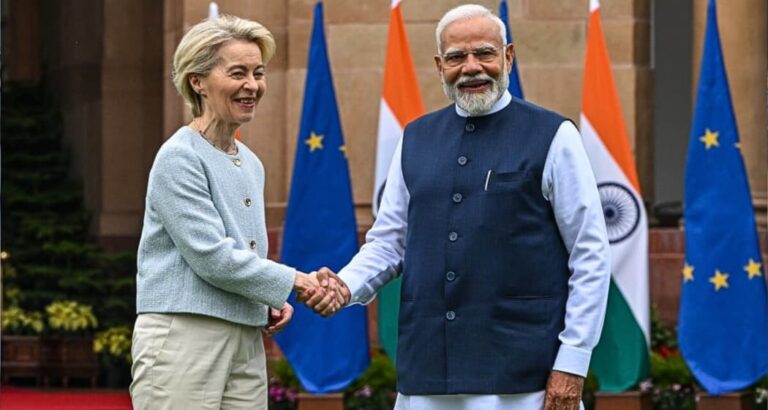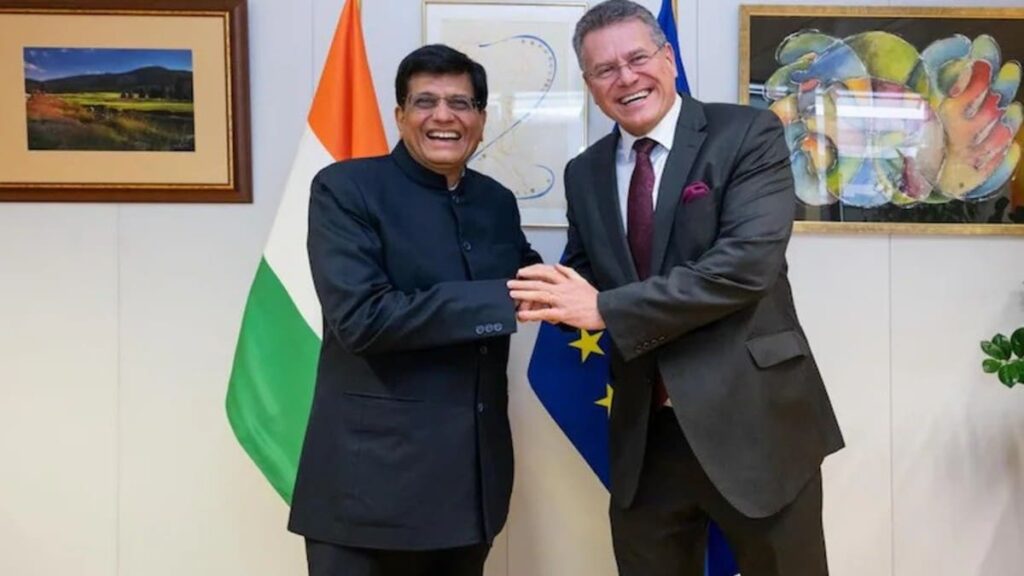
The negotiations underway between India and the European Union (EU) for a free trade agreement, officially called the Commercial and Investment Agreement (BTIA), represent one of the most ambitious efforts to strengthen economic relations between the two partners. He was born in 2007; The talks aimed at creating a complete agreement covering the trade in goods and services, investments, intellectual property rights, government purchases and competition policy.
Despite several cycles of negotiations, progress has been uneven, mainly due to divergent economic priorities, regulatory approaches and strategic interests. However, the FTA remains the cornerstone of India’s commercial diplomacy for the reconciliation of development imperatives with global economic integration.
From a legal point of view, the ALE in India-EU is subject to the same framework of treaty law as other international agreements. Negotiations are guided by the Vienna Convention on the Treaty law (1969), and the possible text, once adopted and ratified, would be governed by the principle of Pacta Sunt Servanda.
In addition, the agreement must comply with the obligations of the WTO, in particular articles XXIV of Gatt and V of Gats. For India and the EU means ensuring that the ALE liberalizes “almost all of the exchange” of goods and offers significant access to the market in services.
One of the central challenges was the asymmetry between the developing economy of India and the highly regulated EU single market. The EU has always been pressure for deeper tariff reductions on industrial goods and better access to the retail markets of India. India, however, has underlined the need for flexibility in fields that directly affect its development objectives, such as agricultural subsidies, data protection rules and the movement of natural people.
These differences illustrate tensions between the liberalization of trade and the political space for development, which is a recurring theme in the North-South trade negotiations. This regulatory divergence highlights the intersection between commercial law and broader governance issues, which makes negotiations not only economic but also of political and normative nature.
In addition to economic considerations, the Indian Ale-EU has significant geopolitical implications. For the EU, closer economic ties with India serve its strategy for diversifying supply and reduction chains of dependence on China.
For India, an ALE with the EU would make it its largest trading partner and a key source of foreign direct investment which would improve its global commercial imprint and strengthen its aspiration to act as “rules” in international economic governance. Negotiations therefore go beyond the prices and market access times, addressing the balance of powers evolving from the fragmented international order.
The slow pace of negotiations underlines the complexity of the balance between ambition and pragmatism. The talks stopped in 2013 due to disagreements on market access, but were relaunched in 2022 in the midst of changing global dynamics, including the disturbances of the COVID-19 pandemic supply chain, the Russian-Ukraine war, and the growing salience of economic security in the development of Indian and European policies. Current discussions are marked by a renewed accent on sustainable development, digital trade and resilient supply chains, reflecting changing priorities in international trade law in the 21st century.
From the point of view of treaty law, the Indian FTA illustrates the life cycle of modern trade agreements. Negotiations involve the exchange of proposals, legal drafting and consensual construction, as provided for under article 7 of the Vienna Convention on the Act of Treaties (VCLT). Once the consensus is reached, the draft text will require a signature and a ratification by India and EU institutions, thus formalizing their consent to be bound by the same.
The internal EU processes, which involve both the European Parliament and national parliaments in certain regions, add an additional layer of complexity. Likewise, India will have to navigate interior political considerations, in particular with regard to sensitive sectors such as agriculture and pharmaceutical products.
In the end, the Indian-EU FTA illustrates both the promise and the difficulty of using the ALF as an instruments of international economic governance. If it was successfully concluded, it would not only deepen bilateral trade and investment, but also establish a precedent for India’s commitment with other advanced savings, such as Canada and Australia. Legally, it would reaffirm the role of treaties in the structuring of economic relations under international law, while politically, it would demonstrate the potential of commercial diplomacy to advance wider strategic objectives.
Abhinav Mehrotra is an assistant professor at OP Jindal Global University. The views expressed in the above room are personal and only those of the author. They do not necessarily reflect the opinions of the first.
About The Author