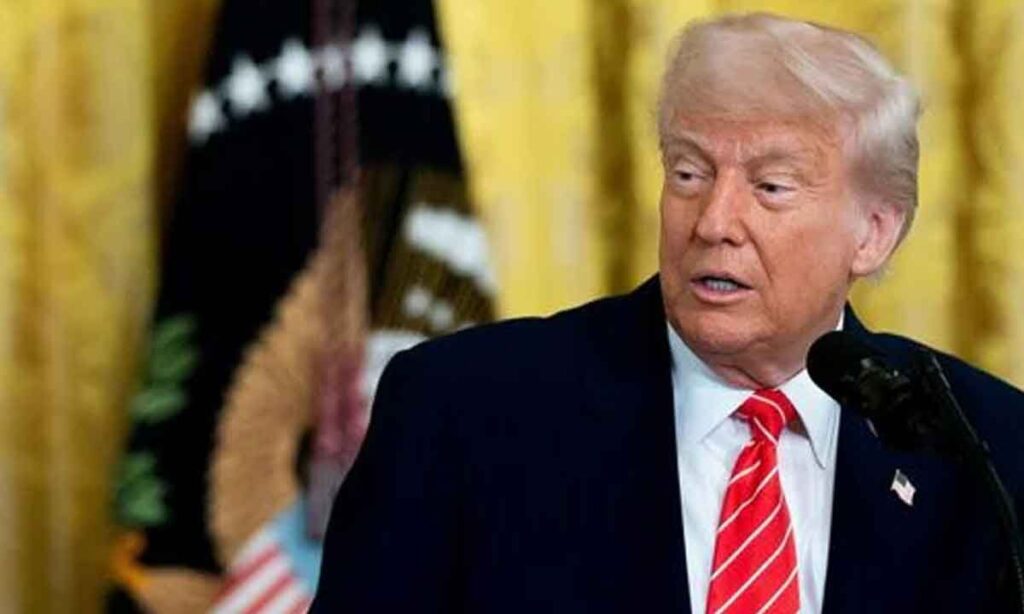
While President Donald Trump’s latest tariff measures are preparing to take effect on August 7, Indian decision-makers carefully analyze what constitutes an unfavorable trade agreement by examining the recently concluded trade agreement of the United States Union. The arrangement between Washington and Brussels aroused strong criticism from various districts, with detractors arguing that if a party has obtained advantageous conditions, the other has received significant financial obligations.
Government circles in New Delhi are increasingly fearing that Trump’s proposed terms has hastily have been able to lead to an equally unbalanced commercial relationship. Managers note that in Trump’s approach to international negotiations, countries that have been characterized as allies are often confronted with more severe treatment than others, diplomatic sweetness being interpreted as a vulnerability by the current American administration. Indian negotiators believe that it may be prudent to observe the possible agreement of China before determining whether the potential agreement of India offers truly favorable conditions.
The United States-EU agreement actually imposes a 15% reference rate on most European exports to America, while providing Washington with reinforced access to the EU market at considerably reduced tariff rates without offering significant concessions. In addition, Brussels is committed to investing 600 billion euros in the United States and buying 750 billion euros in American energy over the next three years.
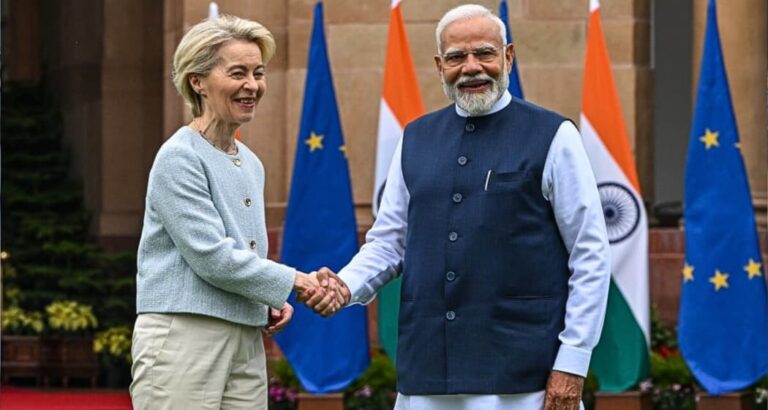
The capitulation of the European Union has followed a foreseeable model which characterized the approach of the American administration with other first signatories, notably South Korea and Vietnam. Initially, Brussels proposed zero prices for zero, later, softening their offer at zero prices at 10% with sectoral exceptions such as cars. The decisive moment has come when Trump threatened a price of 30% unless an agreement was concluded by August 1, which prompted the president of the European Commission Ursula von der Leyen to accept what she described as the best possible arrangement in circumstances.
When Trump’s pricing campaign started in March, the observers thought that the president focused mainly on the realization of tariff numbers with each nation. However, the agreements finalized closer to the deadline of August 1 have developed to include substantial investment commitments, as shown in the EU agreement. Japan has promised $ 550 billion in investments, while the United Kingdom has agreed to adopt a structured negotiation approach for investments. South Korea has engaged $ 350 billion in American projects which will be “held and controlled by the United States” and “selected by President Donald Trump”, while simultaneously accepting most American rights franchise entries in exchange for the 15%tariff rate.
According to Deborah Elms, head of the Hinrich Foundation’s commercial policy in Singapore, while certain preliminary agreements were locked in prices of 15%, others were less favorable. Vietnam, despite an agreement, received 20% more tariffs more than an additional 20% on transbricated goods, while the other ASEAN nations without agreement received 19% of rate. Switzerland, despite the early agreement, faced 39% prices, while the United Kingdom, despite its trade deficit with the United States, has obtained 10% rate. The ELMS emphasize that all rates remain subject to a change, providing little stability insurance.
In particular, some Anase countries without formal agreement have obtained better tariff treatment than the first signatories such as Vietnam. Beyond the tariff figures, the questions persist on the question of whether the other provisions of the agreement will materialize. The detailed texts remain unavailable for most of the signed agreements, and even when details emerge, the terms can be modified during the implementation. Traditional commercial transactions generally cover thousands of pages and require months or years of negotiation, which makes this rapid approach in several countries in a few weeks, especially extraordinary. Only negotiations in China and extended discussions of India seem to involve substantial real negotiations.
Legal and implementation challenges aggravate these concerns. US threats to impose additional prices on goods from other countries violating article I of the general agreement on prices and trade and contradict the commitments of the prices linked to Article II of GATT, which guarantees that the prices will not exceed mutually contained rates. European concessions in the United States could face challenges from other countries if these agreements violate the trade rules of the World Organization, as access to the United States preferential to EU markets may require providing other terms by virtue of WTO provisions. In addition, executive decrees linked to Trump’s trade are faced with national legal challenges in the United States.
Practical questions of implementation also arise. Can EU member countries realistically increase American energy imports of 750 billion euros over three years? Can the Commission guarantee 650 billion euros in American investments, since this implies that many private expenses rather than public spending by individual companies? The American Customs Department and Trade Managers face major challenges on monitoring and implementing several specific provisions in the country. The delay of July 31 The pricing deployments until August 7 would have granted a preparation time to American customs, although the implementation gently in the main American ports remains unlikely given the compressed calendar.
The European experience serves as an edifying example for India when it sails in its own commercial negotiations with the Trump administration. The model of initial concessions followed by an escalation of threats and a possible capitulation which characterized the agreement of the EU highlights the risks of rushing into the agreements without preparation and adequate lever effect. Indian decision -makers seem to be determined to avoid similar traps while pursuing mutually beneficial trade agreements that respect the economic interests of the two nations and sovereignty.
About The Author